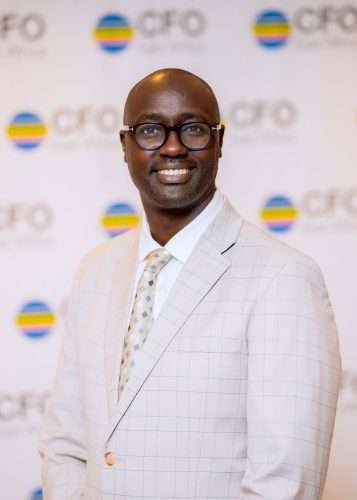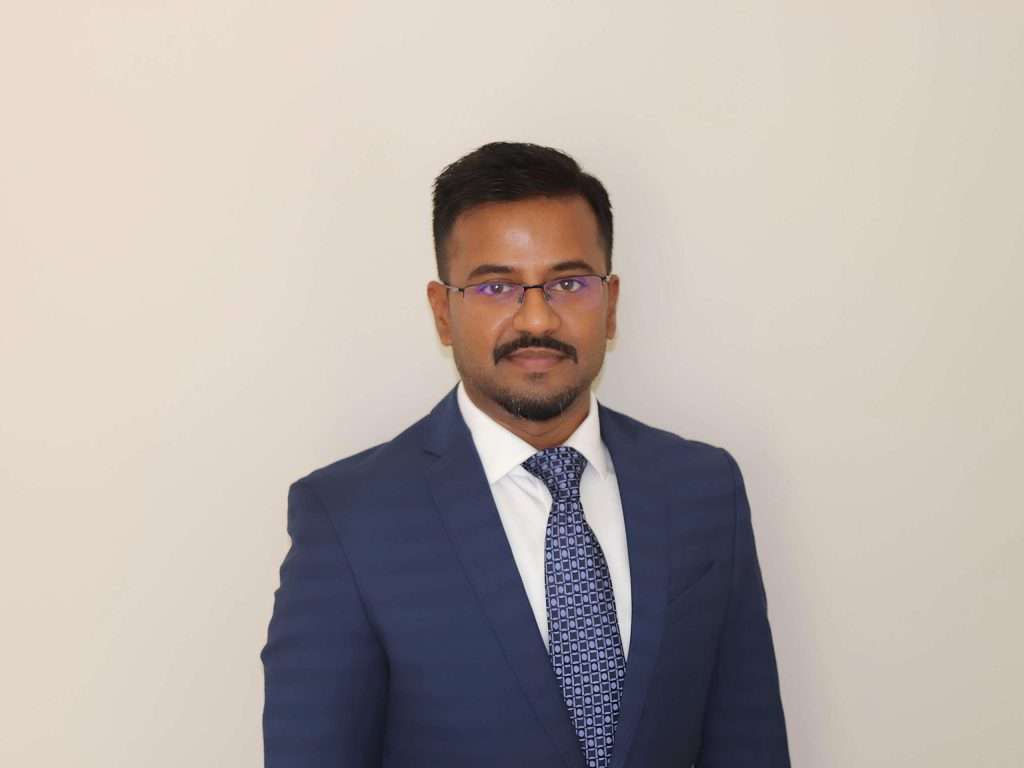
Manish Ranjan has built his career on navigating complex markets while strengthening compliance and developing people. As he steps into a group-level role at Mabati Rolling Mills, the outgoing ALAF Tanzania CFO reflects on the challenges and resilience that have defined his career in East Africa.
When Manish Ranjan first considered moving to Africa in 2011, he wasn’t entirely sure it made sense. He had spent nearly a decade working for publicly-listed companies in India. The opportunity in Kenya didn’t offer the same scale, but something about it made him reconsider.
“India had a very vibrant stock market and publicly-listed organisations which were large in scale and good on governance. So the thought process was that going out of India, especially in African countries, you may not get that kind of exposure. But I felt that it was worth taking a chance,” he says.
As a student, Manish did not set out to pursue a career in finance. He began as a science student with ambitions to join the Indian Institute of Technology to study engineering. When that did not materialise, he opened himself to economics and earned a bachelor’s, opening the door to accounting and finance. About seven years into his career, he found himself drawn to investment banking as India’s financial markets opened up. He enrolled in the CFA programme and completed two levels before his responsibilities at work took precedence.
“My intention doing CFA was to use it as a springboard for an investment banking career. I did not attempt the third and final level. Still, it opened up opportunities. I had worked in close interaction with the chairman on a project I was handling. Then he offered me an opportunity in Kenya,” he says.
In 2011, he joined Sunflag Group in Kenya, then moved to Addis Ababa, Ethiopia, a year later to help acquire and stabilise a state-owned textile mill with long-standing internal issues.
“We were able to negotiate a hair cut on the liabilities. We negotiated some kind of waiver from the tax department as well. There was restructuring on the labour side also. Because the country had more of a socialist approach, and this was an acquisition under the government’s privatisation scheme, the intent was to avoid affecting the labour. There were a lot of learnings in terms of how to manage people and the situation,” he says.
Compliance and resilience
At the time, private banks weren’t available in Ethiopia, so funding came through government-backed institutions. Manish and his team approached the Development Bank of Ethiopia and secured $10 million of rehabilitation funding. He also engaged directly with agencies while managing labour and compliance constraints.
“Handling the business as a whole gave me a lot of confidence,” he says.
Until August 2025, Manish served as CFO of ALAF Tanzania, part of the Safal Group, which operates in nine countries in eastern and southern Africa. He has since taken on a group-level position at Mabati Rolling Mills in Mombasa, Kenya, where he now supports tax and treasury. As he sees it, the shift builds on the lessons of compliance and resilience that defined his time in Tanzania.
“The immediate hurdle was a two-year-old VAT refund claim. The refund process used to be very long. It was like a 100 percent verification. So we had to really ensure that the documentation is well maintained. It took us even engaging with Tanzania border customs offices and neighbouring countries’ customs documents to substantiate some of our exports,” he says.
In 2021, the Tanzania Revenue Authority rolled out transfer pricing audits for the first time. Manish had to spend months refining intercompany pricing logic, documentation and preparing his team for the process. When the notices came in, they responded with structured files and detailed backup.
“The key learning of these two very engaging exercises was the need to strengthen compliance, be pro-active and develop the team’s capability to handle these challenges. I then spent significant effort and time to develop structures, processes, compliance mechanisms and reinforced the team to ensure we were ready ahead of time for these challenges. However, these efforts would give peace of mind in future and save your time and involvement when the next of such requirements arise,” he explains.
Pushing for advocacy
The company experienced a difficult business environment in 2022 when the steel downstream industry faced unprecedented price fluctuations and global headwinds due to the Russia-Ukraine crisis and US Fed monetary policies. ALAF had to endure squeezed margins, strained cash flows and dollar unavailability, risking defaults of foreign obligations.
“I managed with regular engagement with bankers, suppliers, brainstorming and implementing various mitigating measures aimed at increasing forex availability, reducing forex exposure, and optimising costs. It was like a war room situation almost every month and you had to stay on your toes and yet in control of the situation. It is so fulfilling to see the ideas which come when you proactively take on a crisis situation,” he says.
Currently, ALAF faces a tough market environment, where substandard and under-declared imports distort prices. Manish has pushed for advocacy alongside operational performance.
“We are trying to create awareness. We are trying to highlight how the government is losing revenue because of under-declaration. At the same time how people are losing money by using substandard products,” he says.
To complement those efforts, ALAF has focused on building local capacity. Rather than continue importing coated products from within the group, Manish led funding for a $25 million investment in a colour-coating line based in Tanzania. The new facility strengthens ALAF’s position in a market crowded with lower-grade imports.
“We were importing it from Kenya or South Africa. Now we have invested in Tanzania itself. So now we are capturing the manufacturer’s margin. And the material is readily available to the customer,” he says.
Mentoring leaders
For Manish, investments in plants and equipment go hand-in -and with investments in people. He sees team development as essential to sustaining competitiveness, arguing that finance leaders must free their teams from routine tasks and prepare them for bigger responsibilities.
“I personally believe in not holding everything to myself. I would like to develop my team, assess their abilities, understand the gap and help them grow. It gives you professional and internal fulfilment and also allows you to focus more on the strategic vision of the company. So the team feels empowered and motivated, as well as it frees up your time,” he explains.
In practice, this has been reinforced through Safal Group’s mentorship programmes. High-potential staff are identified through Six Sigma and other assessments and given customised training to prepare them for bigger roles. Manish considers this one of the most meaningful parts of his role.
“In our group we have mentorship programmes where resources identified as having potential are engaged and guided into bigger roles. We conduct career assessments every year and provide customised training programmes to help them grow. This shows colleagues that the company invests in their future and values their contribution. It creates motivation that in turn strengthens the organisation,” he says.
The Indian national traces this persistent spirit back to his mother, who hailed from a remote village where women rarely worked or pursued higher studies. After she got married and had children, she began to study for a degree, competed in government examinations and enrolled in a teacher training course. She eventually qualified to teach in a government school and did so successfully until she retired at the age of 58.
“She did all this while being a wife, a daughter-in-law and a mother. That gives you inspiration, because if she could do that, why not you?” he says.