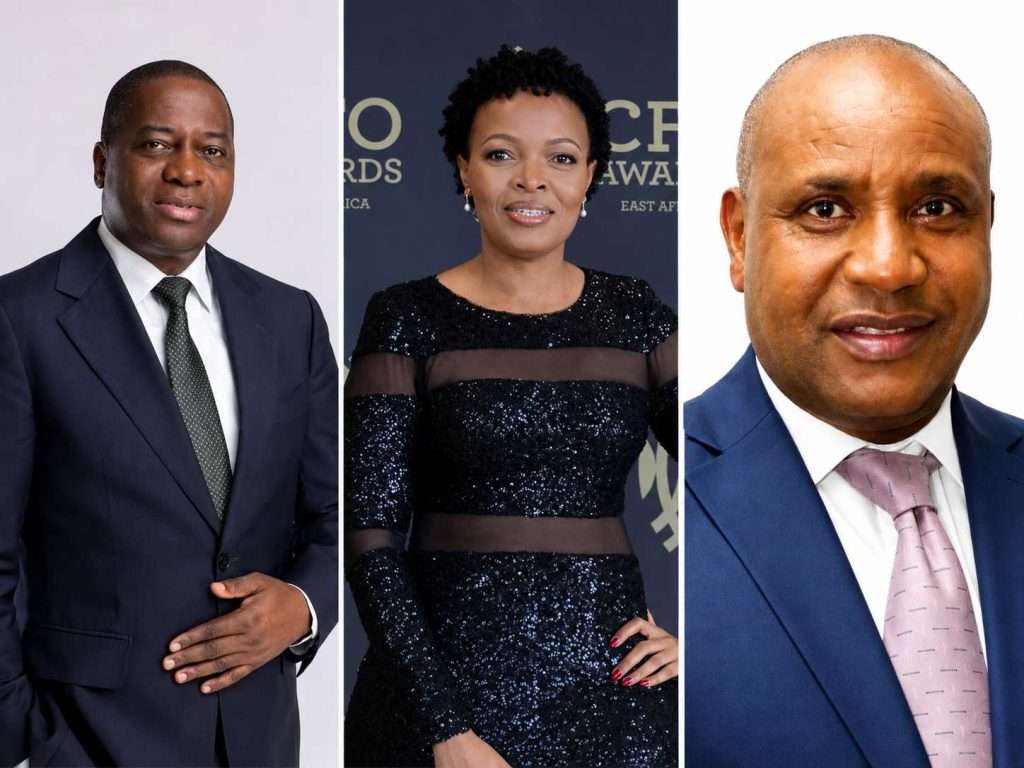
Every finance leader eventually comes face to face with the need for automation. The harder question is which change actually earns a permanent place once the systems are in and the old habits are gone. CRDB Bank CFO Fredrick Nshekanabo, Heritage Insurance GM finance and administration Luke Magambo, and Vodacom Tanzania finance director Hilda Bujiku share the one process they automated that changed their work for good.
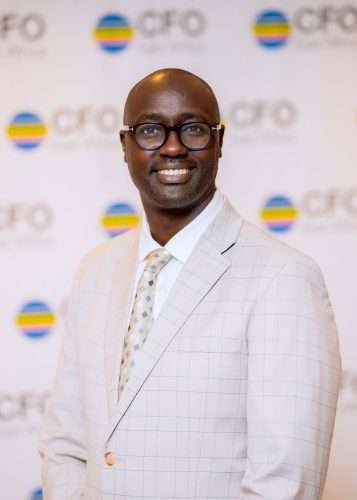
Fredrick Nshekanabo joined CRDB Bank at the tail end of its manual era, when reconciling a branch’s books meant physically tracing every entry by hand. Two and a half decades on, he still points to one specific habit the bank has permanently retired.
“We are making one change here where we are automating the payment. One could still argue that we need to see the physical invoice, receive it, stamp it, and then ask why. But that is history now. You pay over the POS electronically, and you simply get an electronic payment record,” he says.
What strikes Fredrick most is how little anyone misses the paperwork. The reconciliation headaches that used to define a finance officer’s day, tracing a wrongly coded entry with no physical trail to fall back on, have simply stopped being a category of problem.
“You used to find a teller thinks he posted something right but used the wrong code, and there is no manual trail to trace it. That was a real challenge. Now the entries are electronic from the start, so that particular kind of error has mostly disappeared,” he says.
Beyond the ledger
At Heritage Insurance, Luke Magambo has taken automation into underwriting, a different corner of the business. Where decisions once relied on experience and static reporting, Heritage now leans on financial intelligence to sharpen how risk is priced and managed.
“The increased use of financial intelligence and data-driven insights has significantly enhanced the quality of decision-making across the business, particularly in underwriting, risk management, and resource allocation,” he says.
For Luke, the value isn’t confined to pricing risk more accurately. It has opened up areas of the business that used to sit outside finance’s reach entirely.
“Only a few years ago, artificial intelligence was something most people in this industry viewed as abstract, even futuristic. Now it is transforming how we detect fraud and how we understand our customers, not just how we price risk. Those are opportunities we did not have before, and I do not see us stepping back from them,” he says.
Freeing the team to add value
Hilda Bujiku has led two enterprise system transformations in her career, first at Vodacom Lesotho and again at Vodacom Tanzani, both times replacing manual transaction processing with automated platforms.
“Transaction processing can be done by anyone, and by artificial intelligence and robotics. Gone are the days where you need an expert sitting there preparing financial statements by hand. Gone are the days,” she says.
What automation removed from Hilda’s team, she has redirected toward advisory work, which shapes decisions before they are made rather than reporting on them afterward.
“I tell my team, do not dwell in the Excels, these are automated now. What value are we bringing to the company beyond that? If your tasks can be automated and you have not moved beyond them, that value will be taken by the technology instead of you. So we position ourselves as business partners, not as people running spreadsheets,” she says.
Across their respective sectors, the three CFOs describe automation less as a cost-cutting exercise and more as a redrawing of what finance is for. None of them frame the shift as something to be managed cautiously.
“I know the controls, the transaction processing, and what is not needed anymore. My team is not the one running into the office when a payment needs approving. We are the ones asking why the money is being spent at all. That is the value we protect now,” Hilda says.