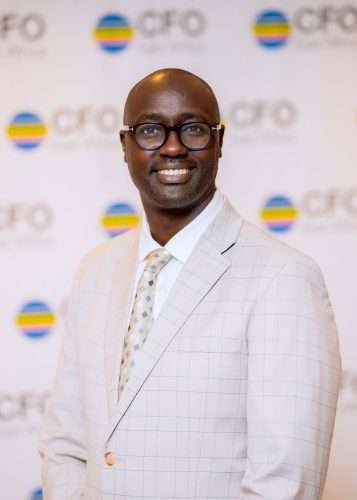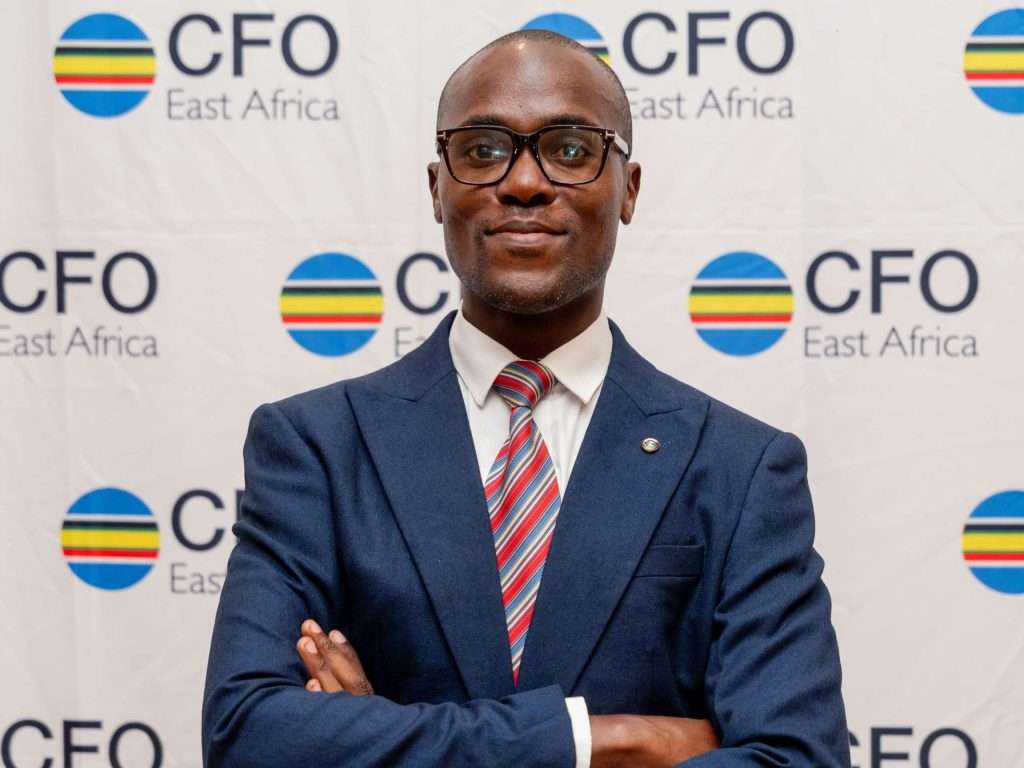
Seleman Issa looks back on his journey from a small Tanzanian town near Lake Victoria with quiet gratitude. His role as finance director at Frostan is the answer to a prayer he first said at the age of 14.
Seleman Issa grew up surrounded by accountants. His grandfather and several uncles and aunties were all in the profession. His enterprising grandmother often sent him to run errands at the market and scolded him when he got the wrong change back. As a boy, he imagined building hotels along Lake Victoria and running them as an accountant.
“When I was at that age, I wanted to be a businessman, and I thought if I could be an accountant, then I could be a good businessman. My grandfather and grandmother ran many businesses during their time. So, I think from early on, I was groomed into it,” he says.
After completing high school, financial difficulties delayed Seleman’s progress. As a compromise, he ended up choosing the Institute of Finance Management over the more prestigious University of Dar es Salaam. He felt tested, as it was not the path he had imagined. Alone in the city with little money, he held onto his faith, anchored by his resilience.
“I had to stay in Dar es Salaam until I got my CPA because my family did not have enough cash to support me with my review classes. I had to look around and see how I could fulfil that dream. One of my pastors helped me to pay for the first review class and after I got work, I started paying for myself. I was able to complete my CPA in 2012 and I became a certified public accountant that year. When I look back, I thank God that I chose the right track,” he reveals.
The full picture
Seleman then joined Tanzanian conglomerate Simon Group as a senior accountant before immersing himself in auditing at PKF. The rigour of audit work gave him a foundation in technical precision and discipline. He came to believe that every finance professional should spend time in an audit firm to gain the full picture of accounting practice. After that, he transitioned to the private sector and never looked back. In 2023, he joined Frostan, a company specialising in cold-chain production of chicken and meat.
“We are venturing into this because it is a new thing in the region. We are eyeing the European Union market, but for now, we are focusing on the local market because demand is high,” he explains.
The way Seleman describes the business reveals his vision for Tanzania’s agricultural sector. He speaks of working with the government to educate farmers on the benefits of preservation and export readiness. For Seleman, finance is the system that enables this mission.
“It is always finance that decides that this project is viable, and this one is not viable. If you are a good accountant, you are able to manage investments. Finance or accountants are the ones to see the numbers. You said this investment will bring us maybe ten percent increase in sales. It is upon us to look at the trends and predict that this is not a good investment, and in the end, we are going to make losses,” he explains.
Despite Seleman’s clear-eyed vision for Frostan, leadership was not something he mastered instantly. During a light-hearted conversation with his juniors when he worked at PKF, they teased him for being too strict. Until then, he had never thought about his communication style.
“It was a moment for me to reflect, and I found that I needed to change. I assumed that everyone knew what I knew, but it was not true. You need to put a mirror in front of you and reflect on whatever you are doing so that you are able to correct the mistakes that you make. It was a friendly thing, but for me, it was a reflection that I needed to look at my behaviour and emotional intelligence,” he recalls.
Glaring blind spot
Seleman has since adopted a quieter and more open style, which encourages team members to speak freely. He now uses that insight to guide how he manages younger employees. His view of leadership has also changed.
“You need to identify from your staff how to motivate them to do this work by identifying what weakness they have and their strengths. Slowly, in the areas where they are weak, you can start giving them small tasks and reviewing what they have done. You need to expose them to training and allow them to see you make mistakes too. You do not have to be afraid to show your weakness because even the manager is not perfect,” he says.
As a young adult, Seleman once toyed around with the idea of being a professional model. But he now prefers a quieter life. He enjoys singing in his church choir and re-watching old television shows like long-running soap opera The Bold and The Beautiful.
“When I was growing up, my grandmother used to like that I was always with her in the kitchen. I like cooking and I love to cook for people to eat although I am not a foodie. When I am not at work, if I am not at church, I will usually be at my house watching movies,” he says.