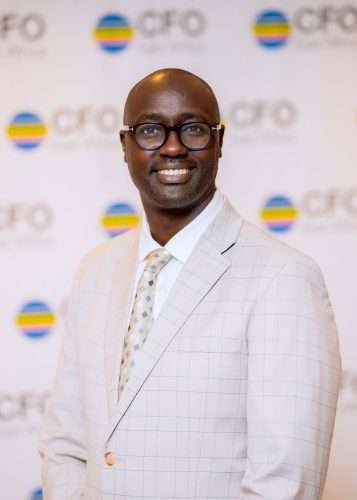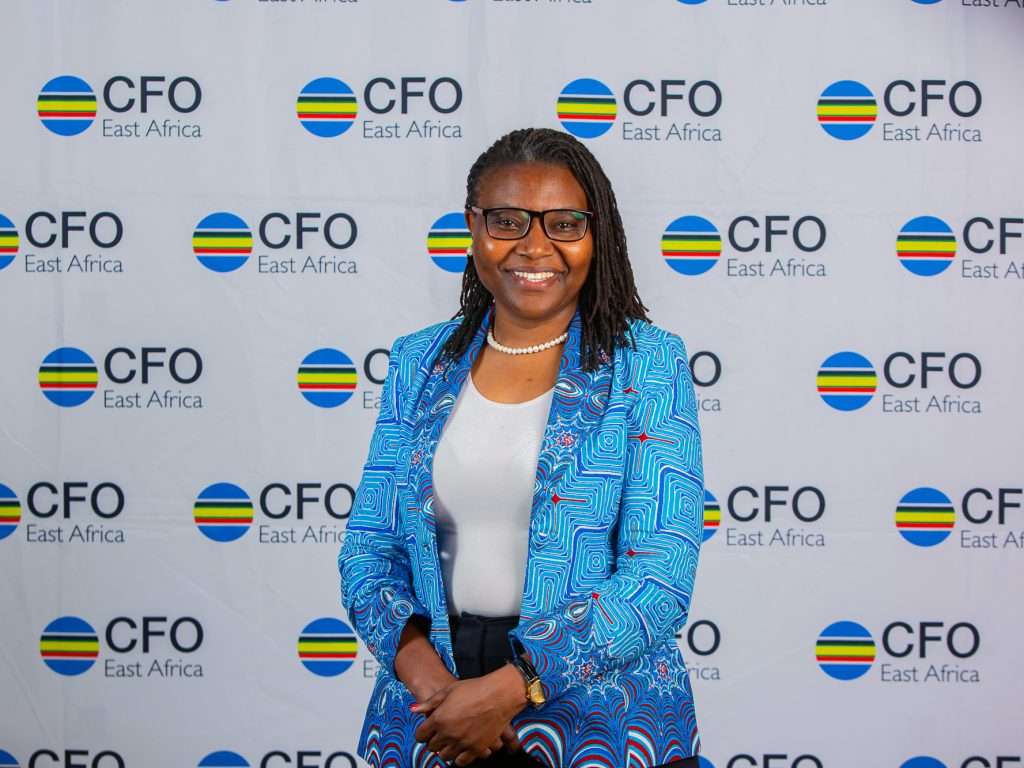
Hewatele CFO Joan Andia has seen the entire gamut of leadership, from nurturing superiors who invest in the growth of their team members to managers who focus only on output. As the CFO of Hewatele, she is intentional about leading her team with empathy.
Joan Andia assumed the CFO role at oxygen social enterprise Hewatele in 2023, right when the world was recovering from the throes of the Covid-19 pandemic. Since then the spiking demand for oxygen has placed immense pressure on the healthcare sector, and Joan was a stranger to the field of medicine. It was a jarring entry into an industry where the stakes were high and the learning curve steep.
“I think the first six months were just a baptism by fire. There were some days where I wondered ‘what am I doing here?’ But I’ve always said that if God gives you a position, He gives you the grace to succeed in that position,” she says.
Until then, Joan had worked in the investment sector, including a short stint in private equity, Other sectors would be banking and manufacturing. This taught her how to adapt quickly and build systems in real time.
“It made me a bit more flexible. I do not walk into a room thinking I know everything. I am very open to learning and to hearing what others are saying. But then also, I bring that structure,” she says.
At Hewatele, which manufactures and distributes medical oxygen across Kenya, Joan found herself navigating a different regulatory environment, with new supply chain realities and the bureaucracies of working with county governments. She describes the team as small but deeply committed to the mission, as they scale up to be the largest producer of liquid oxygen in East and Central Africa
Partnering with the business
“It’s a very mission-driven business. And I think that’s what really drew me to it. Because I felt like we were doing something that is life changing. And for me that’s very important,” she says.
Joan believes the scope of a finance team should go well beyond compliance and reporting, incorporating strategy and long-term vision. In her view, finance is instrumental in ensuring resources are used effectively and the company is sustainable over the long term.
“I think the finance role is a lot more than people think. You are the one who has to make sure that you’re always making the money work for the business. Not just now, but also in the future,” she says.
Joan describes the CFO-CEO dynamic as a true partnership, saying the finance head has a responsibility to bring clarity, offer strategic insight, and ensure sound governance. It is not enough, she stresses, to simply support from the sidelines.
“You’re really the person whom the CEO can lean on when it comes to numbers, strategy, reporting, governance. You’re not just a support function. You’re actually a partner,” she says.
Good communication
Her leadership style has evolved over the years, coming a long way since she started out. At Hewatele, Joan often makes time for one-on-one meetings, placing a high value on creating a safe space for her team. For her, it is important that people feel they can admit what they don’t know. She therefore strives to create an environment where learning is not punished but encouraged.
“I try to be a coach more than anything. I ask a lot of questions. And I also try to create an environment where people can say, I don’t know this,” she says.
She also places a premium on having conversations with her team members. Over time, she has found that good communication allows for better delegation, planning and outcomes. When team members grow into their roles, Joan observes, the business grows stronger.
“I think the one word that I’ve learnt in my journey as a leader is empathy. The minute you start to realise that everyone is trying to do the best they can and if you can help them from that point to do better, then you’ve already won. And empathy does not mean letting people off the hook. It just means you’re seeing the person as they are. I believe in helping people grow. Because then they can take on more and I don’t have to be the one doing everything. And it’s more sustainable,” she says.
Saving lives
As a leader Joan is anchored by her faith, which helps her stay grounded in all seasons. Through her devotional practice, she has found meaning in her work and respite from the pressure that often comes with working in a high-stakes environment.
“I really do believe there’s a reason for the work that we do. And it’s not just about us. It’s also about the people that are impacted by the work that we do. That gives me a lot of energy,” she says.
The impact of Joan’s work has become especially pronounced after the pandemic. Hewatele has played a key role in the timely supply of oxygen to patients in hospitals when demand was surging and availability was low. The urgency of those moments and the demand for this life-saving product brought Joan a fresh sense of clarity.
It’s fulfilling to receive positive feedback on lives saved because of timely supply of oxygen. And for me, that’s when you know that what you’re doing actually matters. That keeps you going,” she says.
Joan advises her peers to take an active role in shaping the future of their organisations. In her experience, fast-moving sectors like healthcare demand agility and responsiveness, traits she has found useful at Hewatele.
The shift in leadership
“We need to ask, how can we use finance not just to report what happened, but to shape what’s coming? That’s where the value is,” she says.
She encourages CFOs to build teams that can think critically and work across different functions. In her view, this is particularly important in organisations like Hewatele, where business decisions have a direct human impact.
“I think we underestimate how much finance can do. We think it’s just about closing the books. But it’s also about thinking ahead and asking, are we doing the right things now to be where we want to be in five years? That’s where the challenge is,” she says.
In the time she has worked in finance, Joan has also seen a shift in how leadership is defined. She advises present-day business leaders to move away from a command-and-control approach and walk alongside their teams.
“I think when people feel that you’re with them, they’ll walk with you. They’ll even go the extra mile. Because they know that you’re not just managing them. You’re actually walking with them,” she says.
Although she did not anticipate the move into healthcare finance, Joan is certain that it aligns with her personal values.
“It was not where I thought I would end up, but I can now see why I am here. I think when you do work that matters, you grow in ways you did not expect. And that has been a gift,” she says.