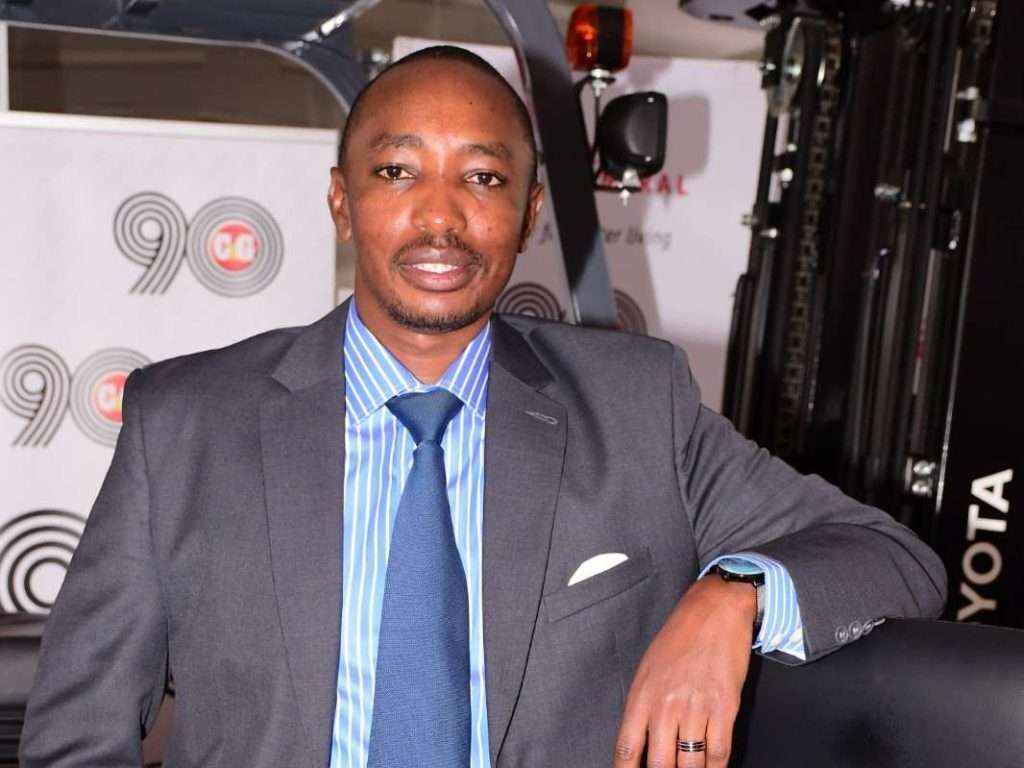
Car & General is entering another period of reinvention after nine decades of surviving changing markets. For CFO Sam Njenga, staying relevant necessitates remaining close to customers, investing in people, embracing technology and being willing to rethink what comes next.
Most of what crosses Sam Njenga’s desk is measured in quarters, but a 90th anniversary demands a longer view. What arises is the question of what this business has done, decade after decade, that allows it to still be relevant. The answer is found in a pattern of choices, sometimes unfashionable, made by people who understand that they are stewards.
When Sam talks about Car & General, he describes it as a company that has repeatedly adjusted to the world around it.
“Started in 1936 in Nakuru, it was mainly dealing with farm equipment and related construction equipment. With Nakuru being the hub of farming back in the colonial days, it was only sensible to start it there,” he says.
Ninety years after it first opened its doors, Car & General is having the kind of year most companies only dream of. Investor interest in the stock has been building since mid-2025, and this year the numbers gave it real momentum. From around KSh 33 a year ago, the share price has rocketed past KSh 340, a 935 percent gain in just 12 months, pushing the company’s market value from KSh 2.65 billion to KSh 27.41 billion. It’s now one of the best-performing stocks on the Nairobi bourse, and its rally has helped pull the wider market to a record KSh 4.1 trillion in value.
As Sam sees it, the company has been shaped by reinvention, with its survival hinging on repeatedly abandoning yesterday’s successful business model and finding the next opportunity.
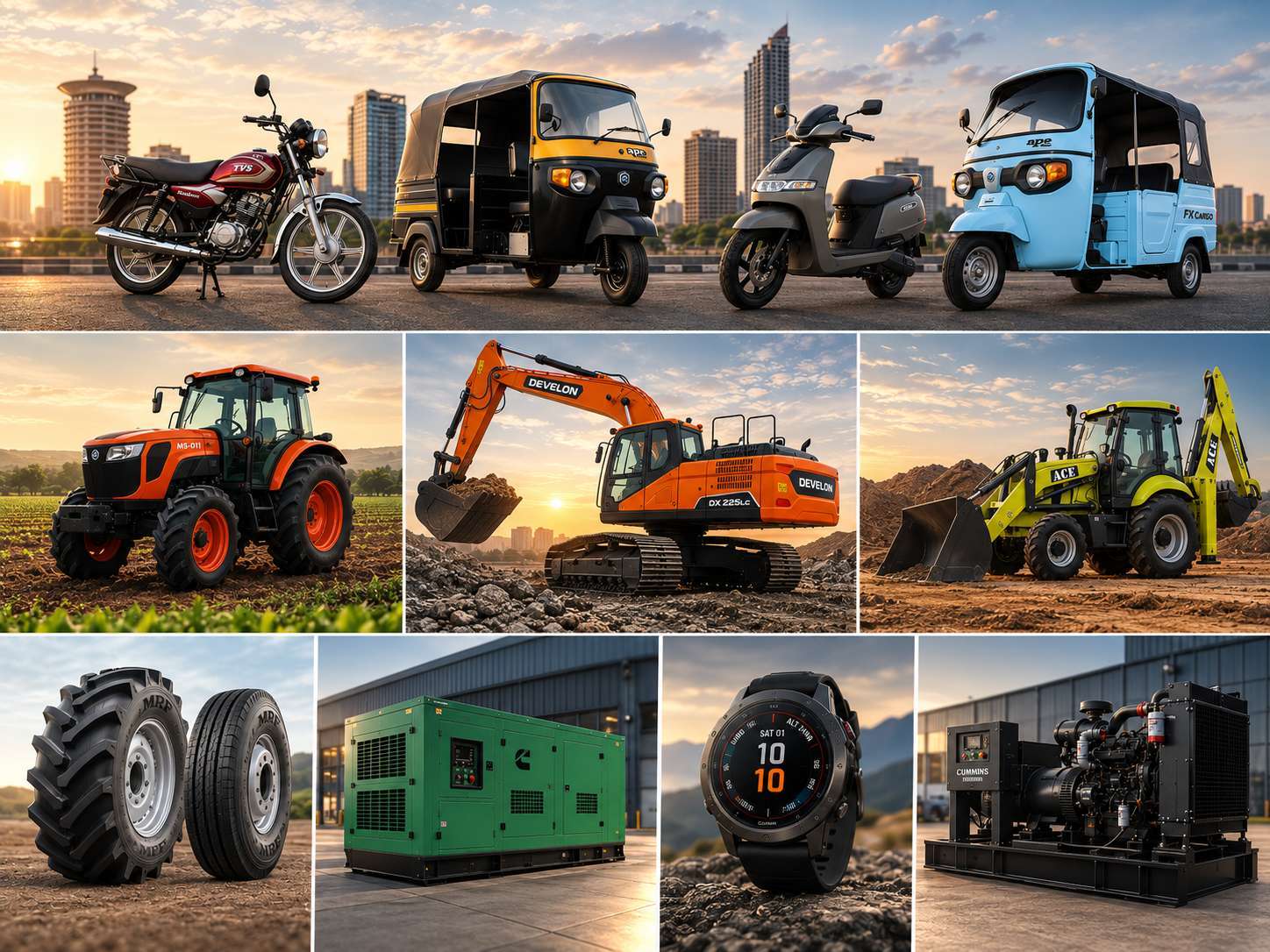
He recalls, “Over the years, Car & General has kept reinventing itself, moving from selling those items in Nakuru, to retreading tyres, to at some point selling white goods. These are things like refrigerators and washing machines, to a point where it went into motor vehicles. It was dealing with the likes of Alfa Romeo and Fiat, and we were the single distributors of these cars in East Africa. Currently the mobility space has moved from cars to two-wheelers and three-wheelers that facilitate last-mile transport connectivity.”
The ability to adapt has become central to the company’s identity. Today, Car & General has about 20 subsidiaries and associates across Africa with interests spanning mobility, agriculture, manufacturing, financial services, IT and real estate. Sam sees that diversity as part of how the group builds resilience.
Customer focus
“Right now, we are seeing a very different kind of customer base. Their expectations are quite off what we’ve always been used to, and customer experience means a lot to them. This includes how they can find you, how easily they can pick up information from the internet, how easy it is to interact with your team to understand your products better, how easy it is for them to even do a purchase online. We have to be agile enough to meet them where they want us to be. Otherwise, if you don’t go where they are, someone else is working towards that, and within no time, you’ll be left out,” he says.
This understanding of customers is part of Sam’s explanation for what allows a business to last. He sees speed of response as a competitive advantage.
He says, “It’s about how customer focused you are and whether you are flexible enough to align with customer expectations.”
For Car & General, investing in the mobility space has always meant investing in people. By supporting small businesses and creating pathways to financial independence, the group has helped millions of East Africans build livelihoods with dignity and confidence. In doing so, it has demonstrated that sustainable economic growth is created not only through large industries, but also through the aspirations and determination of individual entrepreneurs. Taken together, these individual journeys contribute to stronger industries and more competitive economies.
Growth inside the business
Sam’s own career is evidence of the internal development culture at Car & General.
“I’ve been here long enough, I’m almost a fixed asset,” he laughs. “I came in as a finance trainee and have grown through the ranks, across subsidiaries, at times working in Uganda, Rwanda, and Tanzania, heading different departments up to where I am as a CFO now.”
The experience gave him a view of the company that extends beyond finance. He was exposed to different parts of the organisation that forced him to critically think and understand how the business was operating.
“The most interesting bit for me was when I moved to audit, risk and compliance, because it gives you a bird’s-eye view of the business. You get to see everything that happens in the business. You get to meet everyone who is running the business, and ask the hard questions,” he notes.
His leadership philosophy is developing people internally, and the CarGen Leadership Academy is evidence of this. This was an initiative established to identify and develop leadership capability, strengthen technical expertise and prepare future generations to guide the organisation through an increasingly dynamic business environment.
The CFO as an innovator
One of Sam’s clearest examples of innovation came when he took over as CFO. At the time, much of the finance operation was manual and the incumbent had passed on suddenly. The experience pushed him to accelerate automation.
“I was very intentional around that time to ensure that we automate as much as possible. And I can tell you right now, I think there are only a few entities that can compare to ours in matters of automation. Today, I don’t need to ask my accountants to send me the financial statements or the management accounts at the end of the month. By the third day of the month, I have them automatically in my email,” he notes.
The value of technology is strategic for Sam. It gives finance leaders more time to understand the business.
“This has made our business more efficient, and now we’re looking at more strategic issues rather than waiting to hear when our management accounts will be ready or when we are going to do our business review. You can always do it on the go. Automation has been a big win for us, and I think that will be the game-changer for any other organisation that wants to move to the next level.”
Preparing for another 90 years
The challenges facing Car & General are not all within Sam’s control. As a diversified trading business, the group is exposed to foreign exchange, taxation and regulatory uncertainties.
“Most of the time, we come across macroeconomic challenges that are beyond us. Being a trading business, the biggest chunk of our business, about 70 percent to 80 percent, is from the trading side of it,” he says. “Being a trading company that is involved in a lot of importation, there are a lot of dynamics around things like foreign exchange, global logistical challenges and global geopolitics. Any uncertainties or fluctuations around these will hit us directly.”
His vision is to build an organisation capable of responding when conditions change. Sustainability is part of that vision as the company considers the environmental issues and impact associated with mobility.
“We’re looking at another 90 years. The building blocks or the foundation of it will be how we are aligning to sustainability. Sustainability for us is not just reporting profits but more to do with purpose. It is about enabling sound decisions, allocating resources wisely and ensuring that today’s opportunities do not compromise tomorrow’s resilience, both at company and global level. That has become increasingly important in an era defined by rapid technological change and economic uncertainty.”
The organisation continues to invest in electric mobility, cleaner energy solutions, digital platforms and financial services that expand access to opportunity. Battery-swapping infrastructure, innovative financing models, connected technologies and local manufacturing all reflect a willingness to anticipate tomorrow’s needs while remaining grounded in the realities of today’s markets. Its commitment to local assembly of motorcycles and three-wheelers demonstrates the same long-term thinking. Through businesses such as BodaPlus and other manufacturing initiatives, Car & General is strengthening local industrial capability, creating employment and supporting more resilient regional supply chains.
The journey continues
It is tempting, when celebrating a milestone, to look backwards and count the years, to remember the achievements and celebrate the milestones. As Sam sees it, history deserves that recognition, but institutions are built by continually asking what comes next.
“Knowing where we come from builds our identity, however on the flip side, institutional memory can also limit agility or innovation because you get to a point where people say, ‘We’ve always done it like this.’ That’s why it calls for the tone at the top to be aligned towards innovation, digitisation and agility. You have to temper institutional memory with flexibility to changing times and environments,” he says.
For the next 90 years, change is guaranteed. But if history is any guide, the organisation’s greatest contribution will remain its ability to empower people and strengthen the industries that drive progress across the region it has proudly called home for nearly a century and increasingly beyond it.