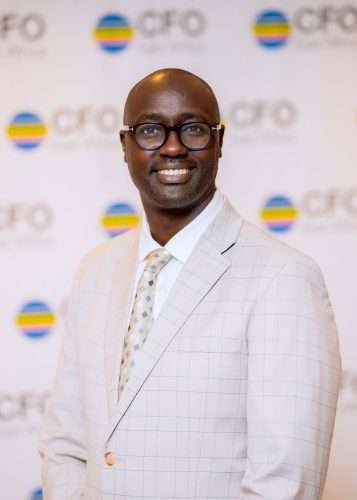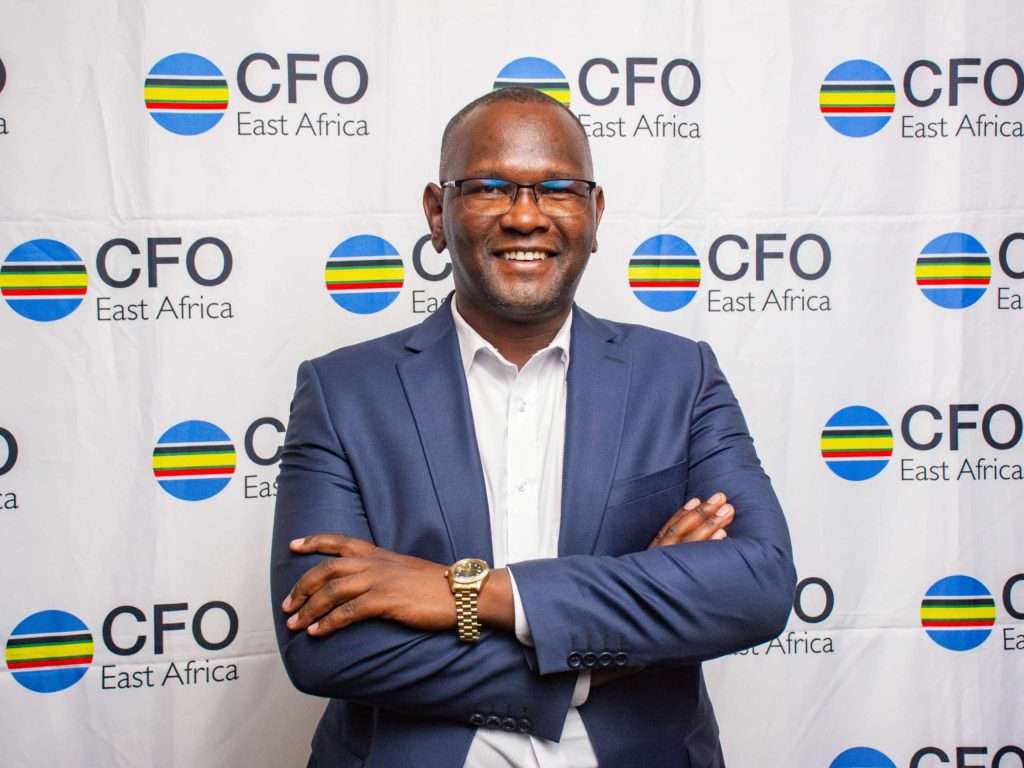
Naivas CFO Jonathan Ng'ang'a decided he wanted to be an accountant in the third grade. He shares the governance secrets behind the company's longevity in the supermarket sector and explains the value of trusting your team.
Tell me a little bit about yourself and how you ended up where you are today.
From when I was a young man, I chose my career quite early on. I remember when I was in grade three, my mom asked me what I wanted to be when I grew up, and I said an accountant. It ended up there. It happened that I also had the flair or talent for it over high school and campus. It was not a real challenge, and from a practicing perspective as well, that is how I ended up in accounting or in finance.
What excites you the most about what you do?
Mostly, seeing the numbers coming in and being able to influence the numbers at the end of the day, together with the rest of the management team. Today I no longer do accounting. Today I play a management role in finance. What I really enjoy from a strategy perspective is being able to advise the business in various finance-related and strategy aspects, and seeing that bring the numbers in. That is what I really enjoy quite a lot.
Do you find that your role has changed as time goes by?
Yes, today accounting and finance is not about bookkeeping. That was the case in the past. If you look at what senior leaders in finance are doing today, it is certainly not just reporting the past, but projecting what is going to happen into the future, identifying risks, and determining how those specific risks are being mitigated.
What are the memorable moments of your career?
Consider the retail supermarket sector; ten years ago, we had entities that no longer exist. Management must look at three key things closely. First, every store must be run as a single business entity that makes business sense. Second, expansion must be rationalized from a return on investment perspective. Finally, working capital management is critical, involving proper supplier management and putting the right items on shelves for faster inventory turnover. When I look back, we have managed that quite well. As my role evolved, I moved away from the day-to-day management of these elements into a strategic role, managing the business with an eye on the future. Adopting digital transformation is also a key focus moving forward.
What would you say are some of the challenges that you have had to overcome and what did you take away from them?
One challenge was transforming from a numbers person into a strategy person. This required a significant shift in my thought process about six or seven years ago. Secondly, a finance leader must trust the people they work with, ensuring they have the capability to make the right decisions. Once you develop your teams to that level, you can step forward and look at the business from a future perspective. We learn from the past, but it is gone. What got us to where we are today will not necessarily get us where we want to go tomorrow, so we have to keep innovating.
What, in your opinion, is the secret to Naivas’ longevity?
It all boils down to governance. As an institution, we learned quite early on that this is quite critical. Even though it was a family business in the past, and it is still a family business today, we put the governance aspects in place quite early on so that we can ensure we mitigate some of the risks mentioned earlier. For a retail chain, working capital is key, and customers are critical because you have to ensure they are walking into your stores. The associates or employees are also quite critical because without the right attitude, customers are not coming into your store. Thirdly is your operations. Working capital for retail is basically inventory and management of supplier debt.
If you could go back and give your younger self one piece of advice before you became a CFO for the first time, what would it be?
I would have trusted teams earlier. In the past, I really put in the hours, and a lot of items came to me for sign off. Today, with the right controls, that no longer happens.
How do you think someone who knows you, like a friend, would describe you?
They would say I am a workaholic. Not necessarily always at work, but I create time for family. For me, the weekends are really family time, ensuring that I am with my family. For weekdays, it is really hard to manage.
What role has mentorship played in your career, and how do you, in turn, bring the best out of your team?
In terms of mentorship, I have worked with our current CEO for about eight years. Back then he was not our CEO; he was our chief of strategy. He played quite a key role in my development to where I am today. My favorite book is the Seven Habits of Highly Effective People. I keep speaking to the teams around that.
If you had to prepare CFOs in East Africa for one big shift that you think is coming in the near future, what would it be and why? It will be AI. The reason is because there is a future to it. In terms of automation of some of the things that we do today, that shift in the next few years will impact CFOs in a big way and actually has started to do so.
In the past, we used robotic agents, automating some manual tasks. What we are planning to do is embark on a digital transformation journey that encompasses a lot of AI and automation. In the past, it was just robotics and automation of a few processes here and there.
What is something that you do outside the office that makes you a better CFO? Engaging in community work makes me a better CFO. It is basically two things. Back home from where I come from, I do quite a lot of engagements with young people, telling them they can make it and they have what it takes. Secondly, I am also a board member across a few schools, so I try to create time for that as well.
Do you have a nickname? What do the people who know you call you?
They call me Jonah. This is short for Jonathan.