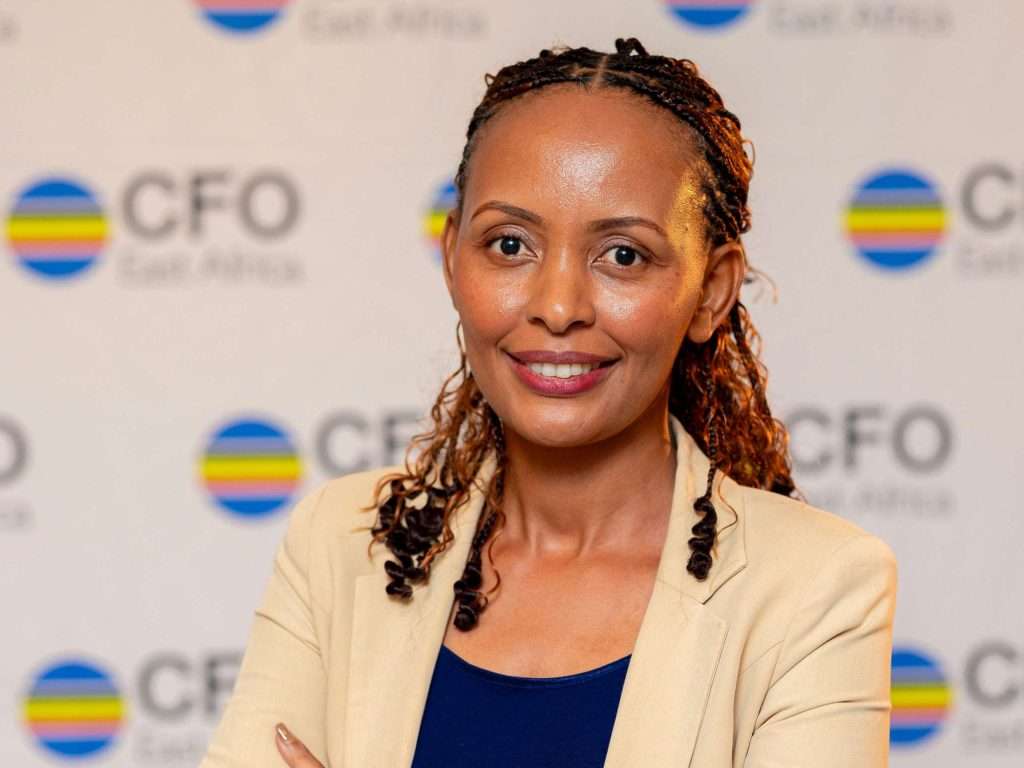
Josephine Mbabazi’s path to leadership bypassed the traditional corporate ladder, forcing her to build financial systems from scratch and lead teams through the uncertainty of the Covid pandemic. As head of corporate services at Rwanda's Capital Market Authority, she uses her empathy and strategic mindset to shape national policy and advocate for sustainable economic growth.
There is a particular kind of pressure that finance leaders rarely speak about openly. For Josephine Mbabazi, director of corporate affairs at Rwanda’s Capital Market Authority, that pressure arrived in 2020.
Josephine came up through manufacturing and construction companies in Rwanda, accumulating experience in industries as different as beverages and building. She was rising through the ranks when the pandemic hit, tasked with leading a team of over 60 people to deliver financial results even as colleagues resigned. Uncertainty had become the defining condition of the working day.
“It showed me that empathy is something not to take lightly, and that hands-on training matters. Making sure you deliver a message with no ambiguity, so that people can get you the right results. That has been an eye-opener for me in terms of how a team should be led. Clarity in communication, clarity on deliverables,” she says.
Josephine is clear about the fact that one cannot claim to be a good leader on theory alone. In her experience, being placed in a position where one is responsible for results is the only real classroom. Leading through Covid was markedly different from the challenge facing CFOs who were already established at the time. At the time, Josephine was simultaneously training people who had never done the work before and trying to keep operations running in real time.
“Other CFOs were probably looking at different things. But for me, that was the time I was rising through the ranks. People could get sick. You had to fill in technically and strategically. I was trying to climb and create a platform that they already had. So it was different for me,” she explains.
Embracing short-term discomfort
The willingness to accept short-term discomfort in pursuit of longer-term gain is one of Josephine’s defining traits. After leaving Inyange Industries, arguably Rwanda’s largest beverage manufacturer, she moved to Ruliba Clays, a company she describes as four times smaller. On paper, the move looked like a step down. But it forced her to build financial and administrative systems from scratch, structure financing for a major plant expansion and think about investment execution in ways that a more established environment would never have demanded of her.
“I felt like maybe you would underestimate the quality of a CFO there. But fortunately that was the time I actually learnt a lot, because I was in a sector that was kind of new. You had to set up the whole system administratively and financially, and the company was also expanding. I had to think about how to get the financing and structure the new investment. Those are things I would not have gained had I stayed in the big pool,” she reveals.
As Josephine sees it, the finance leader building structures for growth is doing harder and more instructive work than the one managing systems that already exist. Moving across sectors also demands something she considers essential and underrated.
“You cannot just bring your technical expertise as an accountant and say you can fit anywhere. Yes, you can, but it requires some humility and a willingness to learn what the applicable tools are in a certain industry, for you to be able to excel as a finance person,” she says.
Her current role at Rwanda’s Capital Market Authority is the sharpest turn yet. She now works on the policy side, advocating for tax incentives, how different funds operate and what legislation Rwanda’s financial sector might need. It is territory she never thought she would occupy.
Shaping national finance policy
“Generally, I enjoy finance. I used to enjoy the numbers, looking at the strategy short-term and long-term and seeing them come to fruition. It is different now. I am constantly thinking about policies that would improve access to capital through Capital Markets. Getting to know different funds, how they operate, what laws they would need enacted in Rwanda. I’m enjoying it,” she adds.
Although artificial intelligence is proliferating at neck-breaking speed, Josephine does not share the anxiety she observes among many of her peers. She reaches for an analogy from Rwandan roads. Automated speed cameras, called Sophias, have replaced traffic police at junctions across the country. They issue tickets instantly, without negotiation and without judgement. The machine, she points out, is programmed. It is not thinking.
“There is a difference between a machine and a person. Your critical thinking is supposed to be up there. You need to understand that the people who made the machines were people who thought about what it would look like if there was no police officer who might take a bribe or punish people unfairly. If you are a finance person who is not thinking strategically and critically, and you only execute what is written by rule of law, then even those rules and laws won’t make sense, because you don’t understand what was behind their creation. Machines are not going to be the leaders we are talking about. They are not empathetic,” she says.
Josephine is also candid about the gap she has had to close in her own skills set. She describes a former version of herself who was quick to judge those whose questions seemed obvious.
“My brain was so fast that I would be very judgemental. Trying to accommodate all of that has been a challenge, even to pause and say maybe this is something to accommodate and look for a way out. My younger self would have benefited from learning to communicate better and also stomach some of it,” she said.
Empowering people and community
She pushes the same principle with her own team, encouraging professional qualifications across functions, including HR and procurement.
“It is very hard to argue with someone who has gone to school and knows what they are referring to, other than someone who is just firefighting. The thinking is totally different because their mind is sharpened,” she says.
On weekends, Josephine sings in a church choir. She describes it as a ministry rather than a hobby, one that connects her with people.
“I enjoy going to church and being around people of the same thinking. It takes you to places you would never think of going if you did it alone. We go to weddings, visit the sick, support those who lost their loved ones. We fellowship among ourselves. Those are the things that I enjoy,” she says.