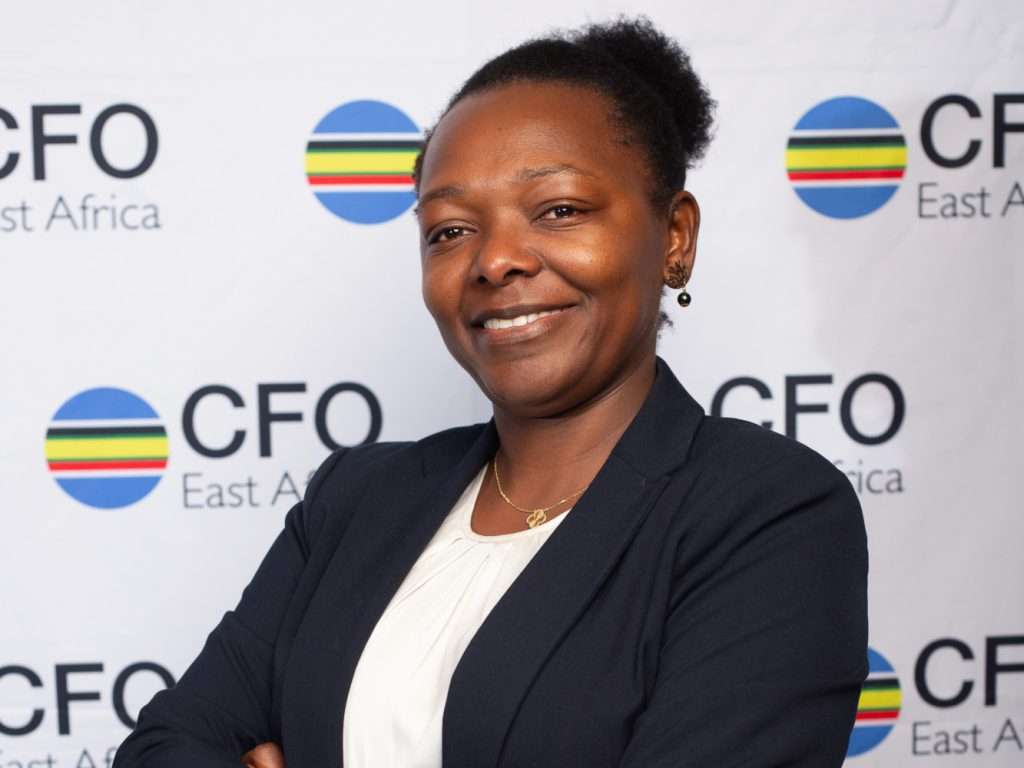
Lake Turkana Wind Power CFO Alice Wathika has broken barriers as the first female finance leader in one organisation after another. In a conversation with CFO East Africa, she reveals how her passion for delivering impact at the community level has defined her trailblazing journey.
What have been the highs and lows of your career?
I describe my career as a trendsetting adventure, and being the first in many capacities as a woman has shown me that hard work truly pays off.
I was the first female manager at Grain Bulk Handlers - now Bulk Stream - and the first female CFO at Salama Fikira, a security firm operating in a male-dominated industry. I then transitioned to the energy sector, where I became the CFO of Kipeto Energy without prior experience in that field. My main responsibility was to oversee the company’s transition from reaching financial close, construction and into operations.
From Kipeto, I moved to Lake Turkana Wind Power (LTWP), Africa’s largest wind farm, where I am also the first woman to hold my position. I split my time between our site in Loiyangalani, where most of our staff is based, and our Nairobi office. I love this role because LTWP is making a significant impact in various areas. We contribute 12 percent of the power to the Kenyan grid, we are the largest private employer in Marsabit County, and 80 percent of our employees come from the county.
Additionally, through our Winds of Change NGO, we have implemented over 100 community projects in education, water, and health. I am passionate about community impact and always try to be present for project handovers. One particularly humbling moment was when we handed over the largest male ward in Laisamis. I felt immense joy seeing locals who previously had to travel long distances for medical care celebrating the reduced journey.
As CFO, I ensure that everyone in the organisation understands the importance of budgeting and financial planning. This approach has led to significant cost savings, improved forecasting, and careful procurement practices. Empowering section heads to own their budgets has enhanced their capabilities and understanding of our operations.
On the downside, working in a male-dominated sector means that there are few women in renewable energy, which limits the number of female mentors I can consult or collaborate with. It is crucial to increase female representation in the industry, and I encourage younger women in finance to consider this field. It's a fulfilling industry where you can see the impact of your work every day, contributing to a sustainable future for the next generation.
Tell us about the company you work for and what its purpose, culture and values resonate with you as an individual.
I work for LTWP, Africa’s largest wind farm, which was commissioned in 2018. We have 365 turbines that each generate 850 kW of power. We are currently in our sixth year of full operations and have delivered 12 percent of Kenya’s total grid energy consumption. Our work has created a strong body of evidence demonstrating significant environmental, economic, employment, and community benefits.
The success of LTWP highlights the potential of renewable energy to combat climate change while reducing Kenya’s heavy reliance on fossil fuels. In 2023 alone, we avoided 605,428 tonnes of CO2 emissions and generated 11.04 percent of Kenya's grid power, displacing approximately $100 million in fuel imports that year.
As the largest private employer in Marsabit, LTWP serves as a beacon of hope for many in the community, which aligns closely with my belief in economic empowerment. The people here are warm, welcoming, and respectful, making me feel at home whenever I’m on site. The local team has a strong spirit of learning and is never shy to ask questions, fostering a valuable mutual learning process.

How many people do you manage as CFO and what is your management style?
As CFO, I primarily support the CEO, and my role is largely strategic. I interface with external stakeholders, including lenders, banks, and regulators, as energy is a key aspect of Kenya’s Vision 2030 development agenda and we are key stakeholders in power generation. Internally, I focus on the big picture, ensuring we deliver on our strategy within budget while maintaining efficiency and prudence. I also prioritise support for our team and the local community, all while providing a return to our investors.
I describe my management style as dynamic, blending elements of transformational and participatory leadership. I emphasise collaboration, transparency, and mutual respect within my teams. By establishing a clear vision, I empower team members to contribute effectively toward achieving our organisational goals. As a transformational leader, I promote innovation, adaptability, and motivation, creating an environment where team members are encouraged to grow and excel. I help everyone see the bigger picture in every contribution they make, fostering a sense of ownership in our mission to provide green energy to the grid. Finally, leading with empathy allows me to connect with my team members, helping me approach them in ways that bring out their best.
How did you end up as an accountant? If you had a different career in mind, how did you end up shifting?
During my school holidays, I sold maandazi which introduced me to finance and the importance of balancing numbers. This experience led me to study accounting at Strathmore University.
Initially, my passion was in wildlife and tourism, which influenced my university application. But I never pursued that training further. Along the way, I fulfilled my dream of contributing to wildlife and tourism by running a successful ‘voluntourism’ organisation on a pro bono basis. Through this initiative, I helped over 600 volunteers from around the world connect with various charitable children's homes and community projects in Kenya.
Is there any particular event that has happened that has shifted your perspective on life?
As part of my work, I spend a lot of time at our site in Loiyangalani. Before the wind farm was built, that region was underdeveloped. There were no roads and very little development. The area is very hot, and the residents there grapple with very harsh climatic conditions. The locals are very resilient and determined to succeed in life. Those who are part of the LTWP team have an amazing attitude. I have colleagues who have never gone through formal schooling but are working for us as drivers, security personnel, hospitality and administration staff. They have gained meaningful employment that has drastically improved their lives, allowing them to earn a decent income and send their children to school.
The wind farm has not only brought clean energy to the grid but also transformed the lives of a community that was once forgotten. It is a powerful reminder of how renewable energy can create opportunities and uplift entire communities, fostering hope and a brighter future.
Did you have a nickname growing up? What was it and why did they call you that?
Not really, but I remember as a young girl growing up, I had lots of energy and enthusiasm for everything I did—whether it was racing my friends on the playground or diving headfirst into new hobbies. I like to think I brought a little spark to any situation, always ready to light up the room. Now, it reminds me of the passion I carry into my adult life.
What do you like to do outside of work?
I have a deep love for nature, and I enjoy spending my time outdoors mainly running and hiking. I’ve summited Kilimanjaro once and Mt Kenya three times. Since my running debut in October 2023, I have completed over ten half marathons and participated in a mountain-to-mountain ultra run in Nyeri courtesy of my running club Urban Swaras. Trail running is my favourite because it allows me to blend running with hiking while immersing myself in beautiful scenery. On my bucket list is to run a marathon, explore Marsabit, including Mt Kulal and have a hiking adventure through the Ruwenzori Mountains in Uganda.