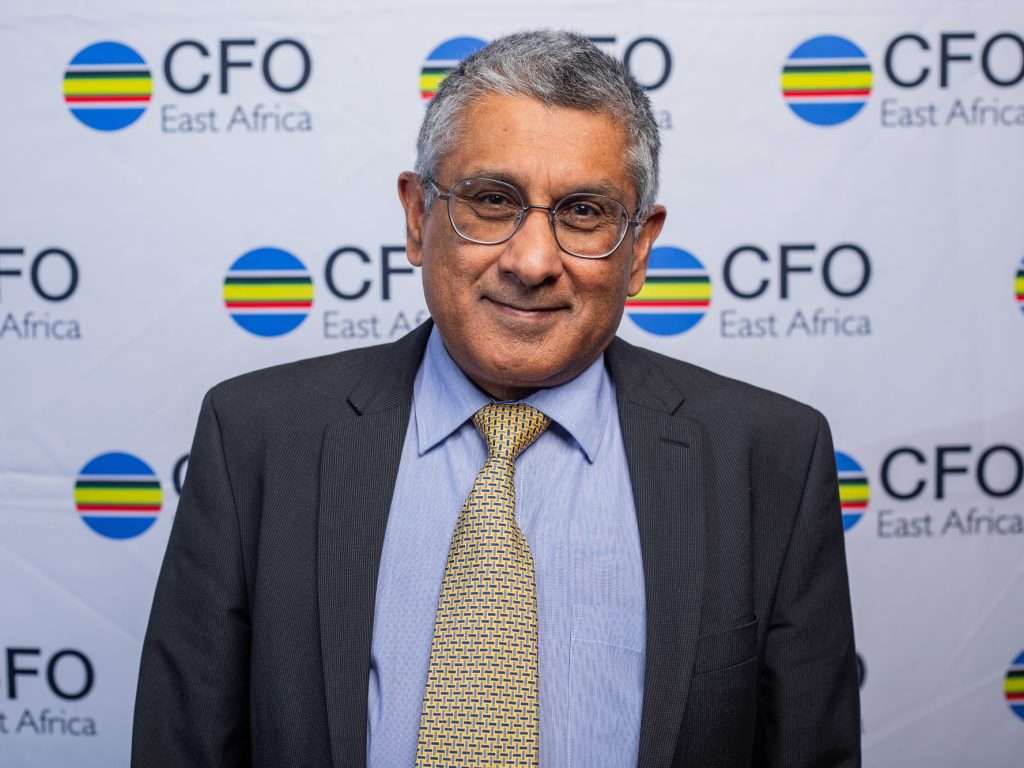
In December 1995, while most of the world revelled in the festive season, Ashif Kassam had his head buried in every piece of literature he could find about general insurance. The firm where he worked as an audit manager, Samvir & Co, had received an opportunity to audit an insurance company, the first one in their portfolio, and Ashif accepted the challenge to lead this engagement.
“We didn’t have any technical material, audit programs or methodology. I got a few things together and went and did the audit. Not only did we deliver on the engagement, but we also discovered some control weaknesses that had resulted in the client not claiming some significant reinsurance by error. The feedback that I got from the head of reinsurance was, ‘I don’t believe that you don’t understand insurance because you came here pretending not to know this sector, but the audit works showed otherwise, and you made our life difficult with the management.’ I took that as a compliment,” he says.
This assignment, a feat for an accountant barely two years into his career at the time, would set the tone for the rest of Ashif’s professional journey. Eager to chart his own path, Ashif co-founded RSM Eastern Africa in 2004 and has been at its helm ever since. The firm has grown into one of the region’s leading audit and advisory firms, seeing numerous companies through strong headwinds and helping put the wind back in their sails.
“About two years ago, we helped the shareholders restructure a business that underwent significant turmoil, one of Kenya’s oldest manufacturing companies called Kaluworks, which had been placed under administration. RSM played a big role in restructuring that company and getting it out of administration. It was a very difficult restructuring, and I don’t think Kenya’s history has seen a restructuring with that complexity that has worked out so well,” he says.
Ashif’s achievements are even more striking given that accounting was not a field he originally intended to go into. After his A-levels, while he was waiting to enroll for a financial management degree, he started to help out at a petrol station owned by one of his father’s friends.
“While I was helping him run the service station, he told me, ‘You’re here the whole day. Why don’t you join a college and do something for one or two hours?’ So, I asked him, ‘What should I do?’ And he told me to do accounting because, in anything that you do, numbers will always help you. He said maintaining books was not his strength, and he always struggled because of that in business. So, I went to Strathmore to join the course and failed my entrance exam,” he says.
A different journey
Not one to wallow in self-pity, Ashif quickly sought admission at the Kenya School of Professional Studies and began a CPA course. After his first semester, he joined Strathmore University, where he completed his ACCA certification. Although mathematics had never been his strong suit, Ashif took to accounting like a duck to water. Within only 17 months of joining Samvir & Co, he had risen from audit assistant to audit manager. As he looks back on his path, he recognises his love for the profession and his ethical boundaries as the driving force.
Through his role at RSM, Ashif has played a key role in shaping global audit standards. As part of the HLB network, the firm developed their global audit manual. It was the first time a global audit manual for a network had been written out of Africa. In 2007, he was selected to join the board of the International Audit and Assurance Standards Board (IAASB) as a member from Africa and the Middle East, serving for one year as a technical adviser and three years as a full member.
Now, Ashif is spearheading the launch of RSM Eastern Africa’s alumni network, a move he hopes will build long-term relationships with former employees who have risen to leadership roles in finance and accounting. This was also the impetus behind RSM’s decision to partner with CFO East Africa.
“I think bringing CFOs together to discuss their challenges was the main motivation. There was no forum for CFOs before. Most CFOs are members of ICPAK, but ICPAK involves a number of other bodies and career paths, not just CFOs. This collaboration created a forum for CFOs,” he says.
The bigger picture
Ashif’s approach to financial advisory and consulting has been shaped by years of experience in auditing and restructuring businesses. He believes that while CFOs often have deep industry knowledge, advisory services offer something invaluable - a broader perspective.
“I think all accountants have the same skill sets. Where audit and advisory come in is that the firms providing these services have a much larger view of the industry. Sometimes it’s not about the CFOs not knowing how the industry runs. They can probably teach any consultant or auditor how it runs. But it’s about helping CFOs and management see blind spots they might not be seeing. It’s about providing a bird’s eye view of the business. Sometimes when you are in the forest, you don’t see the woods clearly. Bringing a different perspective and industry experience helps. Controls that worked 10 or 15 years ago might not work today,” he explains.
As RSM Eastern Africa begins its third decade, Ashif is keen to ensure the firm continues to develop top-tier talent. Over the years, he has observed that technical knowledge is not the be-all and end-all of professional success. He advises early-career finance professionals to develop resilience and adaptability and be willing to commit to the learning curve.
"A lot of people want to grow quickly without committing the first two, three, or four years to setting that foundation and understanding. One of my lecturers, Professor James McFie, said that an accountant is a jack of all trades and a master of one. He needs to understand all industries and aspects but is a master of understanding the figures and how they stack up. Jumping very quickly in the early stages of a career doesn’t help," he says.
Work-life integration
Ashif’s role as executive chair of RSM has given him a bird’s eye view of how the CFO role has evolved. Although many believe CFOs have transitioned from number crunchers to strategic leaders, Ashif argues that the fundamentals of the role remain unchanged. He believes that while strategy is important, execution is what distinguishes a successful CFO.
“The issue is that the complexity of business organisations has grown. With technology, you have multiple branches, multiple countries, and multiple aspects to deal with. Economies are growing, and the scale of business is growing. So, it’s becoming a critical part. Earlier, CFOs were the chief accountants. Today, someone produces the information, and how you interpret that information is becoming very critical. Anybody can develop a strategy. You can get consultants to do that for you. But it's the implementation that is becoming more critical. To me, it’s moving away from the routine areas of compliance to the whole new ambit of execution. What is your execution strategy that differentiates you from someone else?" he says.
For Ashif, professional growth and personal commitment are inseparable. He disavows the notion of treating work and life as separate realms, preferring instead to adapt to the everyday demands of each one.
“There are times your family will need you more, and there are times work will need you more, especially from January to April or May. There will never be a balance. This is for any industry. You look at the army or any profession; there’s always that issue of understanding what the profession needs from you to grow to the top and how you integrate this work-life challenge into what you’re doing. I’m always a believer in work-life integration rather than work-life balance,” he says.