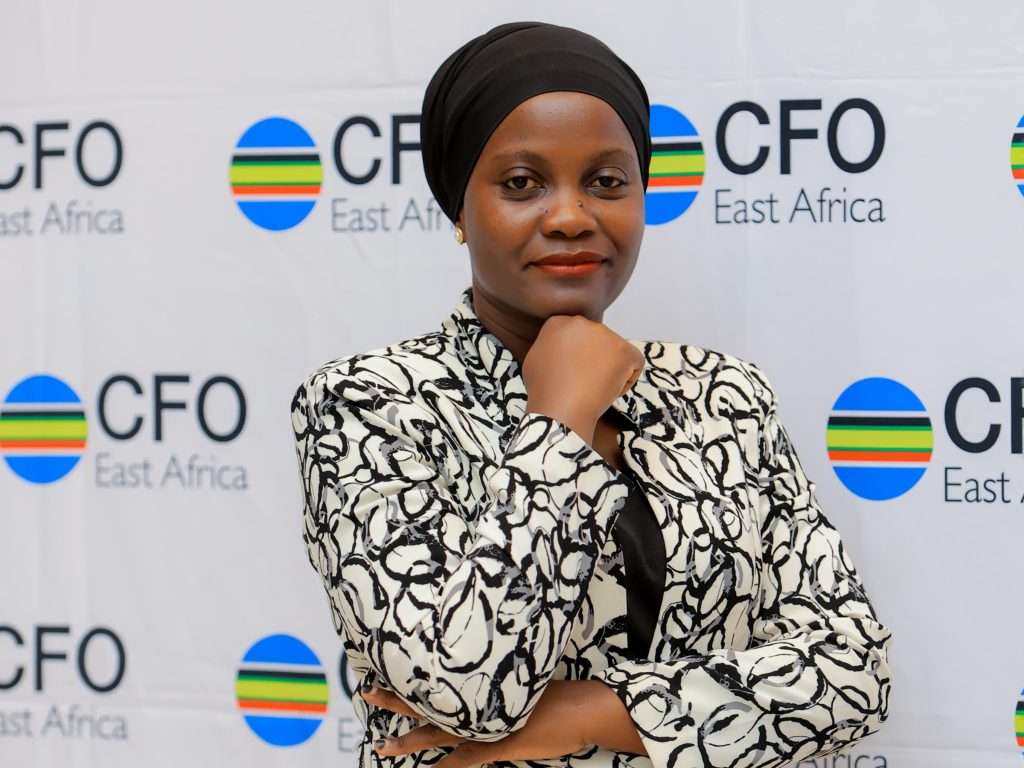
When asked to share her journey into the C-suite, Aminah Galenda’s response is modest. “I might have one or two things to say.” But as the head of finance at Tropical Bank begins to share her journey, the irony is clear. Her “one or two things” are a masterclass in resilience.
For years, Tropical Bank CFO Aminah Galenda carried the responsibilities of a CFO without the title. She traces her career back to Equity Bank Uganda, where she began as a bank teller shortly after graduating from Makerere University. Within three years, she had moved from her position as a teller to supervisor and then to branch operations manager. Her heart, however, still held a distant ache for a finance role.
“Every year when asked where we wanted to work in our appraisal forms, I always indicated finance,” she recalled.
In hindsight, Aminah wishes she had acted upon her desire as opposed to just writing.
“Perhaps the journey would have been shorter. I work in a male-dominated field and the few women there have had to create space for themselves by speaking up.”
She finally transitioned to a fixed asset accountant role that was less clerical and more analytical. The role, she says, was her first true test, as she had to learn how to meet the competing needs of different stakeholders. Fortunately, she passed and soon got promoted to financial accountant, a position she held for three years before being headhunted by a different bank as a financial controller.
Making good decisions
The new position was a blessing as it led her to her mentor, whom she described as her game changer.
“When he brought me under his stewardship, I was not just a financial controller. He deliberately coached me to be a CFO,” she said.
By the time her boss left two years later, he was confident of her abilities and even recommended that she take over as CFO. However, this was not to be. Instead, she was appointed acting CFO, alongside her role as financial controller.
Unknown to her, she would hold the two positions for the next year. Even before she could fully grasp the weight of her responsibilities, Covid-19 struck, throwing her into a crucible.
At a time when finance and executive functions were the anchors of most organisations, Aminah is thankful that she used her instincts, values and strict adherence to bank policies to make decisions for the good of the bank. She also acknowledged the encouragement she received from her mentor during the season.

A mistake-friendly environment
In May 2024, Tropical Bank offered her the CFO position. A few weeks after she joined, the bank merged the finance and administration departments, and once again she found herself handling additional roles and responsibilities. Her first lesson in the new role came when she unsuccessfully requested a salary increase owing to her added responsibilities. Frustrating as the experience was, she learnt how to handle office politics and how to decode “the meaning after the meaning”.
Having benefitted greatly from her mentors, Aminah is a big advocate for mentorship. Her leadership has always been marked by an open-door policy that allows staff to openly express themselves and to try new things, a lesson she picked from her first mentor.
“My approach is not punitive. Instead, I create an environment where people can make mistakes. In cases where the mistake may be punitive to the organisation, I employ a hands-on, eyes-on approach.”
Initially, her approach was not welcomed by some members of her staff. “One manager told me that they felt that I was looking for ways to get them laid off.”
She quickly realised that she needed her staff to support her and thus made it clear that as long as performance was optimal, no one would get laid off. She also made sure she was always honest with them, and with time they gave her their support.
Checking in
“My direct and indirect reports don’t come to ask for solutions from me. Instead, they bring solutions that we discuss. We adopt those that work and discard the ones that don’t. I thought of how I could indirectly train them because sometimes people are not courageous enough to ask to be trained. I train through strategic delegation of tasks to direct reports reflecting on their capabilities and skills,” she said.
In addition, Aminah employs bi-weekly check-ins on key business-as-usual activities, which allows the team to get ahead of any issues ahead of time and free up time for more cross functional business partnership support. The idea for this mechanism came from the book The Four Disciplines of Execution, where she picked the lesson on creating accountability cycles and delegating roles only to people who can and have capability to influence them.
“As a leader, you must decide what you want executed and how everything fits in and then structure activities in such a way that you will get results. Later, you must create a consistent accountability cycle,” she explained.
Aminah envisions the CFO role evolving into that of a default business leader. She believes that as organisations adopt AI and other emerging technologies, future CFOs must know how to combine AI into business standardisation processes and focus on the decisions that need strategic human intervention. This, she said, will give room for progressive or futuristic trends.
“We are already on that journey. We’re just propelling it to bring it to fruition”, she says.