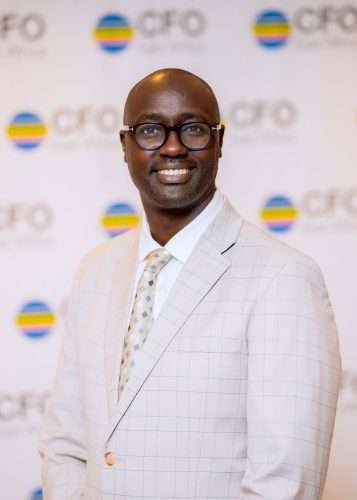
CMCL founder and CEO Carol Musyoka, who has more than a decade of experience in corporate governance consulting, has joined the experienced panel of judges for the inaugural CFO Awards for East Africa. The seasoned lawyer and entrepreneur speaks to CFO East Africa about the importance of big-picture thinking for C-level finance executives.
What attracted you to join the panel of judges for the awards?
I think it is a good opportunity to recognise and celebrate good CFOs. I have sat on a lot of boards, and good CFOs are strategic thinkers. The bad CFOs are just number crunchers. These awards help recognise people who may not be widely known, but are doing great work in driving strategy within their organisations.
How do you think the role of the CFO has evolved in recent years? And as you evaluate the different candidates, how are you going to take that into account?
I don’t think the role of the CFO has evolved. For as long as I have been recruiting for boards, good CFOs have always been strategic thinkers who go beyond the numbers. It's not just about balance sheets and financial reporting. So, I’ll be looking for CFOs who demonstrate that strategic breadth and depth and who can connect the dots.
How do you think your career journey will bring a unique perspective to the judging panel?
I have recruited for boards for a long time, so I think I know what makes a good CFO. I understand the value of a CFO who is not just focused on numbers but is strategic and sees ahead. A CFO has to be someone who can see the bigger picture and bring creative solutions to the table. That experience allows me to look at candidates not just in terms of financial expertise, but on their ability to add value to the entire business.
As part of the judging process, you will evaluate candidates across different categories and from different backgrounds. How do you level the playing field when reviewing the achievements of diverse candidates?
I do not see the value of diversity for the sake of it. If you level the playing field, the cream will eventually come out on top. It's not about putting women or Africans in certain positions just because they are women or Africans. I don’t think it would be right to do it just to fill a quota and say ‘we are championing diversity’. It has to be about merit. If you create an enabling environment, women will eventually find their way into these positions.
How do you think these awards contribute to the finance profession?
The awards recognise people who are doing well in their field. They also elevate and raise the profile of people who may not be known. So, if I'm looking for the best CFO, or if I'm looking to recruit a CFO, the awards help to surface the talent in the market, and makes it very easy for talent hunters to know where to start. It doesn't necessarily mean that this is all that we use, but it helps to at least create a point of entry.
Which qualities and attributes will you be looking for in the nominees?
For me it's breadth of knowledge and depth. Depth is not enough. There has to be breadth too. It's not just about the numbers. It’s about more than that. Are you able to speak beyond just the balance sheet? Are you able to speak at a macroeconomic level? What are the macroeconomic factors that impact you? Are you able to think about the political economy? How does that impact you? Are you able to think about the global economy? Are you able to talk about what's going on in Europe and in China?
So, you must think beyond just Kenya, and look at what's going on at an East African, at an African, at a global level that may or may impact you. That's where I'm always looking. That for me is a clear mark of a big strategic thinker.
How do you think CFOs can position themselves to drive sustainability and innovation in their organisations?
If sustainability is not a strategic tenet of the organisation, then as a CFO, I'm not going to do it. I'm here to deliver what needs to be delivered. What doesn't get measured doesn't get done. So, if it's not measured, then I just won't do it.
Now, if we're in an extractive industry, like the cement or mining industry, those are things that can affect the environment and the communities around us. But that’s at the organisational level. So, for me, the question is moot without looking at the organisational strategies with regards to sustainability.
You have heard of greenwashing. For a lot of companies, if it’s going to help them sell their product more, then yes, they are going to push for sustainability, because at the end of the day, they have a strategy. Is this going to help us sell our product more? Will this allow us to get into the European market? That means they have to show that they're sustainable, and they will.
But it’s either a shareholder initiative or a board initiative. Does the CFO have the gravitas to make that change? I don't know.
What do you think are the biggest challenges CFOs are facing today?
I would say regulation and taxation. It is very difficult to plan around this tax regime. That’s a key issue. And getting talent.
What advice would you give to future CFOs who are aspiring to be recognised at an awards level?
Think beyond the numbers. You're not a number cruncher. You're a dealer. You're supposed to be able to go to the shareholders, go to the directors. You've got to be able to understand your markets. You need to be a big picture thinker. You have to be able to give confidence to the board that this ship is being steered right. I would say the CEO is the head, but a CFO is the heart. Because all the key vessels go into the heart. Once the heart stops beating, the head can't function.The CFO should understand every single aspect of the business, not just from a numbers perspective, but why it is an important part of the business.
Which trends or opportunities in East Africa should CFOs have their eyes on in the coming years?
Without a doubt, I think tech and its potential impact on the bottom lines, its potential impact on people, and its potential impact on processing in the manufacturing space. They have to understand what's coming down the line. Because something can come from left field and just completely wipe out the business. I'll give you a good example.
There's a Chinese AI company called DeepSeek. They say they are providing AI at a fraction of the cost of American companies. They claim that they spent about $5.6 million to develop their algorithm, while the American companies have spent billions of dollars. As a result, a lot of the tech stocks in the US declined. I don't want to call it a black swan event, but it probably is. For me, if I were in business, that would keep me up at night.