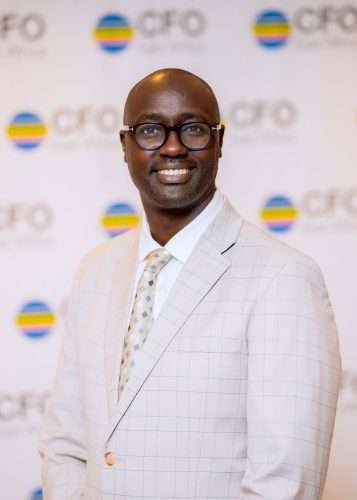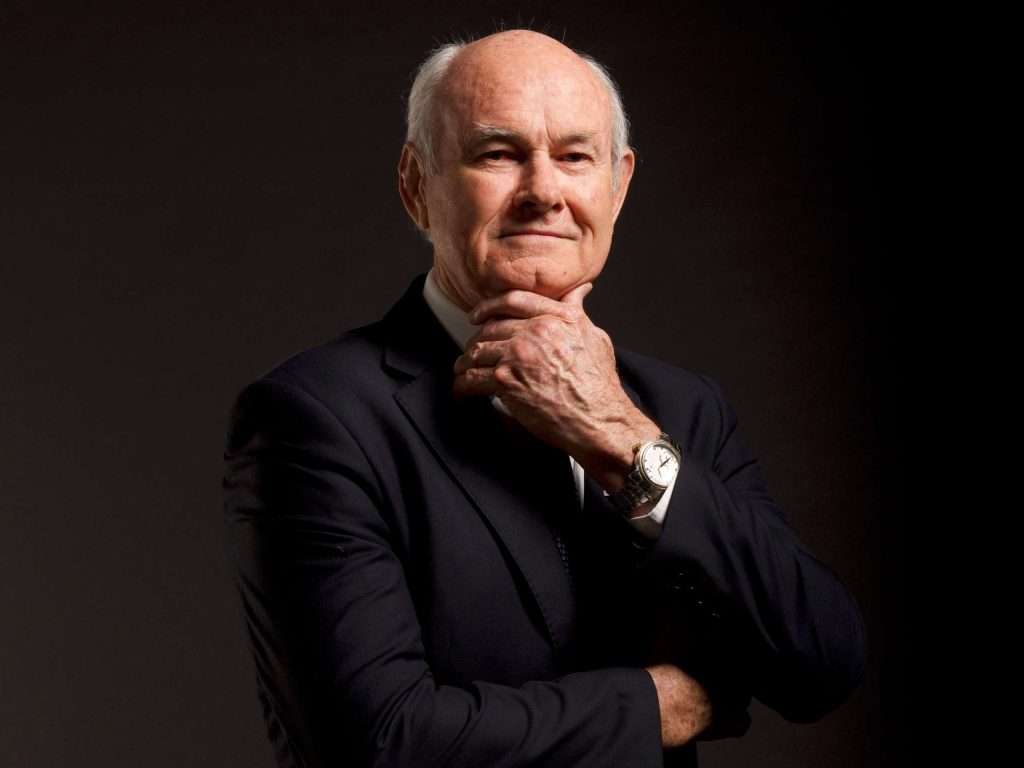
Dr James McFie is a household name in the world of academia. The Sasini board chair and senior lecturer at Strathmore University, who boasts more than 50 years of experience in the field, gives his viewpoint on what it takes to excel in today’s financial landscape.
Share some experiences from your journey as an academic and accountant that you think will bring a unique perspective to the panel?
I have been teaching accounting for the last 50 years. One of the things that happens in universities around the world today is that everyone talks about becoming a research university. However, a lot of accounting research in academia is almost totally irrelevant to the accounting profession. My concern is that when a person has studied accounting under me, are they work-ready? Are they able to work in an organisation and be an asset from day one?
I organised a breakfast for managers in asset management companies, insurance companies, and banks, and we asked them if they found university graduates work-ready. The answer was no. It takes about two and a half years to train young graduates in the work place before they become productive. These young persons have specialised in the subjects leading to finance, insurance or accounting openings but that training seems to be irrelevant for the real world.
I have always been interested in practical work, which is why I lectured the Certified Public Accountant (CPA) and the Association of Chartered Certified Accountants (ACCA) courses for many years. I want my students to be an asset in the entity they join from day one. I also run a course for company directors on how to use AI. I believe that CFOs need to be all-rounders, understanding not just finance but also technology, management and the industry they are in.
How do you think the role of the CFO has evolved in recent years, and how do you plan to apply this perspective in evaluating candidates for the awards?
A CFO may do their job really well, and yet the business is running at a loss. The loss may arise from temporary market conditions. If the loss is more than a temporary blip, the CFO has to rack their brain to establish the cause and remedy it. The business fundamentals have to be clear to the person. They have to know the industry. If a company makes an incredible profit this year, is it sustainable? Will it be the same next year? So, the CFO has to understand the business in which they are working and its environment. Sometimes new regulations come in.
The CFO has to have the fundamentals absolutely right. The CFO has to be an all-round person. They have to be responsible for ensuring quality work. If fraud occurs in the business, what measures were taken to prevent it? The CFO has to understand where fraud can occur, and put in controls to prevent it.
How do you think the CFO awards contribute to the finance profession?
I am one of the chief judges in the annual Financial Reporting Excellence (FIRE) Awards. When a CFO produces a set of financial statements that will be examined by judges, they try to make sure the statements are better than what they would do if they were just producing them for the users of the financial statements. The average shareholder is normally interested only as to whether or not they will receive a dividend, and how much it is.
Buy-side analysts will use the data in the annual report. A CFO knows this. But if the CFO knows that their set of financial statements will be compared with others in the same industry, they will produce a better set of statements. I once spoke to two of my past students who are buy-side analysts. I asked them if they actually used the annual reports published by companies. They told me they did. I went on to ask them for an example. They had decided to sell their 10 million shares in a now-collapsed retailer because the numbers and the narrative contradicted each other.
The awards raise the level of financial reporting. The finance director of a leading lender normally produces a very good set of financial statements, and he once asked me why they were not winning any prizes. I gave him the answers. The competition acts as a guarantee that people are producing high-quality financial reports. It encourages CFOs to do an important aspect of their job better.
Similarly, the CFO of the year Award encourages individual CFOs to go the extra mile to do an excellent job as an outstanding CFO.
What do you think are the biggest challenges CFOs are facing today in Kenya?
One of the difficulties is that you can be a CFO and you realise that the managing director or a principal shareholder is asking you to do something that adds no value to the business or even to do something fraudulent. To answer that person in a way that avoids doing what they demand requires an incredible amount of ingenuity. CFOs have to be clever in dealing with such situations. They have to be wily characters, as innocent as doves but as cunning as serpents. They have to navigate political connections and sometimes deal with board members who do not understand the business but have political influence.
CFOs need to be honest and have the courage to stand up to unethical demands. They also need to be able to manage their team effectively and ensure that their organisation is financially sustainable. Another challenge is keeping up with new regulations and technologies. CFOs need to be constantly learning and adapting to new developments in their industry. They also need to be able to manage risk effectively and ensure that their organisations are prepared for any potential challenges.
What advice do you have for CFOs who want to be recognised as the CFO of the year?
Number one, be knowledgeable about your industry. Number two, be able to show that you understand all the areas where fraud can occur. You have to think ahead and think like a thief to prevent thieves from carrying out frauds. You have to be ready to develop the people underneath you. I know a young lady who started doing a master's degree while working at a multinational consumer giant. She did not let anyone know she was doing it because her superiors might have frustrated her. As a CFO, you have to develop your team, even if some of them might do better than you. You have to be honest, not just in terms of not stealing money, but also in terms of recognising when the organisation cannot afford you – and be ready to move on. You have to build up institutional memory so that you become a valuable asset to the organisation.