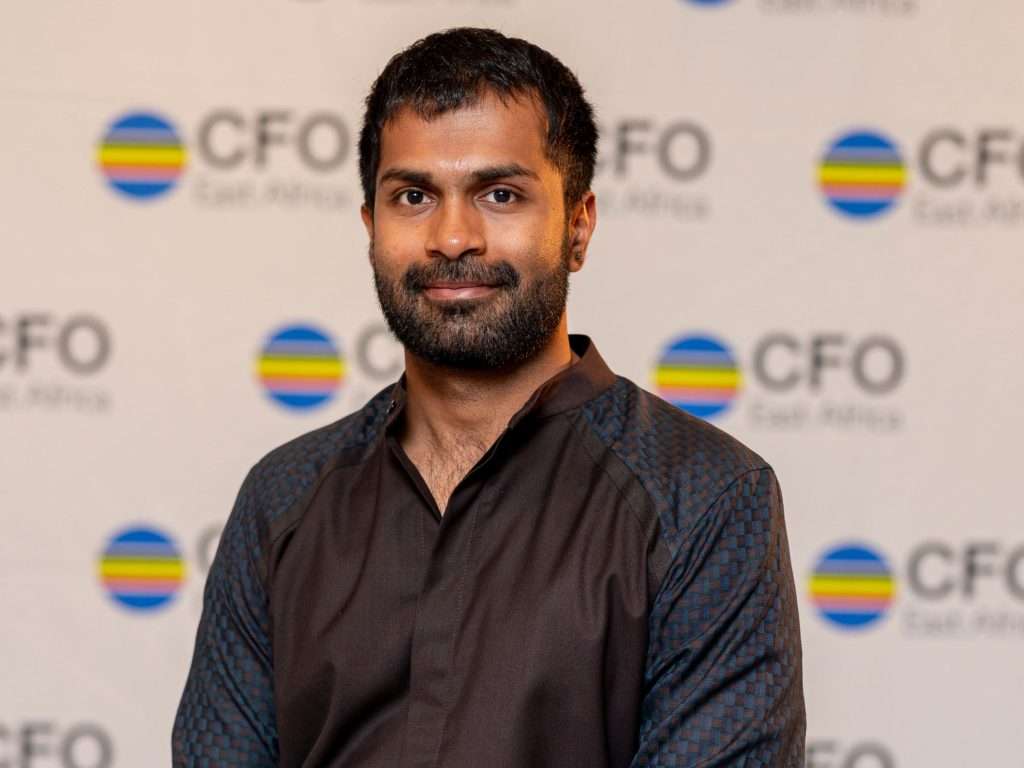
Bag Innovation CFO Akash Ladha left behind a career in India to carve out his own path in Rwanda. He blends an understanding of systems with a mindful approach that helps his team make better decisions.
When Akash Ladha, finance chief at Bag Innovation, first arrived in Rwanda, he had just turned down a job offer in investment banking in India. He did not know anyone in Kigali. Armed with only his CPA qualification, he took a risk in the hopes of finding his own rhythm.
“You find your identity once you move to another place where there’s no one to hold your finger and guide you. In India, there’s a lot of cultural and family influence on your decisions. In Rwanda, I had no network, so I learnt to grow,” he says.
Back at home, he had taken the fast track through India’s accounting exams, completing his CPA by the age of 23. Finance was not his first choice. But as the son of a Marwari family steeped in entrepreneurship, he saw it as a foundation for understanding business. Even as a student, he viewed accounting as a gateway rather than an end in itself.
“Accounting and finance make you ready. Sometimes, the CFO is the only person who understands a business. It’s the boring part, but it’s what supports everything else,” he says.
Eventually, Rwanda proved to be a good fit. The country’s fast-paced work environment allowed him to secure leadership opportunities early. By his mid-20s, he was already managing teams.
“You can take as much work as you can handle. If you're good at what you do, you get promoted quickly. That helped me later on when I started my own firm. I skipped the layers,” he explains.
Removing barriers
In 2020, Akash launched ALSM Consulting Group, which now supports more than 250 East African companies with finance transformation. He embedded strategic thinking in every level of the team, creating advisors who could operate with independence.
“We started with just two or three people and no fancy systems. Every intern or junior staff member we brought in was trained internally. Today, many of them lead portfolios independently and manage client relationships end-to-end,” he reveals.
The experience of being a founder gave Akash clarity about how to create value. He joined Bag Innovation as CFO in 2023, drawn by its mission to close the youth employment gap. The role also offered the opportunity to help grow a visionary startup that was still defining its scale. Although the company had a clear mission, it needed tighter structures. Akash began by building reporting systems and realigning cost structures, ensuring each unit had visibility over its numbers.
“The first thing I did was remove the barrier between finance and operations. I told the team that if they need to know something, they don’t need to send an email to finance and wait for a week. I created dashboards and monthly review structures so that everyone could see what was going on,” he says.
His philosophy was shaped by years of watching founders struggle under pressure. At Bag, he focused on helping the team slow down and make better trade-offs.
“Most founders I’ve worked with are always firefighting. There are so many things happening and they are trying to do everything, but in the process they lose focus. So we sit down, we slow down and we say: where are you headed? What is really moving the needle here and what is just noise?” Akash explains.
Part of his role was preparing Bag for its next funding round, which involved tightening compliance and making sure the company could withstand due diligence. But Akash saw the deeper challenge as one of mindset. He wanted the entire team to understand what investors look for.
Adapting to change
“In most of the startups that I have worked with, there is always chaos when it comes to finance. They don’t have clarity on their unit economics, they don’t have clarity on their cash flow, and they don’t have clarity on their compliance. And what I’ve tried to do here is that if someone comes in to evaluate the company, they should be able to get everything they need in a very clean format. Because that’s what builds trust and gets you to the next round,” he says.
Akash has also trained his team members to adapt to changing conditions. Rather than aiming for perfect forecasts, he advises them to prepare and respond to changes with deliberate choices. He believes good work is the result of thinking ahead rather than reacting under pressure.
“I tell my team, finance is not just about entering numbers in Excel. It is about understanding what those numbers mean. What they could mean. How they change based on decisions. You need to be thinking about consequences and trade-offs so that you can support decision-making in a real way,” he says.
Akash’s leadership mindset begins with how he manages his own time. His mornings begin early with deep, focused work. But that habit is years in the making. For a long time, Akash would work late into the night and lose sleep. Despite waking up tired, he would go straight into his tasks without taking time to rest. Even when the business was doing well, he still felt unfocused. The cycle eventually took a toll on him.
“I remember thinking, ‘I’m doing all this work but I don’t feel like I’m in control’. My brain was foggy, my body was tired, and I wasn’t getting joy from the results. Then I started cutting out things like social media and back-to-back meetings. It was uncomfortable at first, but it helped me rebuild how I approach life and work. Your job is not just to go with the flow. It’s to direct the flow. You need time in your day to think strategically. Otherwise you’re just reacting,” he says.
At Bag Innovation, Akash is now keen to ensure the company’s growth is sustainable. So far, he has strengthened internal systems and helped each team define what success means in practical terms. These changes make the company easier to manage as it scales. At the same time, he remains committed to the company’s original purpose: creating opportunities for young people.
“We talk about impact a lot in this space, but impact needs funding, and funding needs clarity. If we don’t know how much it costs to serve one learner, we can’t plan. If we don’t track retention or conversion, we can’t improve. Purpose and numbers go hand-in-hand,” he says.