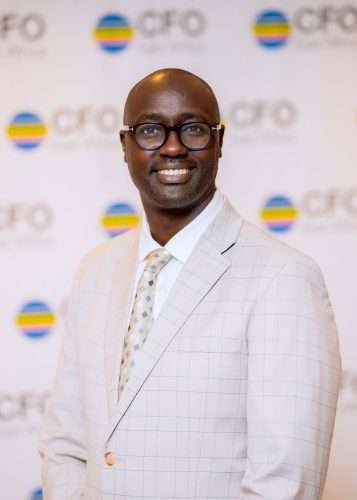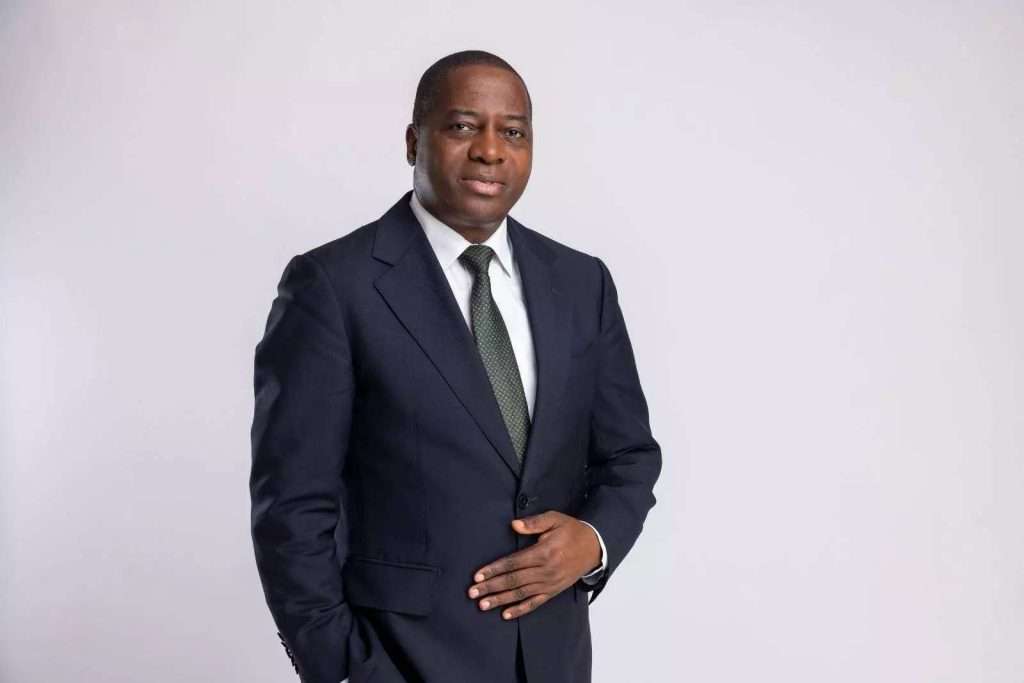
For over 25 years, Fredrick Nshekanabo has shaped CRDB Bank’s evolution. His strategic leadership and commitment to long-term value have made him a cornerstone of the bank’s success.
The name Fredrick Nshekanabo is nearly synonymous with CRDB Bank. He joined the bank in 1999 at the cusp of the digital revolution, when branches still operated manually, and customers had to transact at their home branch. For accountants, reconciling accounts at the end of the day was an exacting and tedious task.
“I saw how difficult it was to balance at the end of the day through the manual process. You couldn’t serve a customer who came from another branch because you couldn’t read their balance. But then I saw the first branch being put online, and I was proud to be part of that process,” he says.
Fredrick started out as a trainee bank officer, moving into finance a year later. The timing of this shift could not have been better. The bank was undergoing a massive shift from manual to digital systems, and Fredrick was tasked with supporting the network through that transition. Although it was uphill all the way, it gave him a deep understanding of systems and processes.
“You’d find a teller thinks he posted something right but used the wrong code. The entry is in the system, and there’s no manual trail to trace it. It was a big challenge. But it was also exciting. I had to learn the systems so I could train the users,” he says.
Those early years at CRDB taught Fredrick how to manage change and gave him his first taste of financial strategy. Since then, his view of the finance role has shifted dramatically, as he no longer sees it as a gatekeeping function. In his view, the finance leader of today must be deeply embedded in strategy.
Driving strategic change
“Controlling, which used to be the major role, is now irrelevant. Most of the controls are embedded in the system. Even reporting is becoming less manual. It’s more about real-time analytics, insights, and guiding the business,” he says.
Ironically, Frederick never planned to work in finance. Having been raised in a family of lawyers, he had always expected to follow the same path. But when he received his university placement, he found himself enrolled in an accounting degree.
More than two decades later, Fredrick leads the finance function at CRDB Bank, one of Tanzania’s largest and most profitable commercial banks. He points to automation and artificial intelligence as the biggest drivers of the changes the bank has undergone through the ages.
“The question is how best you can engage with the business. How best can we utilise resources and get optimal returns? Our role is to partner with the business and guide the strategy,” he says.
Over the last few years, CRDB bank has undergone a series of transformations, with Fredrick playing a key strategic role. It expanded into the Democratic Republic of Congo (DRC) in 2022 and issued its first sustainable bond a year later. CRDB has also replaced its core banking system and overhauled its data infrastructure. The move, which was capital-intensive and high-stakes, flung the bank into a realm of its own.
Long-term vision
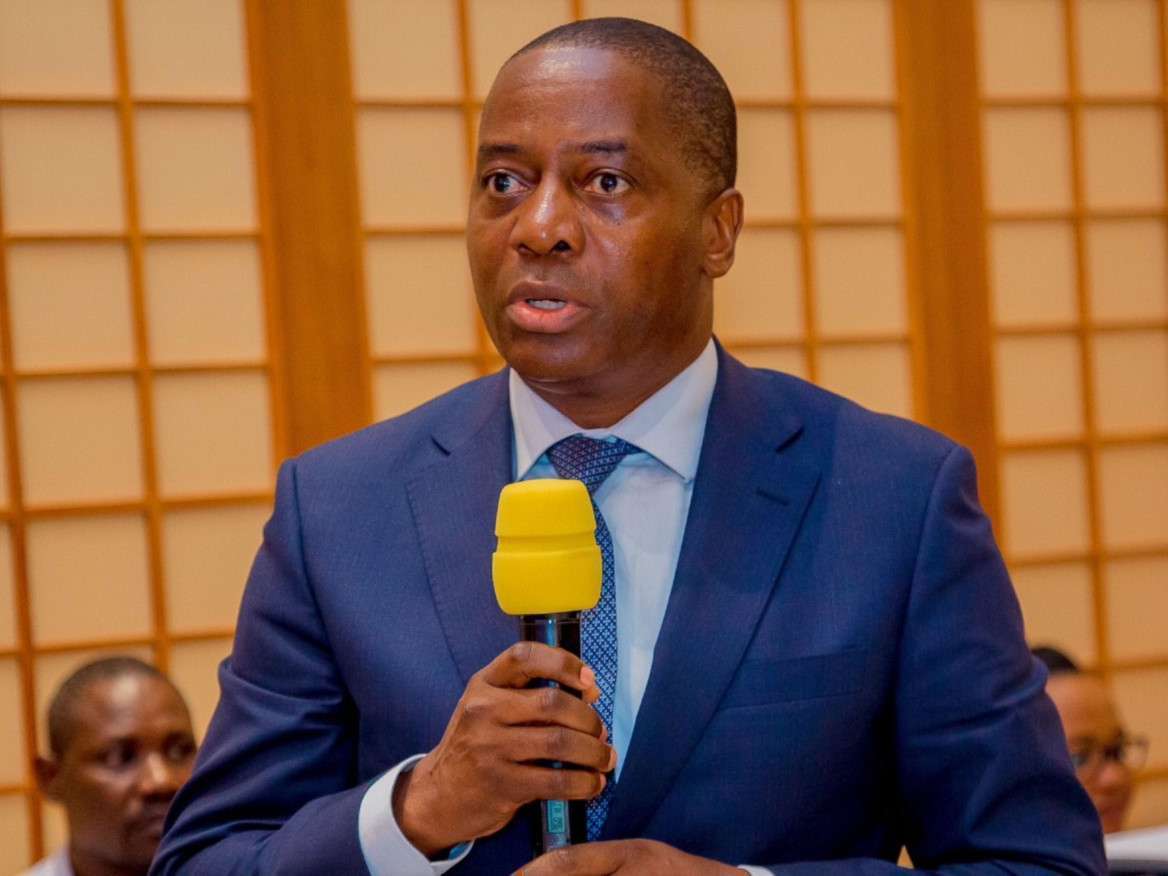
“Our expansion into the DRC was not a simple decision. Neither was changing the date centre or replacing the core banking system. It involved many stakeholders. You have to look at the financial implications, engage with regulators and investors, and make sure the assumptions behind your projections are sound. It took a lot of work to get everyone aligned. But it positioned us for the digital future,” he says.
CRDB was also the first commercial bank in Eastern and Central Africa to be accredited by the Green Climate Fund and later became the first in the region to issue a green, social and sustainable bond. For Fredrick, these achievements are evidence of the importance of long-term thinking and stakeholder alignment. Even internally, Fredrick leads his team with a strategic mindset. He often assigns responsibilities based on potential, allowing team members to make mistakes and learn from them.
“You have to articulate your strategy well. Get investors to understand your priorities. Align your policies and governance. It’s a lot of work, but it pays off. I delegate a lot. I allow people to make decisions, even mistakes. That’s how they learn. You can’t be everywhere. I lead about 40 people now, and everyone is an expert in their area,” he says.
He encourages open-door communication and sees himself more as a peer than a boss. It is not uncommon for a junior team member to walk into his office with an idea or question. In such instances, Fredrick listens carefully and gives honest feedback, as his goal is to create a culture of ownership.
Fredrick attributes his entire career journey to resilience. He considers the Covid19 pandemic, which sent shocks rippling through multiple industries, a test of his resilience. During the scourge, he – like many leaders in banking - faced immense pressure to ensure the bank remains stable. But when the worst of it was over, his team emerged stronger.
Preparing for the worst
“You have to anticipate what can go wrong. You have to build buffers. In finance, we’re trained to be conservative. That gives us room to absorb shocks. During Covid, we had all the backups. Even when revenue streams slowed or regulations tightened, we were prepared. The future belongs to those who adapt. In finance, that means understanding the business, embracing technology, and staying close to your team,” he says.
When he was in high school, Fredrick was an avid footballer. Although he has retired his jersey, he remains a dedicated fan of Tanzania’s Young Africans SC, popularly known as Yanga. He now dabbles in golf, tennis, and table tennis. He also enjoys reading, preferring audio content these days due to time constraints.
“I like golf. I am not very good at it, but I enjoy it. It gives me a chance to connect with people, so I am trying to improve,” he says.