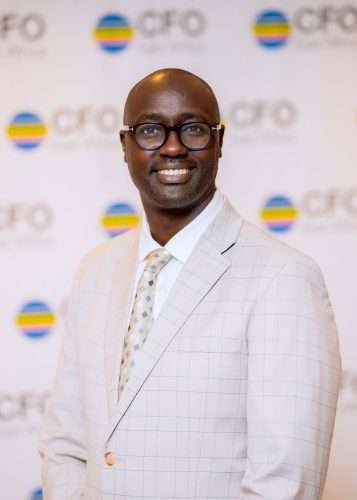
The CFO Summit: Reflections and Aspirations, held in Kampala a year after the CFO East Africa Uganda chapter launch, saw the region’s finance leaders convene at the Four Points by Sheraton Kampala’ to share their perspectives on the current business environment.
After an icebreaker during which Ugandan media personality and MC Dr Ronnie Mich Egwang counted down as attendees mingled for two minutes, the summit kicked off with two panel discussions.
The first – featuring Beiersdorf FD Funlola Pearce, Hariss International FD Eunice Waweru, Stanbic Bank Uganda CFO Ronald Makata, and NSSF Uganda CFO Stevens Mwanje – reflected on the challenges and lessons of the past year.
The panel explored how advancements in technology and other macroeconomic pressures had changed the expectations placed on CFOs. They reiterated the need for strategic thinking and resilience, saying finance leaders must evolve into business partners. Also key to this transformation, Funlola noted, was the need to move beyond technical skills and develop personal connections.
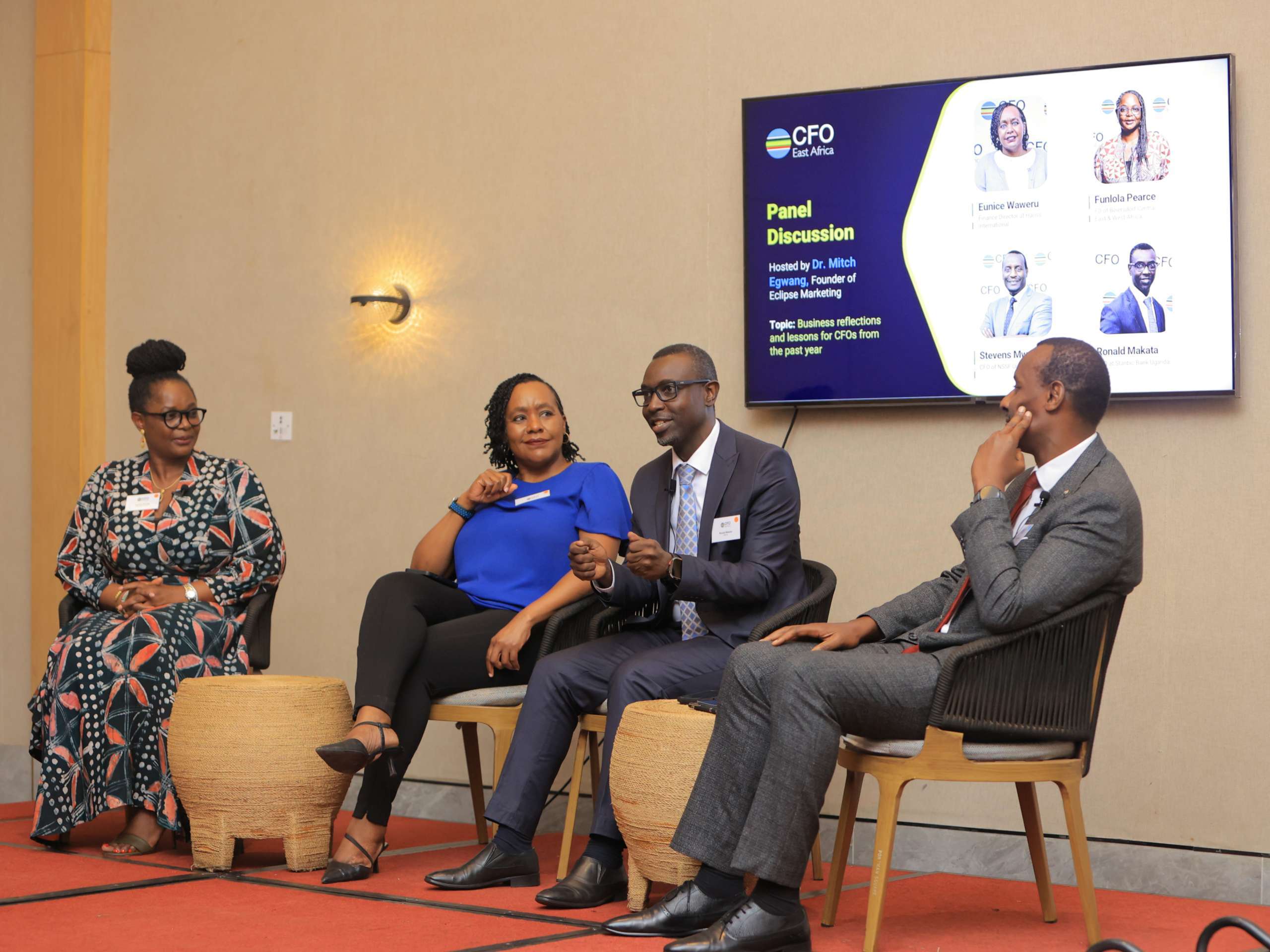
“You can’t do it all. You need people. Build teams that you can rely on, because no matter how skilled you are, you only have so many hours in a day,” Funlola explained.
Related to this was the shift from traditional HR functions to “people and culture”, which they agreed reflected a renewed focus on creating an enabling environment for success.
“You need to grow your people, especially the younger generation. Eventually, they will get it. If you have a strong team around you, you can provide much more value to the organisation,” Eunice said.
A versatile skillset
As the discussion progressed, the need for diverse skills within finance teams also became a key talking point. Stevens explained that CFOs who embrace diversity are better equipped to lead in uncertain times, saying this was essential for creating long-term value.
“I have accountants who can code, accountants who are data scientists, accountants who are project managers, accountants who are specialists in communication. Never be afraid that someone knows more than you. You have the helicopter view. Just learn how to utilise that person. It’s not just about having the skills, but knowing when to leverage the skills of those around you. That is the mark of a truly effective leader,” he said.
The panellists also made note of the rapid pace of technological change, saying the market had also evolved. According to Ronald, this shift demands an expansive mindset that extends beyond the traditional boundaries of an industry or market.
“Our competition isn’t just other banks. If you look beyond traditional competitors, you’ll see where you might be losing value. Clients’ needs are constantly evolving, so you need to know what’s happening in the market. Otherwise, you risk putting out the wrong product,” he said.
Preparing for change
The partner address, delivered by EY managing partner Geoffrey Byamugisha for the second year running, offered a perspective that bridged the themes of both panel discussions. He unpacked the role CFOs play in strategic decision-making, saying finance leaders must be able to anticipate the impact of global events.

“When you sit with boards, audit committees and regulators, the questions they ask often go beyond the numbers. Sometimes, they even ask if our CFOs have the right experience to lead the organisation through this changing landscape. These are not easy questions, but they are the ones we need to answer to remain relevant and impactful as finance leaders,” he said.
Geoffrey also touched on the critical skills gap facing the profession, pointing out the need to prepare for the future
"Do we have the right AI and digital strategy that aligns with our overall business objectives? And quite often we don't actually know how either AI plays in our organisations, or what they mean by digital strategy," he added.
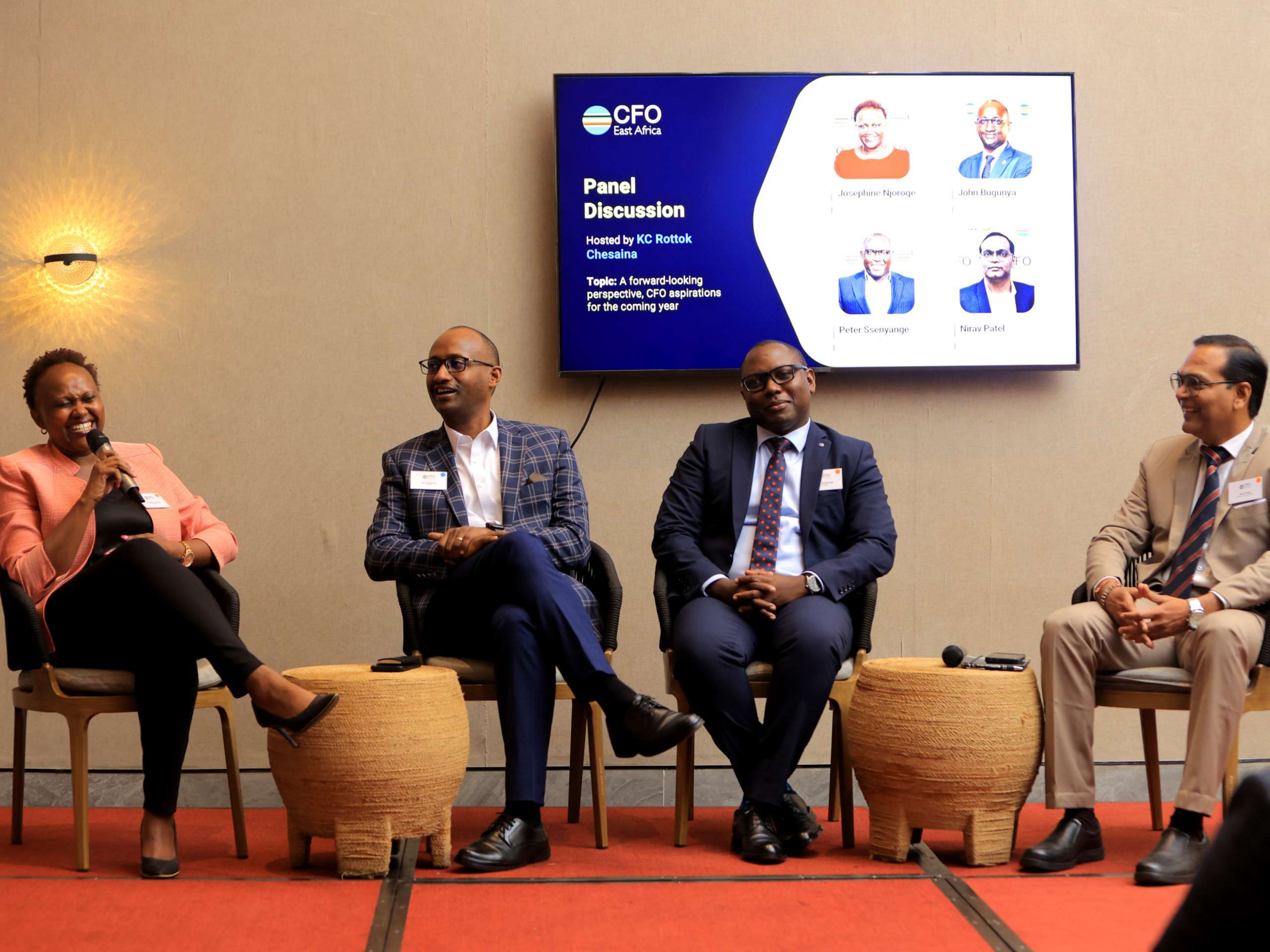
Within this context, the second panel, featuring Uganda Breweries FD Josephine Njoroge, Steel &Tube Industries MD Nirav Patel, ICPAR vice -president John Bugunya, and Postbank Uganda CFO Peter Ssenyange turned to the future, focusing on how CFOs can leverage technology and build resilient teams.
“Tomorrow, we are going to be known as chief future officers for the business, because we are very holistic in our thinking. We are the only people who have the entire helicopter view of the business. We know what is happening with our customers, with our vendors, with our suppliers, and even with the people who work in our organisations. This means we have a responsibility to think about the long-term impact of every decision, not just the short-term gains,” Nirav said.
The twin imperatives: AI and ESG
His perspective captured the panellists’ views on the fresh demands finance leaders must grapple with, including artificial intelligence (AI) and digital transformation. While some attendees shared how they were exploring these technologies, others remained cautious.
“What have we invested in the AI space, and are we maximising that? If you’ve fully tapped into your own capabilities, what are others using? Can you preempt that and leverage it for your business? It’s about anticipating the next wave and positioning your business to stay ahead,” Josephine said.
The discussion also revealed how different organisations were leveraging technology for growth.
“We have to move away from the obsession with opening a branch on every corner. Instead, we’re investing in digital solutions that connect people to financial services wherever they are. It’s about scaling efficiently, without the constraints of physical infrastructure," Peter said.
Beyond technology, other emerging issues such as ESG also captured the attention of the CFOs, with Nirav terming sustainability an accelerator of growth. But for John, the key was to approach ESG as a strategic imperative rather than a compliance exercise, connecting sustainability initiatives to financial performance indicators.
“That’s how you get real buy-in across the organisation. It’s not just about meeting regulatory requirements. It’s about linking these efforts directly to financial performance and long-term value creation. If the CFO is able to link the sustainability initiatives to the strategic drivers and financial performance, then it becomes a no-brainer to get support across the organisation,” he said.
The summit was supported by principal partner EY Uganda and associate partners GardaWorld, RSM Eastern Africa, Sage, and Yellow Card.