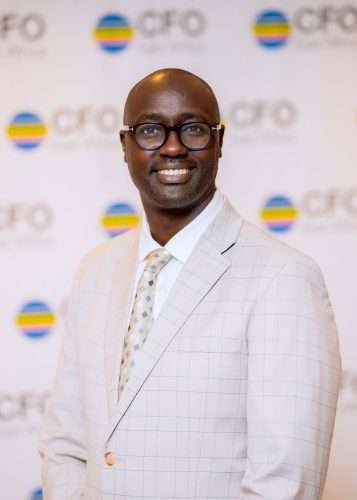
CFOs are moving beyond compliance and reporting to shape business decisions and long-term growth. Jubilee Insurance group head of finance Paul Mungai and Umoja Coin CFO Bornmathew Nuru share how they are placing finance at the centre of strategy.
At Jubilee Insurance, group head of finance Paul Mungai is clear about what excites him most. Beyond the controls and the month-end routines that once defined the profession, Paul is keen to reclaim the role’s relevance. In his view, the CFO’s strategic influence has been steadily eroded by the rise of data teams and commercial executives with a direct link to topline performance.
“I have seen the CFO conversation become a bit diminished. Either it is reducing in itself or others have overtaken us in terms of our importance to the table. One of the reasons for that to me is we have kept ourselves to the traditional CFO type of thing. We are not embracing tech, we are not embracing where this thing is going,” he says.
Paul believes too many finance leaders are still focused on the type of work that should already be automated. He advocates for a different model where the CFO's value lies in steering the business towards the future. In his opinion, what is missing is the shift in mindset.
“Ten percent of your role as a CFO is to come in and say what happened – 90 percent of the role is to tell people what is going to happen. That is what businesses are looking for. Businesses are looking for someone to tell them, ‘This is what we intend to do’,” he says.
Dispelling misconceptions
For Bornmathew Nuru, CFO and co-founder of Umoja Coin, the conversation is just as urgent. At a time when African enterprises are pursuing growth across unfamiliar terrain, he believes the finance function cannot remain misunderstood. The CFO’s role, as he sees it, is foundational, as organisations risk pursuing scale without structure in its absence.
“In Africa, the CFO role is often undermined. But a CFO is a visionary leader, a good decision-maker, a risk analyst, and a mentor. If you underestimate this role and opt for someone cheaper, you’ll see it in your growth and profitability,” he says.
Both executives warn that a business will falter when finance is not treated as a strategic partner. Having worked across Kenya, Rwanda, South Sudan, and Congo, Paul believes the ability to adapt and connect data with action is critical, as it determines whether finance gets a seat at the table.
“This is what our results are telling us. How do we make sure that the December targets are still met? Let’s talk about January to May. Can we talk about June to December?” he says.
Bornmathew echoes that urgency. At Umoja Coin, the team is working across jurisdictions to develop a stablecoin that facilitates cross-border payments. For investors and regulators to buy in, the finance function must lead with clarity and accountability. In Bornmathew’s view, this requires the kind of leadership only a well-equipped CFO can provide.
“This is a real business now. It’s no longer a project or a concept. It’s serious work with targets. They are very serious meetings. If you don’t show up, it’s serious business,” he says.
Making the right moves
For Paul, influence begins with positioning. One of the most sobering lessons of his career has been how former CFOs can sometimes become a stumbling block for the incoming finance leader.
“If they’ve been promoted within the same organisation and then you take up what they used to do, I’m sorry, but you’re in trouble. They think they can do what you do. To them, you don’t add value. And the most notorious people around that are former CFOs,” he says.
The seasoned executive is now keen to help younger finance professionals understand that the job is no longer just about bookkeeping.
“I’m inspired to get to the point where it’s no longer I who comes with the answers. It is I who comes with the right questions. It’s about asking the right questions that provoke what we need to do. If we provide the right answers to the wrong questions, the company’s going nowhere,” he says.