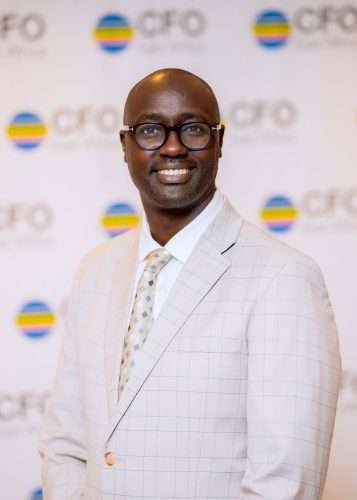
Across East Africa, regulatory changes and funding disruptions are frequent occurrences. Mi Vida Homes CFO Solomon Nzomo, CRDB Bank CFO Frederick Nshekanabo and PSI Uganda CFO Christine Nakayenga explain how they lead their organisations through times of uncertainty without losing their focus.
Mi Vida Homes CFO Solomon Nzomo works in the real estate sector, where success is determined by reliable capital and clear policies. But in recent years, policy shifts have introduced financial uncertainty into the industry.
“In an environment where fiscal policy is not very predictable, then the investment appetite in long-term developments is very much reduced. Because you don’t know how that regime will impact your project. You may start a five-year project today and in two years a change in policy wipes away your margin. So, you would rather wait and see how the wind is blowing before you commit,” he says.
The youthful executive has learnt to adjust quickly, cutting back exposure when external factors threaten profitability. He believes that being proactive about scenario planning is essential to staying grounded.
Rather than abandon long-term goals, Solomon now focuses on preserving the trust of investors. He works closely with his team to model different scenarios and identify areas of flexibility.
“We continue refining our financial structures to make the product more affordable and attractive and we are leveraging the brand and the strength of our shareholder to continue building investor confidence. I think that’s what’s keeping us going. We’ve not seen a complete freeze of the market. There is a lot of interest but it’s a wait and see kind of attitude,” he reveals.
The biggest risk
Further afield, CRDB Bank CFO Frederick Nshekanabo has observed how the CFO role has shifted. Having worked at the bank for over 25 years, he believes agility now outranks longevity. In his view, being slow to adapt is the biggest risk finance professionals face.
“Most of the controls we used to do manually are now embedded in systems. So, if you are still stuck in historical reporting, you are already irrelevant. Because right now, the business wants a forward-looking person who can predict what is likely to happen and put mitigations in place,” he says.
Fredrick believes showing up early in the decision-making process and embedding finance in operational planning is the key to remaining relevant. He makes a point of working with business teams to test his assumptions and tighten financial discipline across different departments.
“You cannot say you are a CFO and you are struggling with Excel. The role has moved. You are expected to bring insights, shape decisions and anticipate what’s next. If you don’t evolve, the role will evolve past you,” he explains.
Short notice
Christine Nakayenga leads finance at PSI Uganda, a global health NGO where funding is often tied to donor cycles and external events. As the 2025 rescission of USAID funding proved, budget cuts can arrive with little warning, requiring sudden adjustments.
“For example, you could find a donor saying they’re no longer going to fund implementation, but they’ll provide technical assistance instead. That means PSI has to position itself to tap into that funding model,” she says.
Christine advises finance executives to forecast constantly and speak up early to hedge against such risks.
“So I’d say, for example, this grant ends in December. If we do not receive additional funding, the programme team needs to start thinking about which activities to scale down or how to manage operations. Visibility is what helps teams to plan ahead,” she continues.
She also builds short, visual bulletins to keep leadership updated on funding risks and operational gaps. Her reports are designed to encourage action before problems escalate, as she believes storytelling is part of what keeps organisations afloat.
“If we’re going to have a budget shortfall in a few months, we shouldn’t wait until the money runs out. That’s too late. I show them the picture early, with as much accuracy as possible. Then they can act, not just react,” she says.