At the 2025 CFO East Africa ESG Summit held on 10 July, the theme of financing cut across all discussions. While ESG frameworks continue to evolve, the actual flow of capital tells a more complicated story where large firms edge ahead and smaller players risk being left behind.
Investor interest in sustainability has been growing steadily over the last few years. As EY reports, 88 percent of institutional investors say their firms have increased use of ESG information over the past year. At the same time, regulatory momentum is rising.
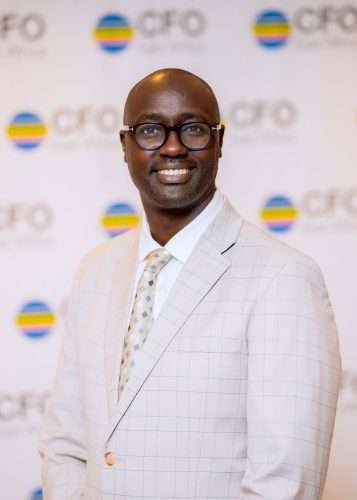
Speaking at the 2025 CFO ESG Summit, EY associate partner Manasses Biwott stated the challenge plainly. Central banks and financial regulators across East Africa are issuing climate frameworks and disclosure mandates. Global standards like IFRS S1 and S2 are already shaping corporate behaviour. But the capacity to meet these expectations is uneven, and financing remains heavily conditional on compliance.
“Institutional lenders are looking more and more at what organisations are doing in terms of prioritising sustainability. If they are not aligned to ESG standards, then they face limitations in accessing finance,” he said.
In his view, the key is for businesses to frame ESG as a pathway to long-term viability. But as he noted, the shift requires resources and capacity that many organisations do not have yet. The consequences of these gaps are most visible in capital-intensive sectors such as clean energy and transport. Collins Otieno, head of finance at Ampersand Energy, described the financial challenge facing early-stage e-mobility firms in East Africa.
“It’s a capex heavy business. You’re not just putting a bike on the road. You need batteries, you need a swap station, and each swap station needs to be constructed. Then you have your electricity costs, your opex. So to fund that, we’ve had to partner with other firms, and that’s not always easy,” he said.
Proving profitability
For businesses like Ampersand, accessing traditional commercial funding often means proving profitability in markets that are still developing. While grants and climate funds help, they are limited and highly competitive. Collins also identified the disconnect between ESG ideals and capital markets as another critical gap.
“Most of the sources of funds are still focused on the bottom line. Our challenge as CFOs is to develop blended finance structures that make commercial and impact sense at the same time,” he explained.
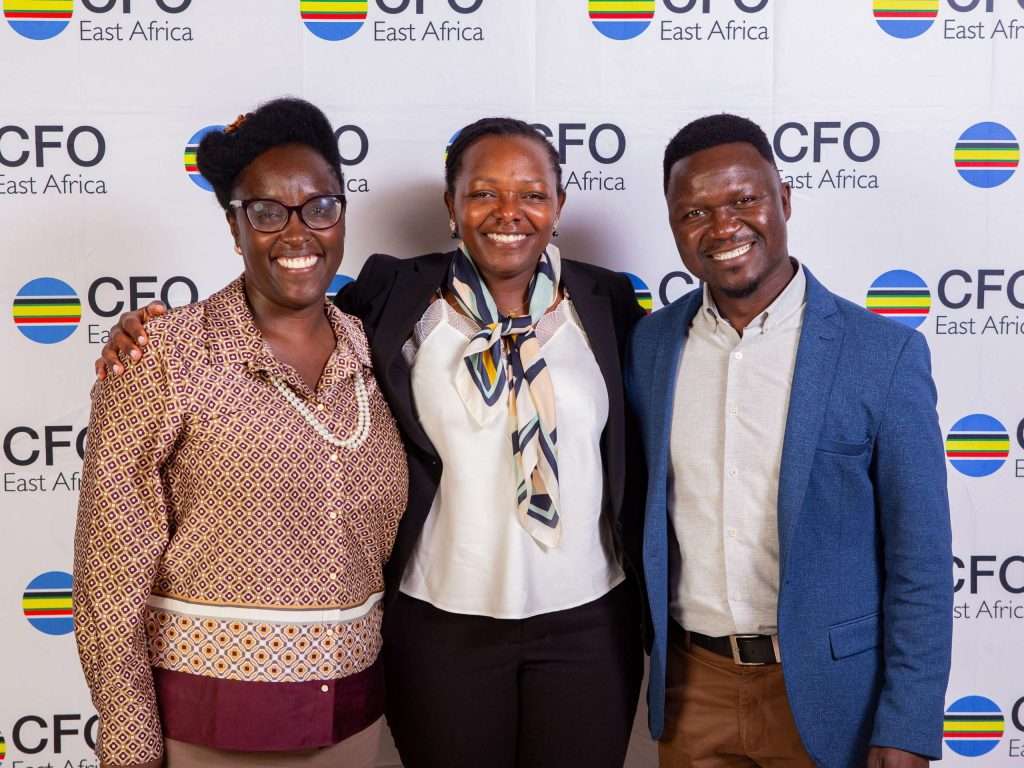
Spiro group CFO Wangeci Kanjama highlighted how this financing gap extends beyond hardware and infrastructure. Although the company has launched a training academy to equip technicians with the skills needed to support electric vehicle adoption, they continue to face systemic roadblocks. Without consistency in regulation, even well-funded projects stall. Despite the region’s large renewable energy base, e-mobility start-ups struggle to scale because of the lack of stable incentives.
“One year, you have the incentive. Next year, it’s not in the bill. That contradiction makes it hard to plan. Africa should have a strategy that fits Africa. We have a transportation gap, a credit gap, a financial inclusion gap, and if we don’t solve all three, EV won’t work here,” she said.
Glimmers of hope
As Manasses noted, ESG financing criteria are gaining traction among development finance institutions and global investors. But the benefits tend to flow to companies that can already demonstrate alignment. These firms typically have robust reporting systems and a clear sustainability narrative. In his experience, few East African firms are fully prepared for the next wave of reporting requirements.
“There’s a real risk that SMEs without scalable tools or assurance mechanisms are shut out of ESG-aligned capital. We’ve seen a lot of qualitative disclosures so far. But the future is about integration. How do sustainability factors show up in financial performance, risk modelling and forecasts? Without that link, many businesses will struggle to access serious financing,” he said.
According to Manasses, the adoption of technology remains weak, with uptake of tools that enable data collection and reporting still low. However, there are glimmers of hope. Collins revealed that Ampersand Energy has secured partnerships with global energy companies to expand its charging infrastructure. Spiro, on the other hand, is building battery assembly plants in Africa. Nevertheless, the panellists maintained that more support is needed, especially at policy level.
“We want Africa to be a hub for EV. But we need the ecosystem. We need stable energy, financing, and policy frameworks. If you get those three right, the rest will follow,” Wangeci said.
For CFOs navigating the ESG transition, the message was clear. Unless more is done to bridge the financing gap, the promise of sustainable growth will remain out of reach for many.
Manasses closed his presentation with a call to action: “If we don’t start investing in capacity now, we’ll miss the opportunity ESG presents. Position your business for the capital markets of the future,” he said.