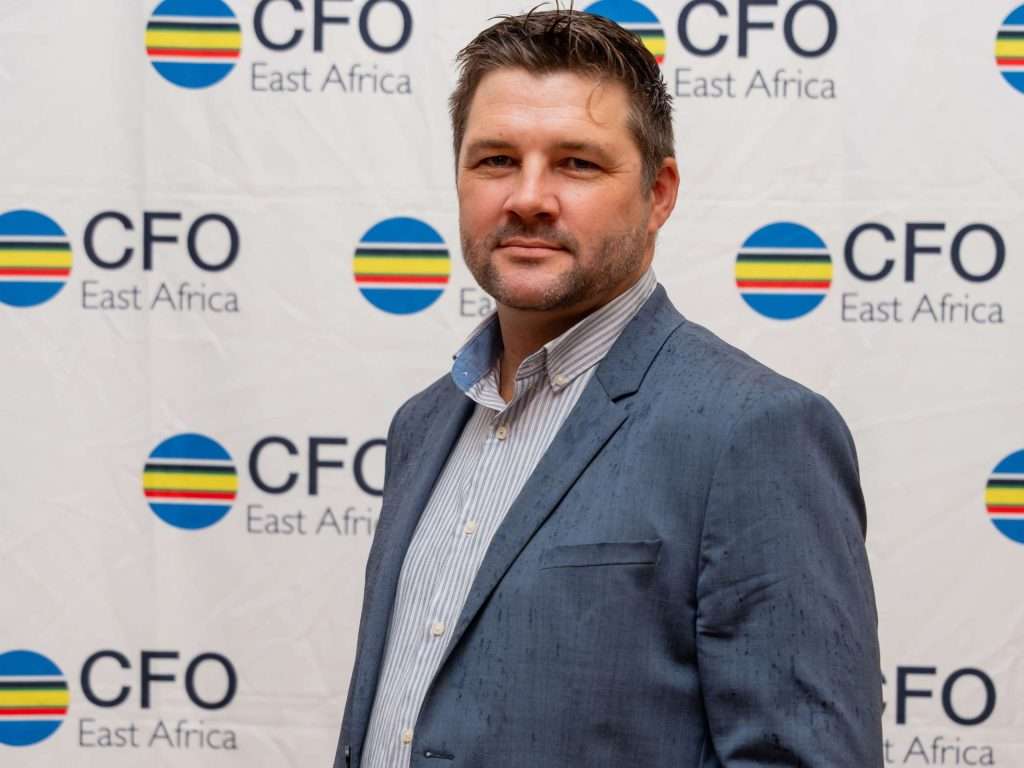
Chris Eyre believes the best CFOs join their teams on the ground to get their boots dirty. The Helium One CFO explains how he has turned his local expertise into a competitive advantage in Tanzania.
Chris Eyre has learned that being on the ground changes everything. He is the only member of Helium One’s leadership team based in Dar es Salaam, Tanzania.
Recently, the company moved from exploration to production. Chris oversaw the transition, helping negotiate a new mining licence and set up a joint venture with the government. He now serves as a director on the company’s Tanzania board, alongside two Tanzanian citizens and a representative appointed by the state.
“I wouldn’t say they have to listen to me, but my opinion really matters because I’m based down here and I understand how the country works and I’ve worked in Africa all my life. I’ve seen what works and what doesn’t work. If you make one mistake here, it can cost you six months,” he says.
The change in phase required a corresponding change in structure. Chris helped establish the local entity in line with Tanzanian regulations, which require government participation in mining companies. But beyond legal compliance, he felt it was necessary for the local company to have operational control. Teams needed authority to act quickly, particularly in markets where regulatory communication can be opaque and timelines unpredictable.
“We’ve gone from being an exploration company to being a mining company in the space of four years. And we’ve had to jump through all the hoops that are associated with that,” he says.
Full control
Chris’ pragmatism under-girds most of his decisions. Before production began, he recommended the purchase of a drilling rig. In his assessment, the long-term savings and resulting operational flexibility justified the cost. Persuading the leadership team was a tall order, because buying assets during exploration defies industry conventions. But ownership reduced reliance on third parties and gave the company full control over its timelines.
“It’s cost us a million dollars, but that’s cheaper than outsourcing it,” Chris says.
His instinct to protect long-term value, even at a cost, comes from experience. In a previous role at a multinational, he saw how regional teams were overlooked despite their contribution. During the pandemic, Chris and his colleagues in East Africa had kept the business afloat while others worked remotely.
“We were making 80 percent of the group’s profit and then told us we were all going to get our back pay back. They gave the people in West Africa 15 to 20 percent due to inflation and they gave the people in East Africa 0.5 percent. That was actually my last straw,” he says.
The experience made Chris begin to think seriously about where he wanted to work. He had already worked in several countries across the continent, including South Africa, Malawi, Kenya, and Uganda. But none were like Tanzania. Regulations there change often and licensing decisions take months. Even simple processes required sustained follow-up. Still, he found the market fascinating, believing even the hardest barriers could be managed with enough time and local knowledge.
“Tanzania has been the most different out of all the African countries I’ve worked in and most unique in terms of engaging with the governmental stakeholders. But I’ve enjoyed it because you live and learn or you get chewed up and spit out by the guys. If they see any sort of chinks in your armour or weaknesses, they will teach you this. So going into these sorts of areas and actually understanding how the markets operate has been key,” he says.
Encouraging people
These lessons have influenced how he manages his team. When delays occur, Chris avoids the instinct to assign blame. Instead, he trains his team to adapt and communicate. In his experience, people often need encouragement more than pressure.
“I think encouragement goes a long way for a lot of people. You always get shouted at when something goes wrong. You never get praised when you do something right. You can do 10 things right and not get any praise for it and do one thing wrong and you’re the biggest incompetent person that ever worked there,” he says.
When Chris joined the University of Cape Town, he initially enrolled in computer science, a choice strongly influenced by his mother. But he lasted only a day. Most of his coursework aligned more closely with finance, and he had always excelled in maths. He completed his undergraduate studies at UCT, followed by an honours degree in financial management at the University of Johannesburg, and entered the commodities sector straight after.
“I was with Metmar Trading for 10 years. About six years in, I was the group financial manager responsible for all the consolidations and things like that. We had just got bought out by Traxys, which was a major commodity player. And they pretty much wanted to move me to Luxembourg and then remain in the accounting space. I wanted to start getting a little bit more involved in operational decisions and things like that. So then I made the conscious decision to have a look at what I could do and I obviously always wanted to work in Africa,” he says.
In the thick of it
He left South Africa to become the financial controller at Malawi Fertiliser Company, where he was exposed to operations in Mozambique, Zambia, Mauritius, and Zimbabwe. Later, he joined Tata Africa Holdings in Tanzania, overseeing Kenya, Uganda, and Tanzania. There, he gained insight into how regional operations function and where decision-making often gets stuck.
“If I can’t get hold of anyone on the board, I’ll make a decision myself and we’ll discuss it later. You miss out on opportunities if you’ve got to go up and down the food chain for everything. That’s why I moved away from big companies. Once you get bought out by someone with operations in the US or China, it just becomes an absolute nightmare,” he says.
In his current role, Chris is careful to factor local context into every decision. He prefers to stay close to operations and remain accessible to local stakeholders. As he sees it, that is the only way to lead effectively in an environment where each week is different from the last.
“You can sit in an office far away and design all the perfect structures and everything else. But they don’t work here unless you’ve got someone on the ground who understands how to make them work. The CFO role has expanded well beyond numbers. You’ve got to be in the thick of it,” he says.