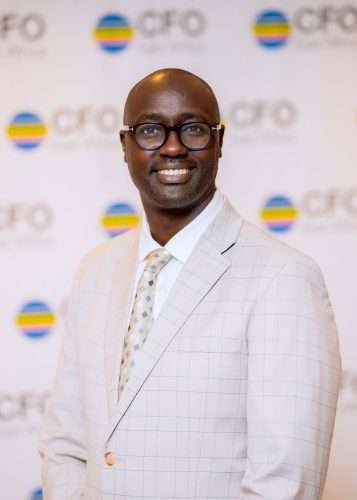
A finance leader’s real test is what happens when they are not in the room. Aerolink Uganda head of finance Dorothy Kiprono, ICEA Lion Life Assurance Uganda CFO Philip Ahabwe, and PowerUp head of finance Eva Zalwango share how they think about building teams that can carry the torch.
In the beginning, Dorothy Kiprono joined the aviation industry expecting the job to be about numbers. What she found instead was a business where spare parts ordered six months in advance sometimes still did not arrive. The finance function was expected to hold things together regardless. Her response was to start training her team to be able to do that in her absence.
“I have to leave people with something. I teach them so that when I leave, they have skills. I want to build a legacy. If I don’t wake up tomorrow, I want to know the team can take over,” she says.
In practice, this means handing team members tasks she would previously have done herself, even when it would be faster to do them alone. Dorothy also promotes from within wherever possible. Over time, this has built loyalty within the team.
The aviation industry is unforgiving when it comes to staff turnover. Pilots, engineers and operations staff move frequently, and the costs of being unprepared are immediate. Dorothy has learned to treat departure as a variable to plan for.
“People will leave. It is about being prepared. As an employer, it’s painful. But you have to let them go, give them advice, and be open. I learned to have a plan B. If a pilot leaves, I need to know where to find another one quickly. It’s about fixing problems, not losing your cool,” she says.
Perpetual growth
Philip Ahabwe cannot remember what became of the plaque his team gave him. What he tracks instead is where the people who worked under him have ended up.
“I believe I’ve had a chance to improve the people I’ve worked with. Some of them have gone on to be senior people in their careers. Others have grown within the ranks. I almost have a new set now,” he says.
When he joined ICEA Lion Life Assurance Uganda as CFO in 2018, he had never led a department. Systems were underutilised, and the business was growing fast. His first audit cycle was, by his own admission, bad enough to make him question whether he should stay.
But rather than hire experienced hands from outside, he rebuilt the team with younger professionals who were open to learning. The bet was on potential over track record.
“Their own personal development excites me. I had two people in my team who completed their master’s before I ever thought of writing mine,” he says.
Philip does not believe in chasing titles and has turned down roles he did not feel ready for.
“You have to be honest with yourself and recognise where you are. It’s all nice and good having aspiration, but what are your gaps? What do you have to learn? Assess yourself on merit,” he says.
Build the system
Eva Zalwango’s version of the same idea starts with processes. At every organisation she has worked in, her first instinct has been to look at the backend and ask what would break if she were not there.
“We are a support function, not a reporting function. You can’t enhance your backend processes through headcount. And it cannot start at the tail end. It has to start at the beginning,” she says.
At Goldstar Life (now Prudential Uganda), Eva joined a four-person team running on spreadsheets. She helped install an ERP, build an investment portfolio and establish financial controls. She also pioneered Uganda’s first direct debit model for insurance. By 2021, the company was the market leader in life insurance.
The lesson she drew from that experience was that the goal of a finance function is to make itself predictable. But she is clear that getting systems to work requires people to understand and believe in them. Now at PowerUp, she is structuring financial models for carbon credits and helping quantify environmental impact.
“If someone had a problem, however small, but that person is happy because of my input, that’s what motivates me. I want to make people’s experiences good,” she says.