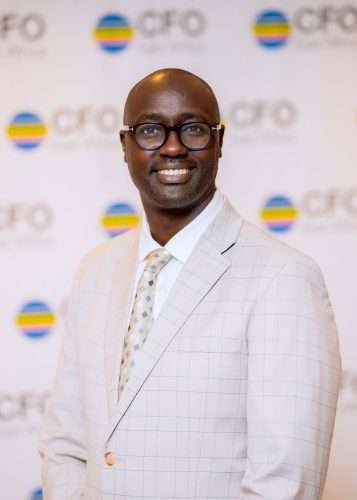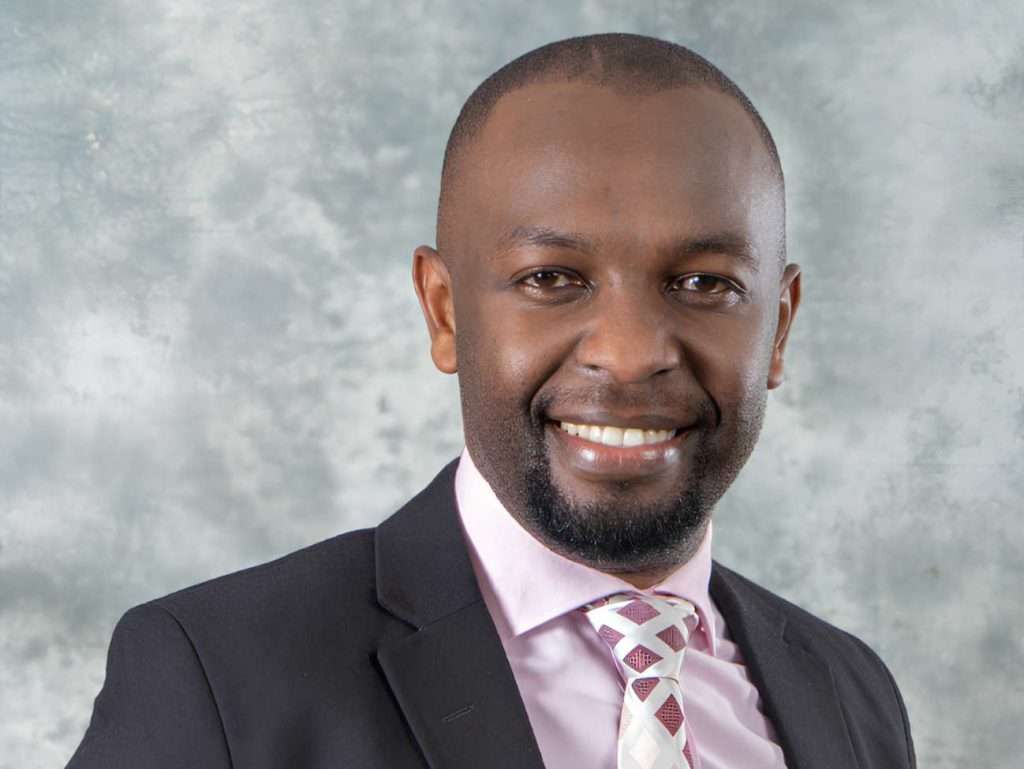
Paul Mungai’s career has taken him across borders and through crises. The Jubilee Insurance group head of finance reflects on the early losses that shaped his sense of responsibility and the decisions that continue to define his leadership.
When Paul Mungai lost his father in his final year of university and his mother in quick succession, he was forced to grow up fast. Almost overnight, he went from being the easygoing third born in a family of four, to the sole breadwinner.
“All of a sudden, I was the one they would come to and say, ‘We’ve got these and those bills to pay by this and that date.’ I remember feeling completely unprepared, but I knew I had to take responsibility. That experience changed me,” he says.
Unlike most of his peers, Paul began his career without the required full qualifications, as the financial situation at home made it difficult. At the time, his classmates were joining the Big Four audit firms after completing their certifications. Paul joined UAP Life Assurance as a payables accountant with a clear goal: to earn enough to afford and complete CPA examinations.
“Every time I would make any inquiries around those types of firms, I would never make the cut. Technically, even to ICPAK, I was not fully qualified yet. I had to start building my career from an incomplete base. I’ve never seen anybody build the upper floors of a tall building while laying the foundation at the same time,” he says.
That drive was soon put to the test in South Sudan, where the stakes were much higher. Paul had just been promoted to chief accountant when the South Sudanese pound (SSP) was liberalised from a fixed exchange rate to floating exchange rate. He was tasked with reconverting operations to the US dollar.
“We had converted the business from US Dollar to SSP in September 2015. At that point, the country had moved away from the dollar. After three months, the government announced that all businesses should revert back to the dollar. So, we had to reinvest in the system and operations, and reconvert the business back to dollars,” he explains.
Between a rock and a hard place
At the same time, violence between government forces and opposition groups escalated.
“An emergency board meeting was called and a decision was made that all expatriate staff be evacuated. But the finance team needed to complete the currency conversion project. And remember Old Mutual was the brand now. Due to the evacuation, I was left with only two finance staff members to complete the task. And I had to get things done,” he says.
Paul and his team closed the project in three months, delivering ahead of audit deadlines and stabilising the business. His success confirmed what he had always believed: demonstrating that you can deliver real results matters more than simply having the know-how or meeting straightforward requirements.
“We had to invest another $1 million to reconvert our entire transacting currency back to dollars. Up to today, the South Sudan business for Old Mutual is still running measured in dollars. It was a significant contribution to the sustainability and the future of that business,” he says.
But technical competence was only part of the challenge. Paul’s stint in South Sudan also marked the first time he stepped into management and transitioned from doing the work to delivering results through people. This was a difficult adjustment, as the habits that made him effective as an individual were no longer enough.
“You get very frustrated when you don’t get people who think like you and have the same energy as you. I don’t like policing people, so pushing people was a problem. It really challenged how I saw leadership,” he reveals.
A new philosophy
Paul’s turning point came when a senior colleague at Old Mutual South Sudan challenged him to rethink how he led. He advised him to abandon his hands-on style and learn how to lead through others. It was the first time he had been advised to trust his team. Although the shift was uncomfortable, it laid the foundation for the leader Paul would become.
“He told me, ‘Paul, I want you to take a pause. You’ve been very used to doing things yourself. That stops. Now you need to show me that you can get the same level of results if not better through people’,” he recalls.
In Rwanda, that leadership philosophy took root. Paul was appointed to lead finance and strategy at Old Mutual Rwanda, which was yet to generate a profit from its operations and survived on repeated capital injections from the group. Paul addressed structural inefficiencies and improved cost control, pushing for ownership across teams. Within three years, the business was paying a dividend.
Paul’s experience in Rwanda taught him to see leadership in a new light. His experience across East Africa reinforced the same lessons. With each move, he learnt to quickly understand the cultural and business context and ask the questions that would deliver results.
“Adaptability is not a buzz word. It’s a required part of being successful, especially in the business and corporate world. The shifts in cultures require you to learn very quickly the context of where you’re in. You adapt to what is required to get things done,” he says.
Regaining external reporting confidence
When Paul joined Jubilee in June 2023, the group was in the midst of its transition to IFRS 17 and facing tight deadlines. Knowledge gaps and coordination issues across multiple subsidiaries also threatened to put the group in non-compliance.
Having led complex changes before, Paul quickly assessed the situation and identified what needed to be restructured. He worked across teams and created a shared understanding of the new standard’s requirements. Within weeks of joining, the company had stabilised its IFRS compliance processes and was back on track to meet all regulatory obligations.
Today, Paul’s focus is on transforming finance into a forward-looking and insight-driven function. He believes CFOs must learn to interpret data in ways that influence decisions and anticipate market movements. For Paul, this means embedding finance within the business as a core driver of growth. Finance, he believes, should be the function that challenges assumptions and leads the conversations that shape long-term direction.
“We are best placed to see how all the parts come together to make the whole. We have drawn useful insights. These insights are key to the strategic positioning of the company,” he says.
Paul is grateful to his former managers at UAP and Old Mutual for trusting him with high-stakes assignments long before he felt capable. Over the years, different mentors have shaped his leadership style. Some modelled patience and empathy, while others pushed him out of his comfort zone when he became too focused on perfection or control.
Legacy and culture
“Some of them shielded me. Some of them stretched me. Some of them left me to thrive. Today I have a front row seat to some of the best modelling of leadership money can buy. My boss, the deputy group CEO, is what I would call all-in-one. Very grounded. He understands business. He understands the commercial. He understands the interconnectivity of all individual parts. He is the guy that gets everything,” he says.
“Even the group CEO, Dr Julius Kipngetich, has shaped me a lot. Just the way he sees things, the way he sees people. The way he talks about value, the way he talks about legacy and culture. I’ve learnt a lot from him.”
Outside finance, family remains Paul’s anchor. After their parents passed away, Paul took responsibility for his siblings’ education, working long hours and sacrificing comfort to make sure they succeeded. His elder siblings graduated in 2018, while his younger brother recently graduated from Case Western Reserve University in the US. His family progress serves as a reminder of what persistence and faith can build over time.
Paul is now keen to prepare a new generation of finance leaders who will elevate the role of CFOs to the undisputed business partner that provides value that cannot be replicated. In his view, redefining the CFO role means building systems and teams that will outlast his own career.
“We do not need to be Mahatma Gandhi to do that. The decisions we make, how we deploy our full understanding into the businesses to transform them. That’s our legacy,” he says.