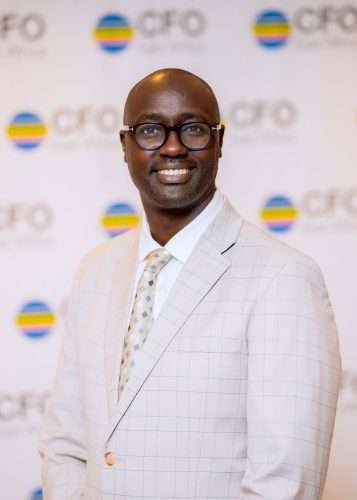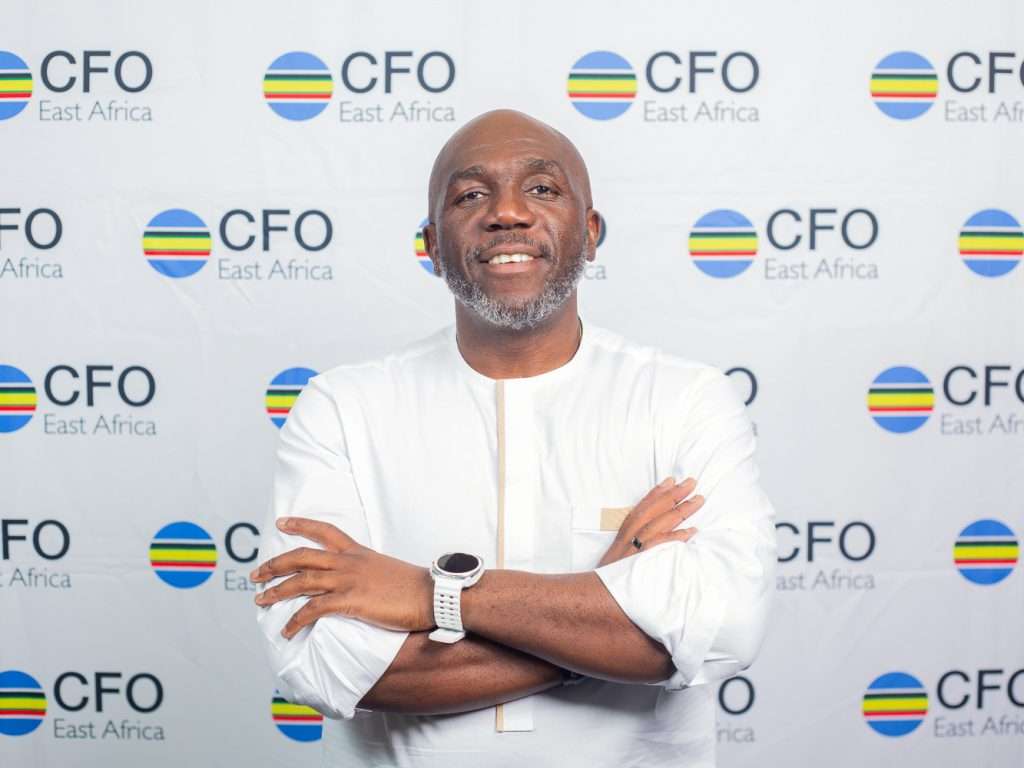
From managing a leading telecoms finance department in Afghanistan to developing a financial turnaround strategy for MTN Rwanda, Dunstan Stober’s journey is a story of resilience, growth, and empowering those he leads.
MTN Rwanda acting CFO Dunstan Ayodele Stober is now used to the curious questions that follow his introduction as the former CFO and acting CEO of MTN Afghanistan. “What was it like living in Kabul?’ is the default ice breaker. But he is a storyteller at heart. Seated in his Dubai office, he recalls his experience in Afghanistan as though he were telling it for the first time.
“In Kabul, we always used to say it's safe until it's not safe. We would be worried after any long, ‘uneventful’ period because we would expect news of a huge attack at any time. But I was blessed to have come out unscathed. One time, I changed my mind about going grocery shopping only to see in the evening news that the supermarket I wanted to visit was attacked. Another time, my colleagues and I were having lunch at our guest house when we started hearing gunshots, blasts and helicopters flying overhead. A building on the way between our office and guesthouse was under attack. A lot of other times, we would either feel the vibrations or hear the sound from a bomb blast and carry on working as if nothing had happened,” he said.
For this reason, most people are confused to know that Dunstan had two stints in Kabul. His first stint lasted about three years working with MTN Afghanistan as a senior manager after he was headhunted by the CFO. Having worked with Dunstan four years prior, he sought his help in improving financial processes and controls, implementing EBITDA improvement initiatives and developing the local team. This was in 2011, when Afghanistan was deeply embroiled in the US-led war on terror, with multinational forces engaged in heavy combat against the Taliban.
“When the CFO in MTN Afghanistan called me at that time, I was attracted to all the things he outlined that he wanted me to do more than the risk of going to Kabul. And I was happy I did, because I built a solid reputation there through the numerous financial and people initiatives I led that helped the company to profitability and improved the working environment. I believe the finance team developed their skills through the best practices I implemented across all the finance functions. To have trained an Afghan to take over my role as the head of financial operations was a feather to my cap. So, when I was called to go back as the CFO, it felt like a no brainer,” he said.
Dramatic turnaround
When he joined, the company's EBITDA was below 20 percent. By the time he left, it had nearly doubled, a feat he attributes to “putting people first”. In 2021, during the Taliban’s recapture of Kabul, Dunstan moved to Dubai, where he was supporting operations before moving back to Kabul in 2023. His leadership saw the company through a successful transition to new ownership, and in September 2024, the new shareholders assumed control of the company. The transaction consumed the better part of Dunstan’s year and left him rather emotional.
"It's almost like seeing your kids leave home to make a life for themselves. But it was the highlight for me to be handing over a stable and profitable business. I am proud of what I achieved with the team at MTN Afghanistan," he said
He is now ready for a new task - steering MTN Rwanda back to profitability. In the first half of 2024, the company, a subsidiary of Africa’s largest mobile operator MTN, reported a loss to the market for the first time. A quarter later, the company’s loss increased, which according to Dunstan was caused by the regulator’s introduction of a zero mobile termination rate, resulting in additional regulatory, fiscal and competitive pressures.
“I see all these challenges as an opportunity for MTN Rwanda to restructure its cost base and repurpose its investment to be ready for its next growth phase. We're going through a period of cost-reconstruction, savings and optimisation. And we are restrategising our value proposition to ensure we continue to delight our customers. I am excited at some of the new initiatives we are exploring at MTN Rwanda,” he explained.
Charting a new path
Dunstan’s priority as he settles into his role at MTN Rwanda is improving the company’s finance environment, optimising finance processes and organisation and developing his team. Part of his recovery strategy is to improve communication among the company’s functional teams to ensure everyone has an understanding of the business and is pulling in the same direction. To this end, he held the first finance townhall meeting creating a platform for his team to engage, interact and share ideas for improvement. He is also exploring new ways of working in the organisation that will foster collaboration, ownership and accountability, which he believes will be key in turning around the organisation’s fortunes in the coming years.
“I like to be involved from the top line to the bottom line in the P&L. But where we are now, I need to focus more on cost optimisation. I need to reshape, rebuild and reposition the finance department as a trusted adviser and business partner to the organisation. We are moving in the right direction with the right level of awareness, and everybody is on board in what we need to do. And our last results showed that we're going in the right direction,” he said.
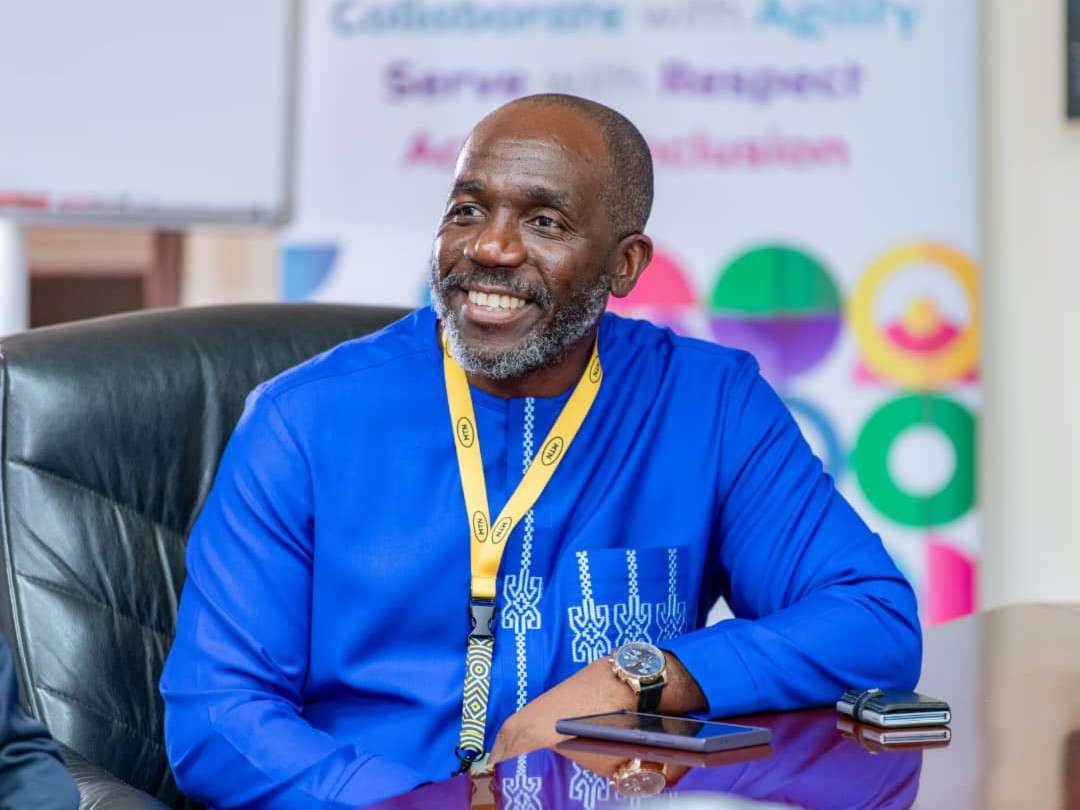
When hiring, Dunstan gives preference to attitude rather than aptitude as he believes the latter can be taught. He enjoys empowering his team by passing on his knowledge and experience and involving them in every step of the work process to ensure they take ownership of projects and see them through from beginning to end. To gain trust, he leads with trust.
“It’s not just about the work, but about them as people, who they are and what’s important to them. I attended a colleague's wedding in Afghanistan. Sometimes, I go out to have lunch with colleagues’ families. The employee engagement score in finance improved significantly after I arrived because of the new ways of work, team spirit and collaboration I introduced. All of a sudden, they saw that they can contribute their ideas and know they can be heard. I am convinced that there is a direct correlation between employee engagement and profits. If you take care of your people, they take care of the job and they take care of the customers,” he said.
Thrown off by his middle name – Ayodele and a close Nigerian accent - people often assume Dunstan is Nigerian. He is a member of the Krio tribe in Sierra Leone, whose lineage is connected to the Yoruba tribe in Nigeria. Dunstan thinks he picked up the accent during the five years he studied there and his Nigerian wife’s influence rubbing off on him.
Dreaming new dreams
Dunstan left Sierra Leone for Nigeria for the first time in 1996, six months after he started his career as a trainee accountant at KPMG. He grabbed the opportunity of an exchange programme between KPMG Sierra Leone and Nigeria with three other colleagues soon after completing his diploma in accounting and finance. While in Nigeria, Dunstan decided to complete his accounting certification at the Institute of Chartered Accountants of Nigeria. Here, he learned his first lesson in humility and resilience.
Although he had taken time off to study for his exams, he did poorly and was demoted, an experience he calls his toughest to date. But he credits the setback for the grit and perseverance he can muster today.
When he first got into management, Dunstan was highly task-oriented, an approach that put him at odds with his team members. He recalls being a hard task-master, setting strict standards for his subordinates to meet. He thinks this is the result of his time in Lagos, whose residents he describes as “highly competitive”.
“I walked into the office in Freetown one day. It was a hot day, but this one guy has a scarf around his neck and a thick jacket. I asked him why he was dressed that way, and it turned out that he was sick. But because of the demands I had placed on them, he didn't have the courage to ask for a sick day off. So, I said to him, ‘leave everything you're doing. Make sure you go to the hospital.’ After that, three members of my team came to me and said they would have never thought I could do something like that. And that really hit me,” he said.
Family man
Dunstan attributes his passion for making a lasting impact on the lives of his team members to his mother, Edith Olakike Stober, to whom he has dedicated his book Joy Has Come Home. Edith, who was a secondary school teacher, had to drop out of school when she got pregnant with him. Dunstan was raised by his maternal grandmother, who cared for him when his mother went back to complete her teaching certification. He fondly refers to her as his first Google, recalling that it was she who instilled in him a love for books.
“The life lessons my mum taught me have proved invaluable in my career and business that I decided to share them with the world in my first book, which I published in 2021," he said.
Dunstan’s book is a story of resilience – both his and his mother’s. It is also a testament to the place of family in his life. Earlier this year, he saw his eldest daughter off to university in Australia, a proud moment for him. He speaks fondly of his three children, whose successes he considers his own.
“I am passionate about giving back and helping others because I know what it means to be down, to feel lost and to feel alone.”
As a way of giving back, Dunstan plans to help underprivileged children through a foundation he plans to launch in 2025. The foundation will offer scholarships, with a focus on the girl child. The foundation will be sponsored by his beverage company, which is also a work in progress in his native Sierra Leone. In the meantime, he is working on his second book.
“I do a lot of things. I enjoy being active. I engage in sports – cycling, squash, padel and football. And writing is my favourite thing to do outside sports. It can be a cathartic outlet. I work on my books and post articles on Facebook, Medium and my newsletter on LinkedIn. Writing allows me to reach and connect with people I would not be able to reach directly,” he said.