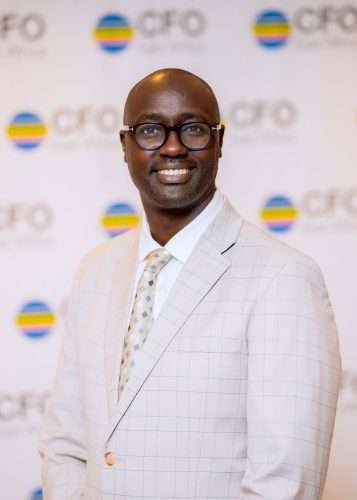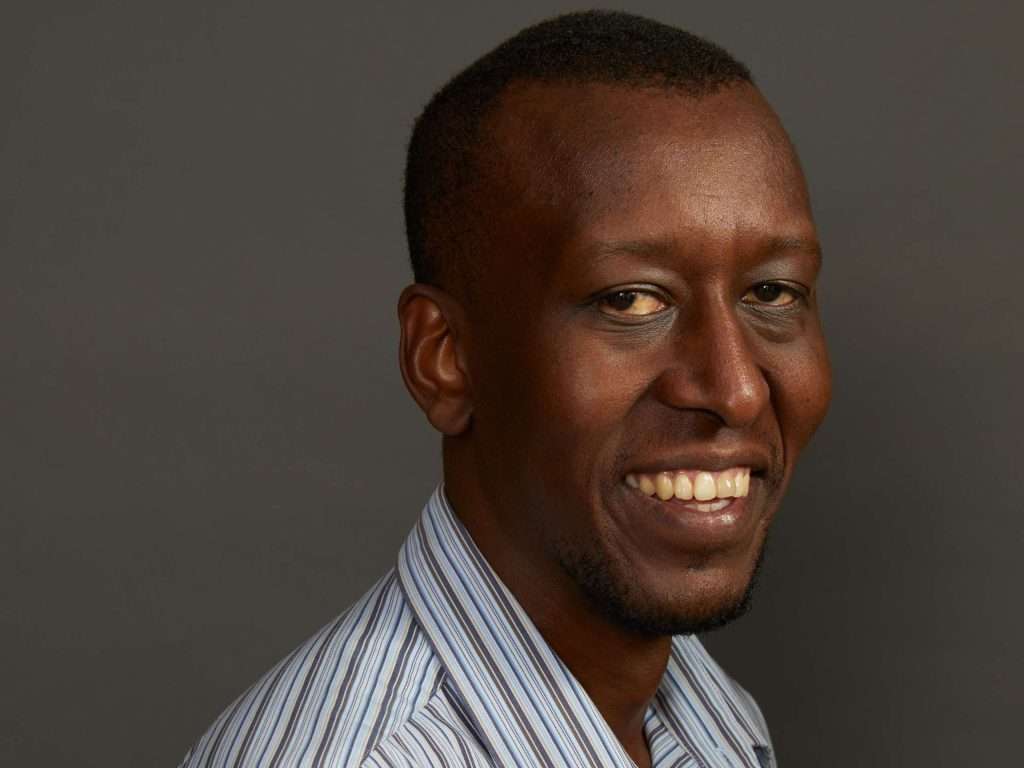
Fourteen years into a career in impact finance, Charles Gachuhi is still keen on building systems that hold.
There is a comparison Charles Gachuhi makes when he talks about what audit did for his career. Financial inclusion in most African countries used to move slowly. Then M-Pesa arrived and Kenya leapfrogged the entire sequence. Audit did the same thing for him.
"In one year, you learn what maybe a typical accountant in another organisation would probably get there in at the bare minimum five years. In audit, you handle the whole accounting cycle including reporting. By the end of the first year, you can do financial statements for a medium-sized firm," he says.
As Charles sees it, the conventional path for a corporate finance professional is slow. But at Ernst and Young (now EY), where he landed after a brief stint at the Safaricom call centre, that timeline was collapsed. The learning curve was steep, by the end of his second year he was an audit senior on assignments for multi-nationals and listed companies. He stayed for four years before identifying something about himself that changed his trajectory.
"I'm more of a doer. I want to do it myself. I want to be involved in the process of setting up the structures. I enjoy doing reports myself. I'm not someone enjoys reviewing what other people have done. I easily find myself redoing it to validate whether it's done properly," he says.
In that regard he feels he is more at home doing the accounting and reporting and not auditing.
Counting the offering
The job that pulled Charles out of audit was not what he would have expected. The New Apostolic Church East Africa, an audit client of EY, needed someone to strengthen their finance department because they wanted to centralise the finance function for Kenya, Uganda and Tanzania. The church’s donors were also keen to enhance grant management and reporting. Working for a church was not exactly the career path he had in mind, but having audited them for two year, Charles was primed for the role. He took the job and walked into an organisation with over 40 bank accounts, each congregation operating its own account, with controls against leakage of revenue wanting.
“It was necessary to address this control gaps and operational inefficiencies but, when you say that to church ministers, they ask whether you are accusing them of stealing offerings. Organisations rely not on the goodwill or the perceived integrity of people but on the systems that you have implemented. That's what at the end of the day as an accountant you can rely on," he says.
The bank accounts came down to four, cheque payments to ministers across three countries were replaced by electronic transfers, while grant and management reporting were streamlined among many other structural and operational transformations. By the time he left four years later, the finance function was centralised and operating effectively and efficiently. While there, he had been part of setting up an NGO run by the Church and discovered that seeing impact in communities offered something neither audit nor business finance had.
"When you could go to the field and see how it has transformed the lives of women out there, from walking 20 or 30 kilometres to look for water to having clean water nearby, it felt something that gives a greater purpose. That's what inspired me to transition to the NGO sector," he says.
A 14-year journey
In 2012, when Charles joined PharmAccess, there were around 13 staff and revenues of roughly 100 million shillings annually. They are now close to 50 staff, and revenues have grown more than tenfold. One thread that runs through his 14 years is an early and consistent enthusiasm for using technology to close gaps that conventional approaches would handle more slowly.
Charles was an early adopter of Power BI within the organisation. He led the set-up of dashboards for management and project reports and opimisation for mobile use so that programme staff in the field could check their budget positions without returning to the office. The use of visuals in financial reports has also been also transformational.
"I like it when I look at someone after I've done a presentation and you see that light bulb moment in their eye. When you've always presented those figures in a table, but when you present them in a bar graph or a pie chart, all of a sudden, they make sense," he says.
When the USAID funding cuts were announced last year, PharmAccess had minimal direct exposure, with USAID-linked programmes accounting for no more than five percent of revenue. Not long after, Charles watched European governments announced increases in defence budgets and understood immediately that the reduction in development aid was not temporary but was even likely to snowball into more donors.
"A lot of NGOs had funding upwards of 50 percent from USAID-related contracts. If you're in business and 50 percent of your business comes from one client, you would be very worried. But in our sector, people never saw it from that risk perspective. People got comfortable and adopted an attitude of this is how we've always done it," he says.
PharmAccess had begun exploring alternative revenue streams before the crisis arrived. One programme assesses hospitals against a quality rating framework to not only rate the quality of care but more importantly offer hospitals a quality improvement plan to guide them through their quality improvement journey. This is a product that hospitals and other payers are now paying for. The Medical Credit Fund (MCF), provides loans to hospitals to finance improvement of their quality of care. It is expected that at maturity and scale, these programs can not only be self-financing but also generate funds that are reinvested into the organisation’s work. In essence, this is also the true measure of the sustainability of its interventions in the health ecosystem.
Charles is firm that revenue diversification must be linked to and anchored in strategy.
"You need to look at your strategic plan and see where are some of the areas and opportunities that you can generate alternative revenue. We are not on one hand saying we're in health and then selling tractors. It's very much within our strategy," he says.
What pulls him in
Charles describes himself as “not naturally outgoing”. One thing that fascinates him intellectually is behavioural economics. He is curious about why people make the decisions they make and what it takes to shift behaviour in a different direction.
"If I want to drive someone's behaviour towards a certain direction, what are the levers that one can pull? Those capture my interest, especially to the extent that this can be used to instil positive behaviour change" he says.
Charles sees his role as finance director as one that seeks to uphold trust, enable impact and transform lives. After 14 years, the work still holds his attention for the same reason it did at the beginning.
"In the NGO sector, when you win a grant, you start seeing in your mind those families being impacted in a great and positive manner. It's a big feeling to transform that from a dream to reality and a greater aspiration than balancing books" he says.