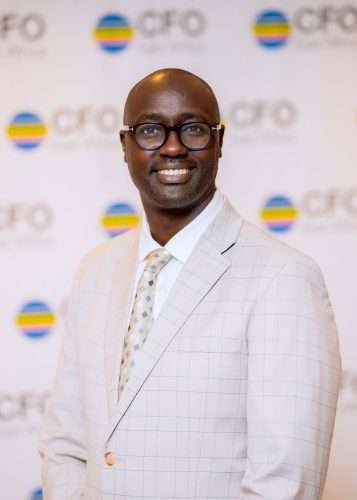
Although some argue that leadership is instinctive, many finance executives learn this skill through trial and error. ZEP-RE CFO Dr Rachael Gitonga, AGL Tanzania FD Sekou Kaba, NSSF Uganda CFO Stevens Mwanje and I&M Bank Tanzania head of finance Veronica Magongo reflect on the experiences that taught them how to lead.
Early in his career, AGL Tanzania FD Sekou Kaba was used to working alone. He was seen as a reliable performer and even enjoyed working independently. But when he became a leader, that formula backfired. He soon realised that his insistence on being involved in every detail was holding him back.
“I was doing many things by myself. But my colleagues and subordinates thought I was not sharing enough. I was imposing things, not explaining. I was not able to communicate and share my passion for the numbers and processes,” he says.
After receiving feedback from his team members, he began explaining instead of instructing. He also learnt to involve them in his decisions and give them space to grow. This made all the difference.
“I decided to be more open, try to communicate with my team and even promote some of them. In all the locations I left, I was offered a lot of gifts and received a lot of recognition. It was touching and overwhelming. I still receive emails from previous colleagues today saying they miss me, that I was a great leader,” he says.
A real enabler
Stevens Mwanje, who serves as the CFO of NSSF Uganda, started out as a bank teller before deciding to study accounting. He realised early on that understanding numbers was only half the job; the other half was learning to listen. When he became CFO, he was deliberate about building a team that shares ideas freely.
“You need to learn things like emotional intelligence, negotiation and communication. You must make time to learn those deliberately. That is how you grow beyond your training and become a real enabler,” he says.
He often encourages his team to make sense of the numbers and even challenge them. In 2020, when the Covid-19 pandemic struck, Stevens was deliberate about keeping morale alive.
“During Covid, we would send cakes to people and celebrate their birthdays together online. We would put on music and dance together virtually. It was a way to keep people connected. I couldn’t be physically with them but I could still show I cared,” he says.
Getting back up
ZEP-RE CFO Dr Rachael Gitonga failed her doctoral proposal defence, it was the first time she had fallen short after years of academic excellence. Afterwards, she sat in her parked car, torn about whether she really wanted to continue with the PhD.
“I’m the kind of person who puts in the time and the work. I enjoy rolling up my sleeves. I had worked very hard and liaised with my professors, but it didn’t meet the cut. And that was very hard. This failure took a toll on me. And I remember finishing up the proposal, getting the feedback and feeling so down,” she says.
A year later, she returned to class, eager to set a good example for her sons. Although she graduated, it was the experience of falling and getting back up again that made all the difference. She now leads her team with a renewed empathy.
“I don’t even know how I did that, but that experience was so humbling for me because it built the muscles for me to deal with failure, to realise that failing is not the end,” she said.
Being a good listener
I&M Bank Tanzania’s Veronica Magongo joined the institution during a major transformation. Her experience moving between different banks had already taught her that strategy means nothing without people. But I&M gave her a first-hand glimpse into the power of listening.
“Leadership and strategy go together. Having a strategy is pointless if you do not lead its execution. We have a very competitive business environment, and having a strategy that ticks all relevant boxes can be a big advantage. It should not be something crafted at the beginning of the year and reviewed at the end of the year, but rather a plan considered daily so that positive changes can be made timely,” she says.
The calm confidence she exudes today comes from her conviction that every challenge holds a solution if leaders approach it with composure. As she sees it, even low points can be moments to prove one’s ability.
“Years in the banking industry have taught me that no problem is unsolvable. Solutions come when you concentrate on issues and collaborate with others to contribute to a successful resolution,” she explains.