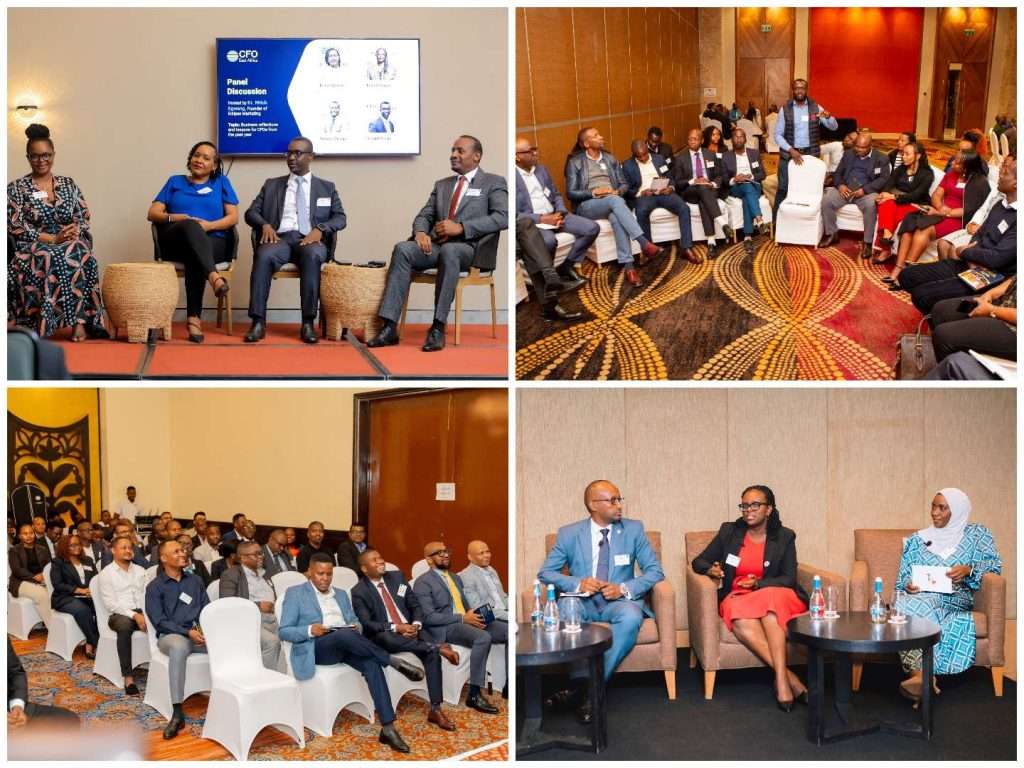
Throughout the year, CFO East Africa provided a platform for conversations that went beyond the balance sheet. CFOs grappled with questions about their evolving role and how to lead in an era of constant disruption.
The days of the CFO as financial gatekeeper are over. Finance leaders across East Africa have embraced their role as strategic partners, moving from reporting the past to actively shaping the future.
Writing about how modern CFOs are driving strategy and value, Jubilee Health Insurance CFO Eugine Muthekele captured this shift.
“Today's CFOs must lead in areas that extend far beyond the balance sheet. They are now expected to shape strategy, drive innovation, and prepare organisations for the future. This shift is not optional. It is a necessary response to an increasingly complex business environment,” he said.
ESG as a competitive advantage
Environmental, social and governance considerations moved from the margins to the centre of business strategy in 2025. Rather than treating ESG as a reporting exercise, leading finance executives are integrating sustainability metrics into performance dashboards, investment frameworks and risk assessments.
“This is a once-in-a-century opportunity for accountants. We have to shepherd this monumental change. It is sacred. Let us not squander it. There is no one ready for this moment like ourselves. Accountants take the lead in joining the dots between sustainability, finance information, performance and disclosures,” Standard Chartered Africa FD Chemutai Murgor said at the virtual summit.
Clean energy also emerged as a particularly pressing topic, with CFOs exploring how Africa's abundant resources present opportunities for competitive advantage.
As Ampersand Energy head of finance Collins Otieno wrote:
"ESG strategy is about business success and financial resilience. Green energy investments present opportunities for commercially viable ventures with great promise of financial gain and economic progress."
The AI dilemma: Embrace or resist?
Artificial intelligence sparked both excitement and apprehension among CFOs in 2025. While some finance leaders have fully integrated AI into their workflows, dramatically reducing the time spent on budgeting and reporting, others remain cautious about data security and ethical concerns.
In an article exploring the GenAI debate, Blue Nile Holdings CFO Shime Baligira revealed that AI has cut her budgeting time from two weeks to a single day.
“We've been dealing with a lot of heavy processes that are still so manual. If it's going to take away the time that I would take to do mundane tasks, or if I'm able to automate my invoice processing, it's not that I'm going to let go of the accounts payable person. I want to use them to do something else,” she explained.
Kisima Farms CFO Francis Ngumbi urged caution: "Understanding what we call supply finance is something that no computer will ever do. Understanding issues about tax is something you cannot have a conversation with a machine about. So, you have to have that interaction. I think AI assists, but then, as a business, you need to have a very clear policy and control framework before you roll out."
Digital transformation
The push for digital transformation intensified as CFOs recognised that real-time data and agile decision-making are no longer optional. Fewer than 30 percent of companies in the region have adopted cloud-based financial systems, leaving many finance teams operating without real-time visibility.
The transformation extends beyond technology adoption to building finance teams with diverse skill sets.
In an article on staying relevant in a changing financial landscape, Tanzania Mortgage Refinance Company CFO Joseph Mrawa explained the importance of continuous learning.
“For you to impact the organisation in a positive way, you need to make sure that you keep pace with technology. Especially now that we are living in the fourth industrial revolution. Whatever is happening out there, if you are not keeping up to date somehow, it's going to affect your operations,” he said.
Resilience in uncertain times
In 2025, CFOs also grappled with how to build organisations that can withstand external pressures. The conversation was particularly urgent for organisations dependent on external funding.
Deloitte Tanzania finance director Relief Mtenga shared her approach to building resilient teams.
“Everybody has to know what the other person does. Sometimes, I even reallocate work. So that if you are on leave, we do not start calling you to ask how something is done. When I go on leave, I hand over my stuff to my finance manager and I do not want them to call me,” she explained.
Private sector CFOs faced their own resilience tests including currency volatility and regulatory uncertainty. The consensus was that resilience must be built systematically through disciplined execution and the ability to anticipate change.
The CFO-CEO pathway
The question of career progression dominated many conversations, with CFOs acknowledging that technical financial skills alone are insufficient for the leap to CEO. The key lies in broadening commercial understanding and learning to tell compelling stories.
NMB Bank CFO Juma Kimori spoke about the discipline required for sustained success.
“The disciplined execution of whatever we commit to has been a fundamental success factor for us. And you know, as a CFO, sometimes you may even become unpopular, but you have to execute your role, which is strategy. You have to drive that from both sides, from the revenue and cost side,” he said at the Tanzania summit in May.
Personal effectiveness and wellbeing
Amid the strategic conversations, CFOs reflected on the habits and routines that sustain their performance. In an article on personal effectiveness, Pathcare Kenya CFO Stephen Kimani shared that he cycles 16 kilometres to and from the office at least three times a week.
These personal reflections underscored the fact that sustainable performance comes from building routines that create space for continuous growth.
“I have a hybrid bike. Because my job keeps me so busy, I do not have time to go to the gym, so this is the best way to have work-life integration. Cycling keeps me fit and I also arrive at work feeling fresh and energised,” he revealed.