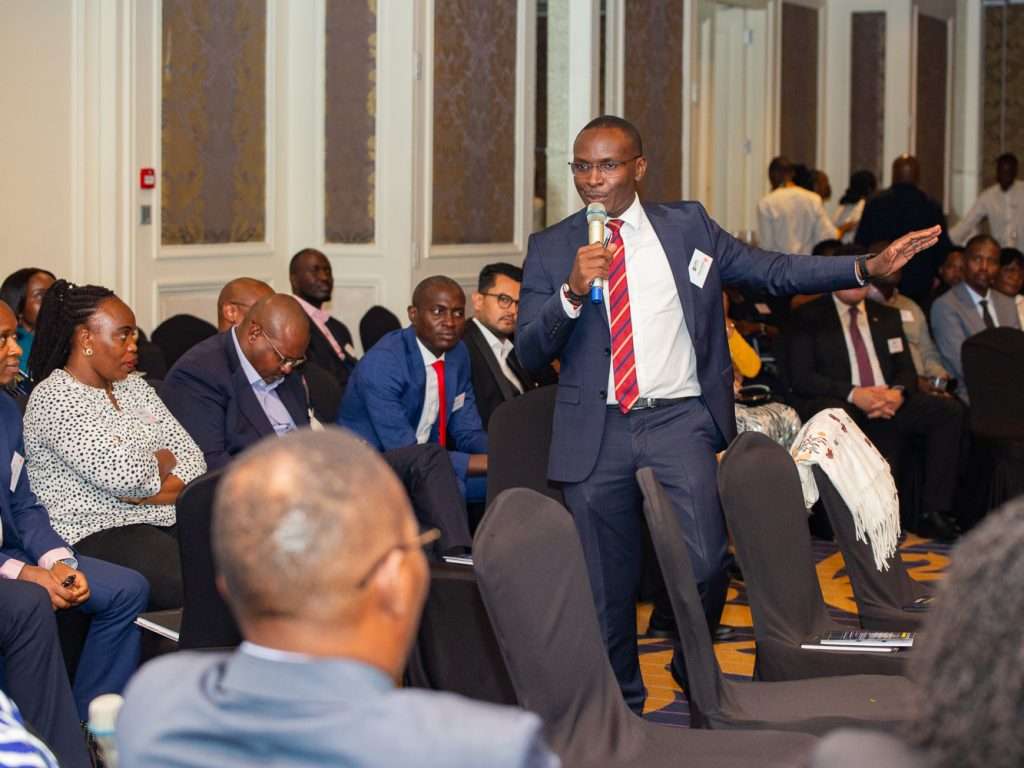
During a roundtable discussion at the 2024 CFO East Africa Year End Summit, finance leaders reflected on the ups and downs that defined the year that was and charted the road ahead. The changing economic landscape and resulting regional dynamics took centre stage as attendees looked back on the events of the past year during a session hosted by media personality Julians Amboko.
A major point of concern was unpredictable year-to-year changes in Kenyan tax laws, which had injected uncertainty into the business environment. The executives noted that the fluctuations had made it difficult to plan ahead, posing a challenge across different industries. Attendees also highlighted a heavier tax burden, calling for policies that would widen the tax base instead.
“For me, it has been extremely difficult to keep up, because one day, we will sit with my team and agree that these are the rules, and this is how we are going to change the payroll. One week later, it was overruled. It's very confusing, and that's how it's affected everybody, I think, in this room. So, for me, my question would be, how do we ensure we come up with a collective voice where we are forcing the tax setters to listen to us and really understand the difficulty they put us in? Because even for your budget for 2025, on what tax base would you set it on?” one attendee questioned.
The executives noted with concern that tax proposals that had been shot down during Kenya’s June 2024 protests had found their way back into newly-enacted laws - and noted that the ripple effect would impact trade within the region.
“We are not living in a country that is isolated. So, whatever is done here affects everyone else who is trading with us, who is neighbours with us, and who is in competition with us. We've tried to raise taxes and it hasn't worked. So, why not start trying to enhance consumption through reduction of taxes that are consumption-based? Or even the corporation taxes. But when you increase tax from all angles, pay as you earn, corporate tax, VAT, you know, the taxes are symbiotic,” another guest said.
CFOs as policy advocates
Some attendees at the roundtable advocated for CFOs to use their financial expertise to drive informed engagement on matters of public interest.
Other executives described the problem as moral or societal, saying a lack of integrity among professionals had enabled graft. One executive called for synergy in political and governance processes.
“How many of us attended the public budget hearings? I was at KICC, and I can tell you we were maybe 20 people. The medium-term strategy paper is the most important thing anybody in this room needs to know about,” he said.
Regulatory changes
Some CFOs also noted that the Rwandan tax system was less challenging to navigate. The country was also praised for its long-term focus, which was credited with creating a business-friendly environment.
“We went to a summit and in one of the conferences, the heads of the ministries came to sit and some business people started standing up and saying, ‘this is my challenge’. And quickly, the head of that ministry would run to you and say, ‘what is the issue? Let me solve it. Come to my office tomorrow’.,” one executive said.
Regulatory changes for financial institutions within the larger East African region were also a hot topic of discussion.
In November 2022, the Bank of Uganda announced a six-fold increase in capital requirement for banks to Ush150 billion by the first half of 2024. Kenya recently followed suit, increasing the minimum core capital for banks to Ksh10 billion by 2029. Tanzania raised the minimum capital for lenders to Tsh15 billion in 2022, while Rwanda requires all commercial banks to have a minimum paid up capital of Rwf20 billion.
“There's no country that can grow and exploit all of its opportunities if it doesn't have capital,” another attendee pointed out.
As the discussions drew to a close, general sentiment from leading financial minds in Kenya, Rwanda, Tanzania and Uganda agreed that there was a need for regional co-operation - and tailored solutions.