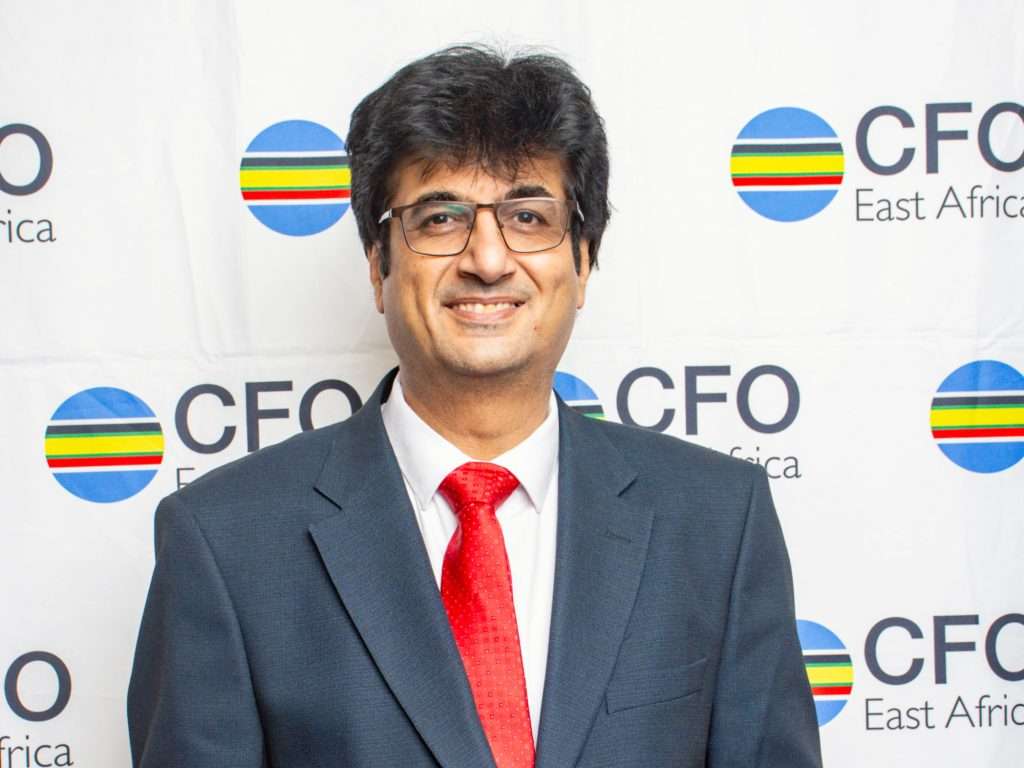
While 88 percent of organisations now use AI, fewer than six percent see major earnings impact. In this article, CFO Amir Parpia explores how C-suite leaders can combine AI-driven insight with human judgement and collaboration to create sustainable enterprise value.
Walk into any boardroom today and you will hear the same conversation: AI is everywhere, yet its impact feels uneven.
Surveys suggest that around 88 percent of organisations now use AI in at least one function, and about 71 percent of CEOs treat it as a top investment priority. But only around 39 percent can point to clear profit impact, and fewer than six percent see AI as a major contributor to earnings.
Behind these numbers are real leaders doing their best with competing mandates. The CEO is asked to grow, the CFO to protect value, the COO to deliver, the CIO to secure and scale, the CHRO to equip people, and the CMO to win customers. Each target is legitimate. But when they are pursued in isolation, AI can widen the gaps between them instead of closing them. The question is not whether AI is powerful, but whether the C-suite can use it to work together differently.
At its core, AI helps machines spot patterns, make predictions, and learn from data. Large language models (LLMs) add a human touch; they read and write in natural language, summarise long documents, draft communications, and translate unstructured feedback into themes leaders can act on.
In practice, this means the C-suite can move from “we have a lot of data” to “we have clearer conversations”. Scenarios that once took weeks can be sketched in days. Risks that used to surface in hindsight can appear as early warnings. The technology does not decide; it sharpens the questions leaders ask and the evidence they consider.
The human spectrum
But AI is not a neutral oracle. It learns from historical data, inherits human biases, and can sound confident even when it is wrong. It does not carry accountability, feel the weight of a layoff, or understand the long-term reputation risk of a decision. That is why the human spectrum remains central.
A CFO knows when a cost cut today will damage capability tomorrow. A COO senses when a process change will frustrate customers even if metrics improve. A CHRO sees how a new tool will land with tired teams. A CEO holds the story of where the organisation is going and why. AI can inform these judgements; it cannot replace them.
Recent studies show both enthusiasm and strain. Around 85 percent of organisations increased AI spending last year, and 91 percent plan to increase it again. Yet most expect payback only after two to four years, and only about six percent of AI projects deliver returns within a year.
At the same time, 92 percent of executives say they are building an “AI elite” that is significantly more productive, while 60 percent expect to reduce roles for those who do not adopt AI. But more than half also report rising internal tension, and nearly 80 percent see growing friction between IT and the business. The pattern is familiar: technology is moving faster than leadership alignment, governance, and shared understanding of value.
Most organisations are not short of data; they are short of shared insight. Finance sees the cost of delay. Operations sees the bottleneck. Sales sees the customer signal. Technology sees the architecture. People leaders see capability and adoption. AI can help connect these views by surfacing patterns across them and turning information into common business questions. Imagine a dip in customer activity that first shows up in sales.
Designing for partnership
An AI-enabled view could link that signal to service tickets, staffing levels, cash-flow trends, and system performance. The outcome is not an automatic decision. It is a richer conversation in which the C-suite can decide together whether the priority is retention, investment, remediation, or a deliberate shift in strategy.
Organisations that get the most from AI design for human-AI partnership. They are clear about which decisions must remain human, where AI provides options or evidence, and how disagreements between judgement and model output are handled. They invest in data and AI literacy so leaders can question, not just consume, model outputs.
In practice, this might look like finance using AI to generate several forecast scenarios, then leaders debating assumptions and strategic implications. Or operations using AI to highlight process risks, then humans deciding which to address first based on customer impact. Or HR using AI to identify skill gaps, then leaders designing change programmes that respect culture and capacity.
A useful starting point is honest reflection. We need to identify where our decisions rely too heavily on gut feel rather than evidence, where we have abundant data but limited insight, and which decisions are too important to delegate to a model but could be improved with better information.
At the same time, we need to ensure AI strengthens rather than weakens accountability and trust. The aim is not to remove human judgement but to elevate it. AI and LLMs can handle routine analysis, surface hidden patterns, and free leaders to focus on the questions that truly require wisdom: what kind of organisation we want to be, what risks we are willing to take, and how we create value that lasts beyond the next reporting cycle.
Mapping the change
Perhaps the most important question is not whether AI will transform your industry, but whether your leadership team will transform how it works together. If each C-suite member identified one decision that currently depends too much on intuition, one area where data is abundant but insight is scarce, and one process where AI could reveal risks or opportunities earlier, what would change?
Try a simple exercise: at the next executive meeting, ask each leader to bring one concrete example where human-AI partnership could improve a critical decision and one guardrail that must remain firmly human. What patterns emerge? Where do your KPIs align, and where do they pull in different directions? What would it take to turn those insights into a shared agenda for the next 12 months?
In this shared agenda, each role across the C-suite retains distinct human strengths while leveraging specific AI capabilities. For the CEO and board, vision, stakeholder trust, and strategic trade-offs remain uniquely human, while AI provides scenario modelling, early-warning signals, and synthesis of complex information.
For the CFO, judgement on capital allocation, risk appetite, and ethics is supported by rapid analysis, anomaly detection, and what-if simulations. COOs balance operational context and customer impact with AI-driven process mining and bottleneck detection. CIOs and CTOs guide architecture and security alongside automated model monitoring, while CHROs preserve culture and empathy while utilizing skills mapping and sentiment analysis. Ultimately, CMOs, CROs, and general counsel pair strategic positioning and ethical boundaries with predictive segmentation and compliance pattern detection.
The organisations that thrive will not be those with the most advanced models, but those whose C-suite uses AI to see further and faster, while humans decide what matters and why. The challenge is to make that partnership deliberate, not accidental.
By grounding AI adoption in clear functional roles and shared cross-enterprise outcomes, executive teams can move past trial projects and deliver measurable performance. The true benchmark of success is not the complexity of the technology deployed, but the clarity and speed with which the C-suite leads.
The insights and opinions shared in this article are Amir Parpia’s own, shaped by his personal experiences and professional journey. They do not necessarily reflect the official stance of any organisation.