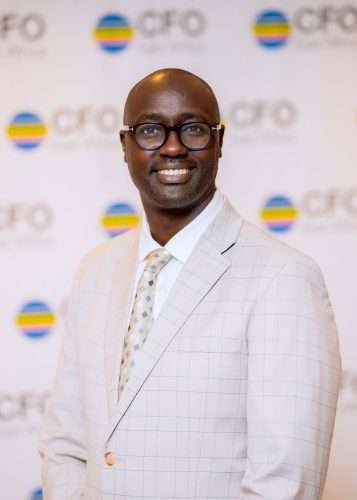
When the pace of work accelerates and decisions carry weight, staying calm is a strategic advantage. For Helium One CFO Chris Eyre, AGL Tanzania FD Sekou Kaba, and WiA CFO Maneno Daudi, composure under pressure is a skill honed over time.
Recently, Helium One began preparing to transition to product development after entering into a joint venture with the government of Tanzania. As the only member of the leadership team based in Dar es Salaam, CFO Chris Eyre found himself navigating regulatory hurdles. Decisions often had to be made with little time to consult colleagues abroad. In those moments, he relied on his intimate knowledge of the region’s business environment.
“You can sit in an office in London and design all the perfect structures and everything else. But they don’t work here unless you’ve got someone on the ground who understands how to make them work. And the role of a CFO has expanded well beyond numbers. You’ve got to be in the thick of it,” he says.
Chris keeps his cool by moving quickly. If a drill breaks or a compliance deadline looms, he does not wait for consensus or the ideal scenario. He prefers to correct rather than stall in the hope of perfection. Over time, he has learnt that progress defuses panic.
“I think if you take a decision and move and if it’s not quite right, then you deal with the consequences and correct it. But I think if you just keep doing nothing, waiting for the perfect moment or the perfect answer, it’s never going to come. So, just get on and do something. And if it’s not perfect, then fine, you fix it afterwards,” he says.
At WiA, CFO Maneno Daudi remembers a month when the numbers simply would not line up. Internet bills from upstream providers landed earlier than expected, while client payments delayed without warning. There were moments when he questioned whether he could meet payroll. But instead of reacting out of fear, he went back to his cash forecast. He had built contingency buffers into his model and used them exactly as planned.
Being prepared
“You should be able to plan. You should be able to have a clear understanding of your numbers. You should be able to forecast and also plan for some eventualities. Once you do that, even when things get hectic, you still have a path to follow,” he says.
In Maneno’s experience, composure comes from preparation. His daily routine includes updating cash flow tools that track projections for the next five years. When things do not go according to plan, he opens a spreadsheet he already trusts. These habits have helped him step into leadership with a steady hand.
“You can be calm and still effective. You don’t have to be shouting to get things done. Even when I’m annoyed or stressed, I try to respond calmly,” he says.
For AGL FD Sekou Kaba, calm begins before the workday starts. He often sets his morning alarm to go off an hour earlier. His day begins with a word of prayer and a gospel song, a routine that kept him from spiralling when he first relocated to Tanzania. At the time, he was navigating an unfamiliar team and new market expectations.
“I have a personal discipline. Every morning before I come to work, I take time to pray and read the Bible. That gives me the mental strength I need. And it helps me treat people well even when I’m under pressure,” he says.
Breaking things down
The toughest moment came when a routine tax submission was rejected due to a technical discrepancy in exchange rates. It triggered a cascade of follow-ups that threatened legal implications if not resolved quickly. In the heat of the moment, Sekou was tempted to fire off an angry email. Instead, he decided to take a brief walk and came back with a plan.
“When something happens, I’ve learnt to keep quiet. I take time to think before I respond. Maybe after one night or after one day, you find that you understand the issue better. And your reaction is better,” he says.
Chris uses a similar tactic. When an unexpected supplier issue threatened to delay a drill mobilisation by several weeks, he knew it could derail investor confidence. His first step was to sit down and list everything that could still go ahead while waiting. Within two hours, he had rerouted a team to begin preparatory work and updated the Gantt chart with revised targets.
“I find that when things get really hectic, the best thing you can do is break it down. What’s the next thing I need to do? And then just do that. Don’t try to solve everything at once, just the next thing,” he says.
As Maneno sees it, transparency is a powerful antidote to panic. During a challenging month last year, he called his team into a meeting and explained the mismatch between receivables and payables. He then invited them to suggest ideas for bridging the gap. By the end of the week, they had negotiated partial settlements and implemented a tighter collection policy. The energy in the office shifted.
“When the team understands what we’re working towards, and what the financial goals are, then they understand why we make certain decisions. They stop seeing finance as a blocker. They start seeing it as part of the solution. That makes everything easier,” he says.
Sekou also recalls a tense period when a budget error was discovered days before board review. While he would have been inclined to reprimand his team, he pulled them into a closed door meeting instead, explaining the risk and asking for help to fix it. Although they stayed late for three nights, the final deck was spotless.
“If something goes wrong, I don’t panic. I call the team, and we find a way forward. I don’t blame people. I show them that we are in it together,” he says.