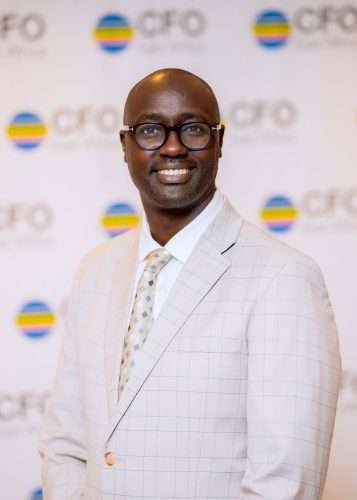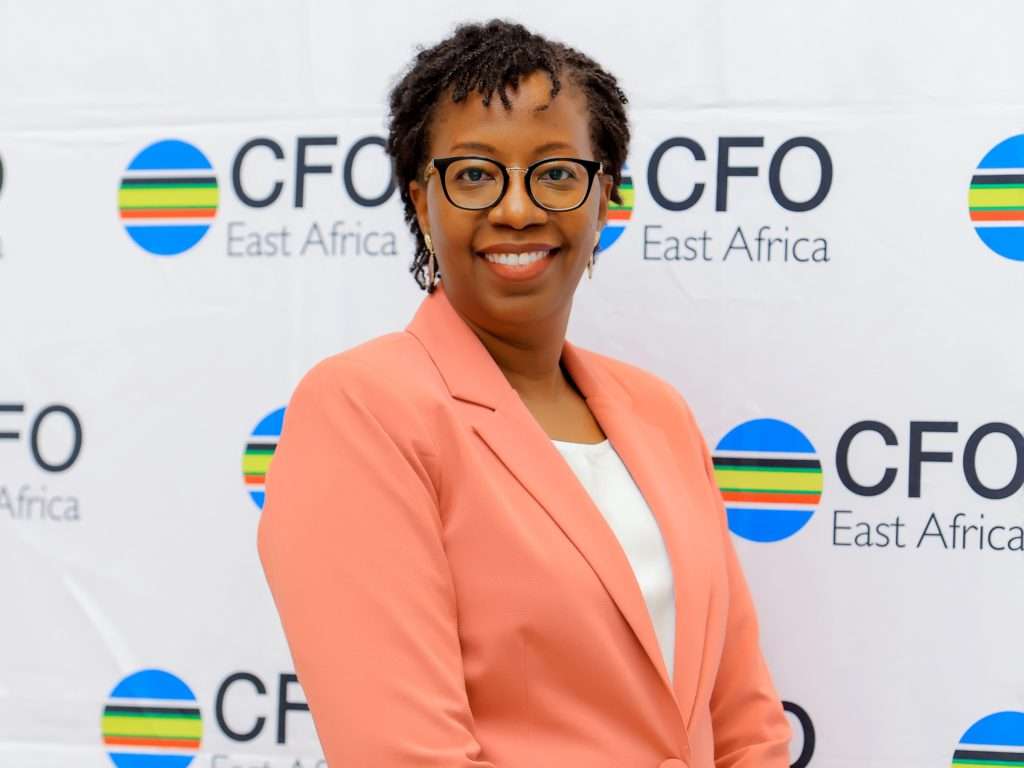
Fiona Nuwamanya, co-founder of Africa Centre for Applied Digital Health, brings a uniquely entrepreneurial perspective to the 2026 CFO Awards panel, shaped by her time founding and scaling a healthcare startup.
In this interview, she shares why modern finance leaders must champion agility and resilience in the face of emerging global risks.
What drew you to become a judge for the CFO awards?
I was asked to participate, and I felt it was important to give back to the finance community. Having won multiple awards over the last four years, I felt it was the natural next step to share what it takes to succeed. Winning an award validates the long nights and hard trade-offs; it provides affirmation that your work is recognised globally. It also brings an added responsibility to mentor others more intentionally and speak honestly about the journey. Finally, it serves as a reminder to remain grounded. An award is a snapshot in time, and yet you must return to the real work of creating lasting impact beyond the gala night.
Having been a co-founder and CFO, what unique perspective do you bring to evaluating candidates?
I have a diverse career across the healthcare and development sectors, but uniquely as a business founder. Being part of a team building an innovative business from the ground, with no references gives me a different perspective; I do not merely look at whether a business is making money, but rather how to strategise and give it legs, hopefully that eventually it can stand on its own. At Rocket Health, as we grew from a small startup to raising private equity over a decade, my role had to evolve continuously. This experience helps me identify CFOs with entrepreneurial curiosity. As times change and evolve, I think we need finance leaders who think like business owners, caring about the product, the customer, culture, and long-term value, rather than just the balance sheet.
What can established finance leaders learn from the startup CFO experience?
A startup environment is highly solution-oriented and agile, much different from corporate environments where processes and solutions are already defined, startups pivot frequently when things do not work. Instead of defending a budget just because “that is how things are done,” we test, learn, and adjust. Many times speed is what keeps you alive. The speed at which you adjust when something is not working. Additionally, as a CFO in a startup, you have to be obsessive about cash flow. We focus on daily unit economics and cash runway rather than waiting for approval at the end of the quarter during board meetings. I think CFOs from established entities could also learn to adopt this survival-level focus on what creates or destroys value daily.
How should CFOs approach ESG and sustainability as a genuine strategic lever?
In Africa, by and large we are still developing “wings” on how to adopt sustainability agenda. While entities in regulated sectors move faster due to global mandates, smaller businesses must craft their own starting points. Therefore, if for example you cannot immediately solve the environmental component, you can focus on the social and governance aspects. Every entity must find its own place to start.
How is the CFO role evolving, and what will define a successful finance leader in the next three to five years?
Historically, many accountants have stayed strictly within their technical lanes. However, in the next few years, CFOs who refuse to learn and develop will inevitably be pushed out. For instance, you may wait for the group to roll out a new digital tool; but what if you proactively identify automation opportunities and upskill your team? Furthermore, the scope of the CFO has expanded to include risk management, ESG reporting, and cyber issues. Given recent global shocks, institutions need CFOs with a posture of resilience, a commitment to continuous learning, and the ability to stay ahead of emerging risks.
What distinguishing qualities will you be looking out for when evaluating candidates? First, I will look for individuals who can clearly articulate their value creation and journey. I want to see where this person was a decade ago, how they have grown and what their concrete contribution to their institutions has been. Secondly, I value resilience through business cycles. Finally, I will be looking out for someone with a global mindset combined with the ability to implement local solutions, translating global trends into an African context.
What emerging risks and challenges should CFOs be prioritising in 2026?
While not entirely new, ethics remains a constant test. CFOs are daily facing conflicts between professional standards and business pressures, so we must make a daily resolve to be the gatekeepers of ethics. Cyber risk is also critical; hackers are becoming more sophisticated, and we must be vigilant against threats that could have an adverse effect on the business. The adoption of AI is another challenge – we must encourage teams to use these tools effectively without losing the ability to deliver nuanced, human solutions. Finally, managing virtual teams in a hybrid environment makes it harder to maintain engagement and mentorship, which is a significant modern challenge that we need to learn how to circumvent.
Is there anything else you hope to see from the candidates or the awards process?
I hope the awards encourage more honest and open conversations about resilience. Often, the process feels too focused on polished success stories. I sometimes share my own experience of a difficult business season when I was under intense scrutiny in the boardroom, because when a company is facing difficult financial realities, the CFO often carries most of that pressure. We need to normalise discussing and reflecting on these hard times and how leaders maintain their resolve and composure when under immense pressure. Also, we must tell our stories when we arise out of those situations victoriously.