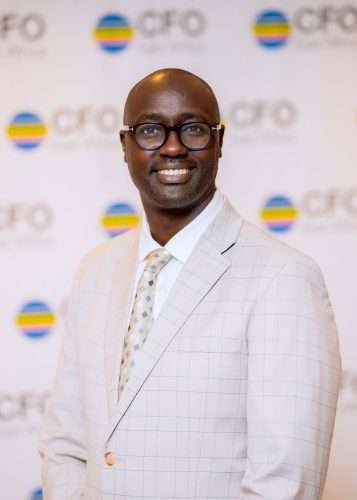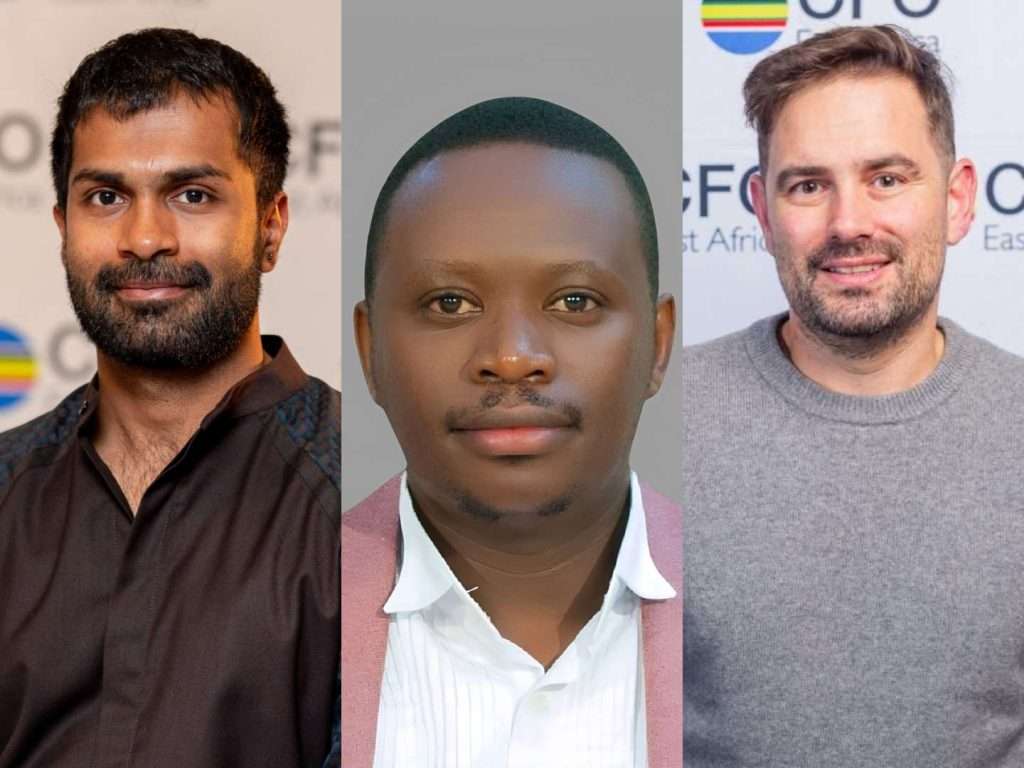
Most CFOs treat risk as something to manage and measure, but for those who go on to build their own companies, it is far more personal. Bag Innovation CFO Akash Ladha, Umoja Coin CFO Bornmathew Nuru, and BasiGo CFO Jonathan Green explain what it means to carry both the financial and emotional weight of running a business.
Bag Innovation CFO Akash Ladha founded ALSM Consulting in Kigali in 2020, at the height of the Covid-19 pandemic. The market was crowded, with established audit firms claiming the lion’s share. He had only two clients but decided to hire a team of five, paying their salaries out of his own income and making up the shortfall every month.
“It is always very difficult in the beginning for an entrepreneur’s journey no matter the business. You may need to make a lot of sacrifices because if you want to have liberty to travel and be your own boss in the coming time, you need to do more at this point. You can’t have both lives. You can’t expect weekends off when you are still trying to build something that will stand on its own,” he says.
The youthful founder kept the firm running through fractional CFO assignments, using the income to fund salaries and operating costs. As client work increased, he built internal capacity around audit, taxation and business advisory, creating a team that could function independently. In those early months, when the firm was spending more than it earned, he was forced to think differently about risk.
“It was hard in the beginning but that paid off because it allowed me to train people and build culture my way. When you train people from zero you are not only teaching them accounting but also how to deal with clients, how to think about the business and how to behave professionally. That is something you cannot get if you hire people who already have bad habits or are used to working in big firms. It took time, but now I can leave the office and know that work is being done properly even when I am not there,” he says.
Entering unfamiliar territory
In Tanzania, Umoja Coin co-founder and CFO Bornmathew Nuru’s challenge was no less demanding. In 2022, he set out to build a cryptocurrency company in a market with no clear regulations and little investor appetite. After more than a decade in traditional accounting and audit, he wanted to create a business that solved real problems in cross-border payments. He left his job to build the platform, funding the project with personal savings and help from a few friends.
“People told me you’re using a lot of energy in this, why can’t you do something different. I said I cannot do something which anybody can do. Let me try something which is at least unique which I have a belief in. It’s just a matter of time and I believe one day we will be among the people who change the continent,” he says.
Running Umoja Coin meant living with long periods of uncertainty. There were months when servers had to be paid for before his own salary. At some point, potential partners pulled out because of regulatory delays. The hardest part was explaining to family members why he stayed committed when the project had yet to generate returns.
“I’ve been employed for more than 10 years and reached a time where I said I know everything about accounting from A to Z. I was looking at Excel files every day and thought, what else do I need to do? I wanted to do something that even my wife sometimes doesn’t understand. But I told to just wait for when I’ll be on the list of people who change Africa,” he says.
Scaling electric mobility
BasiGo co-founder and CFO Jonathan Green faces the same pressure at a larger scale. He manages the financing and operations of one of East Africa’s most visible electric mobility start-ups. The company leases electric buses to operators in Nairobi and Kigali, combining hardware, charging infrastructure and software into one model. Behind that growth is a constant struggle to balance the cost of expansion with impact.
“I guess the role of CFOs in businesses that are having a social or environmental impact is to then find investment that can be aligned with meeting those outcomes which sometimes comes at the expense of investor returns. There is sometimes a trade-off between the amount of return that you can expect and the impact you can make. What we’ve seen here in East Africa is that customers are small, cash flows are limited and margins are thin. You really have to think about how you can bring your product or service to scale to achieve the impact you want,” he explains.
Jonathan oversees legal, ESG and HR alongside finance. He spends much of his time negotiating with investors and making sure that promises made during fundraising are delivered. He describes the dual role of CFO and founder as one that combines operational pressure with personal accountability.
“The challenge is making sure that the team is happy. At the same time the team is working really hard because we’ve accepted investor money. We’ve promised a lot and now we have to deliver. It’s a thankless job but it’s part of ensuring that the culture and financial discipline stay aligned,” he says.