The Central Bank of Kenya’s (CBK) Monetary Policy Committee has lowered its policy rate from 10.75 percent to 10 percent to stimulate lending in the private sector. But banks have been slow to lower their lending rates following past rate cuts, citing high funding costs and increased credit risk.
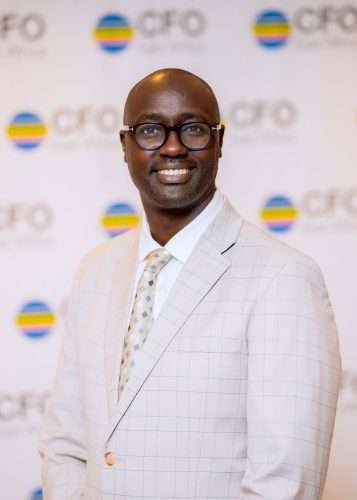
Rubis Energy Kenya group CFO John Githiomi offers his perspective on this development, sharing his strategies for managing inflation and reducing the cost of borrowing.
How are you aligning your company’s borrowing or investment strategies with the Central Bank’s recent interest rate cut to 10 percent?
The cost of credit in Kenya is still relatively high. Financing cost is a significant line in the statement of income for most, if not all, oil marketers in Kenya. The recent rate cuts by CBK are more than welcome. Some of the strategies that most of the sector players employed to manage the financing cost include optimising working capital through enforcement of strict credit policies and reducing collection periods to enhance cash flow, seeking extended payable terms without incurring penalties, as well as efficient inventory management through an optimised stock holding level to reduce holding costs while ensuring operational continuity.
Refinancing of high interest loans with lower interest loans is also one of the strategies employed. In Kenya, banks have been slow in reducing the interest rates. CFOs must ensure that their companies have multiple bank facilities that allow them flexibility to switch between different facilities to keep the financing cost low.
While USD borrowing is relatively cheaper in relation to KES borrowing, it poses forex risks especially where the local unit is unstable. In our sector, we have the advantage of having some USD based businesses. These then allow us to do multicurrency borrowing without necessarily being exposed to forex losses.
A CFO only needs to match his borrowings (USD liabilities) with his USD assets (receivables) to attain a natural hedge, and thus benefit from the lower interest rates through borrowing in USD as opposed to the more expensive local currency borrowing.
How does the recent 0.2 percent uptick in inflation affect your company, and how will you ensure continued financial stability and profitability?
The oil and gas sector is regulated, meaning that inflation affects our cost of doing business without necessarily increasing the margins the business makes. Prices are set by our regulator, with a margin that was last reviewed six years back.
To remain profitable, cost optimisation, technology adoption, and strategies that help you push higher volumes are key to remaining afloat. To ensure stability and profitability, we are streamlining operations by identifying areas for operational efficiencies to reduce costs while maintaining quality and safety.
We are currently undertaking an automation project that should help us reduce or remove unnecessary processes. Inflation, in the wake of static margins, has also led to a review of our cost elements with a view to eliminating unnecessary costs, while renegotiating vendor contracts and revising vendor scopes to keep costs within sustainable levels.
Further, we are delaying and reevaluating non-critical capital or operational expenditure during high inflation and subdued performance periods as a strategy of managing costs.
Within our business, power bills are a key cost. We are investing in renewable energy projects and energy efficiency programmes to reduce our costs within our retail stations and premises, but also as a new revenue line to diversify revenue streams.
Lastly, we are allocating capital to high margin and non-regulated product lines like lubricants and LPG and leveraging on the better margins to cover business costs in the wake of inflationary pressures.
How do you balance short term financial decisions with Kenya’s medium-term inflation target of 2.5 percent to 7.5 percent to ensure sustainable growth?
As CFOs, we make decisions daily. The decisions made should always be aligned to the long-term business strategy. The businesses we build need to withstand any near and mid-term shocks. To ensure sustainable growth, in the short term, decisions made will follow capital allocation to high ROI projects whose returns are way above the projected inflation targets.
We are keeping a focus on operational efficiency to cut down on costs while delivering products to the market at the lowest possible cost, and automation, which removes some costly manual processes. Additionally, we are focusing on high margin non-price regulated business segments like LPG and lubricants.