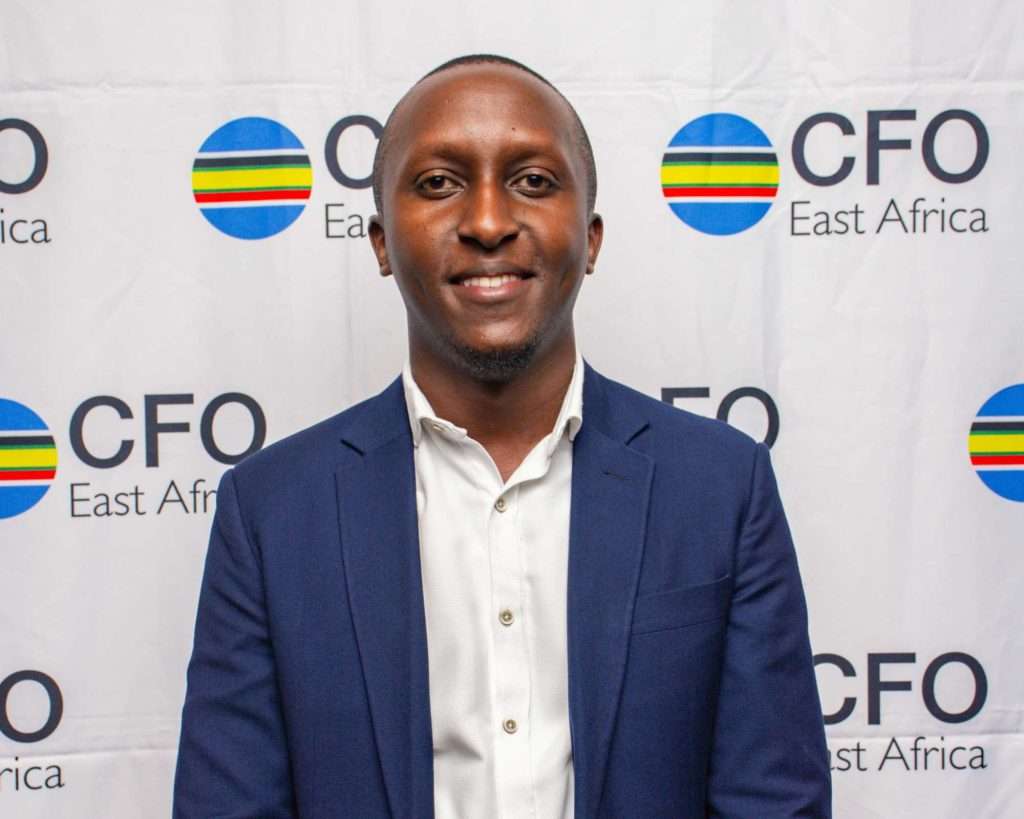
Cross-border payments are not simply about moving money from one country to another for Mark Mwaniki. After more than a decade in sales, and experience across lending and payments, he sees better financial infrastructure as a way to help businesses move faster and enter new markets.
Mark Mwaniki spends his working life trying to solve the friction businesses face when money must move between African markets. Verto provides infrastructure that allows businesses to receive and pay out in multiple currencies, together with foreign exchange and treasury management. He finds the value of that infrastructure is easiest to understand from the perspective of a finance leader trying to manage operations across several countries.
“Having spoken to very many CFOs in the past, what a lot of them want is predictability or certainty in terms of whether they are able to get their money from this country to that country in a certain period of time, guaranteed, whether the cost is open, transparent and fixed, and whether they have visibility into seeing at any given point in time what the status is,” he says.
The difficulty grows as companies expand. Maintaining bank accounts in every country creates another layer of administration. He sees a multicurrency platform as a way of bringing those needs together.
He elaborates, “I think we all know, in this day and age, opening bank accounts in every country that you operate in, of course, can be quite cumbersome because you're dealing with different accounts every day. With Verto’s infrastructure, you basically have access to multicurrency accounts all within one suite or one platform.”
The emphasis on practical business needs is characteristic of how Mark talks about fintech. His interest is less in technology as an end in itself and more in what it can change for the companies using it.
Solving problems
Mark's career began in traditional finance, working with non-deposit taking MFIs and doing their sales. Mark then moved through lending, advertising technology and fintech before focusing on cross-border payments. That experience gave him a broad view of how financial products develop.
“Fintechs love to innovate. I think that's one thing I've seen across the board where we have many tech companies, not just fintechs alone, that are born every other day with new solutions that sometimes some of us didn't even think about or even knew that there was a need for such kind of products in the market,” he says,
He has seen ideas that originate in other markets become useful in East Africa when they are adapted to the realities of local markets.
The cross-border element of finance was already familiar by the time he joined Verto. It had appeared in different forms in his earlier roles.
He recalls, “Having worked across the industries I've worked in, interestingly enough, payments was a part of my day-to-day even in those businesses, because of course in lending you need to basically get the funds to the borrower. When you're raising capital, you need to receive your funds from overseas.”
Entering new markets
Mark sees cross-border infrastructure as an enabler of expansion, particularly for companies that want to trade in markets where they do not yet have a physical presence. One of the obstacles he identifies is the heavy reliance on the US dollar for transactions between African countries. However, he sees a gradual move toward more direct access to African currencies.
“The biggest challenge is the dollar has always been predominantly in the conversation. Your money first has to be changed to the dollar then later converted to the local currency of the other person to be settled. But we are seeing a shift from that, especially with systems such as the Pan-African Payment and Settlement System,” he explains. “And at Verto, we are equally working along the same lines in terms of ensuring that if you want to hold a TZS wallet as a Kenyan business, that is possible.”
He notes that a small business and a large manufacturer may both have the need for cross-border payments but very different operational requirements. The larger opportunity is the ability to expand without rebuilding the financial system of a business every time it enters another country.
“In terms of operations, besides the cash flow aspect, it also allows a business to scale. I mentioned for example, allowing a Kenyan business to access accounts in different markets, whether that’s a USD account in the US or local currency accounts in markets such as South Africa or Nigeria. That gives the business the ability to collect and make payments locally as it expands into those markets, without necessarily having to set up a completely new banking infrastructure in each country,”” he says.
What time really costs
In Mark’s view, the strongest finance decisions often come from looking beyond the most obvious numbers on a transaction. That is why he believes CFOs should continually look at whether their existing payment channels are still the most efficient option.
“Of course, I'm not a CFO, but having spoken to many over the years, one of the key questions is always around efficiency. Is there a better alternative that could reduce overall cost to the business? And that cost isn’t necessarily just the transaction fee, you also have to consider things like time, predictability and the impact on cash flow.” he says.
He says that cost should not be understood only as a transaction fee. A delayed payment can create a knock-on effect that is more consequential than the original transaction charge.
He explains, “It could be around time, in terms of how quick the money can arrive to the beneficiary in a different market. Equally, time can also be classified as cost. A CFO would want to know, and it's crucial, how quick can my money move from country A to country B, because time is of the essence, especially if it's a business that has exported their goods and they require the payment to maybe replenish their inventory. So, it would affect their cash flow should the funds delay.”
That way of thinking reveals the experience he has built over his career. Mark thinks about payment infrastructure in terms of the operational consequences it has for a business.
A region opening up
Mark is optimistic about the progress of cross-border payments in East Africa. This progress is ultimately about access. With greater access, more companies will find it practical to look beyond their home markets.
“I think we are headed in the right direction in terms of, number one, there's a lot more intra-Africa trade, especially in East Africa, that is happening. We've seen a lot more people moving away from the USD when they are presented with solutions such as Verto that allow them to be able to convert their currencies from KES, maybe to UGX or TZS,” he explains.
The future of African payments is therefore both a commercial opportunity and a practical one for Mark. The more easily businesses can move money between markets the easier it becomes to consider those markets in the first place.
Away from the demands of work, Mark is a keen sports enthusiast and spends much of his weekends golfing.
“I pretty much spend my weekends on the golf course. I have been playing for many years. It sort of still ties into my work in a way because most of the time when I'm on the course, I might bump into a CFO who's a client or who I want to sell to. So yeah, it's pretty much what I do to let off some steam on the weekends,” he says.