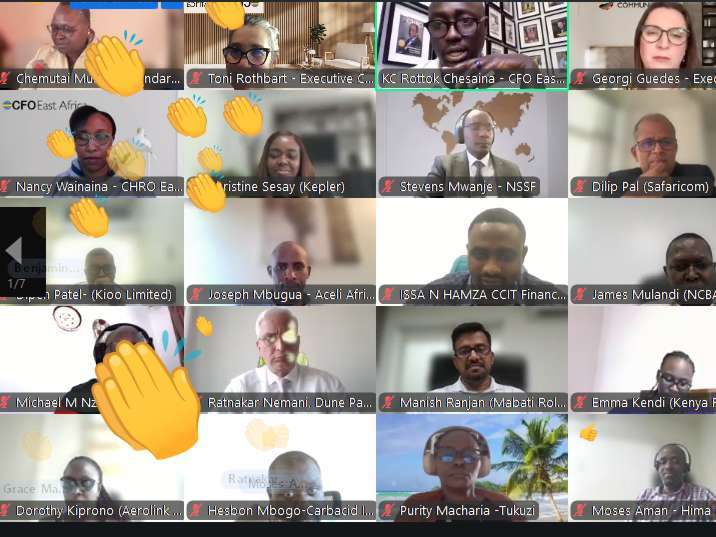
CFO East Africa’s first-ever virtual summit titled CFO Ideas Worth Sharing convened nearly 200 of the region’s finance leaders for a powerful session that tackled topics that remain top-of-mind for CFOs. Over three hours, a series of speakers shared insights that touched on the realities of financial leadership today.
The event opened with a call to action from Standard Chartered Africa finance director Chemutai Murgor, who urged CFOs to take ownership of the ESG agenda and move from talk to action. She emphasised the urgency of implementation, arguing that finance professionals are not only equipped to lead but expected to.
“This is a once-in-a-century opportunity for accountants. We have to shepherd this monumental change. It is sacred. Let us not squander it. There is no one ready for this moment like ourselves. Accountants take the lead in joining the dots between sustainability, finance information, performance and disclosures,” she said.
The summit shifted seamlessly into a discussion about personal financial management led by Kepler CFO Christine Sesay. Speaking from experience, she challenged finance leaders to engage with their team members as people navigating the complexities of financial planning.
“Some of the very people leading our financial institutions rarely engage in teaching financial management. That’s a missed opportunity. Your greatest contributions will not always be in your boardrooms. It could also be in the living rooms of different people, helping them build financial confidence. When people thrive financially, communities thrive and when communities thrive, economies thrive,” she explained.
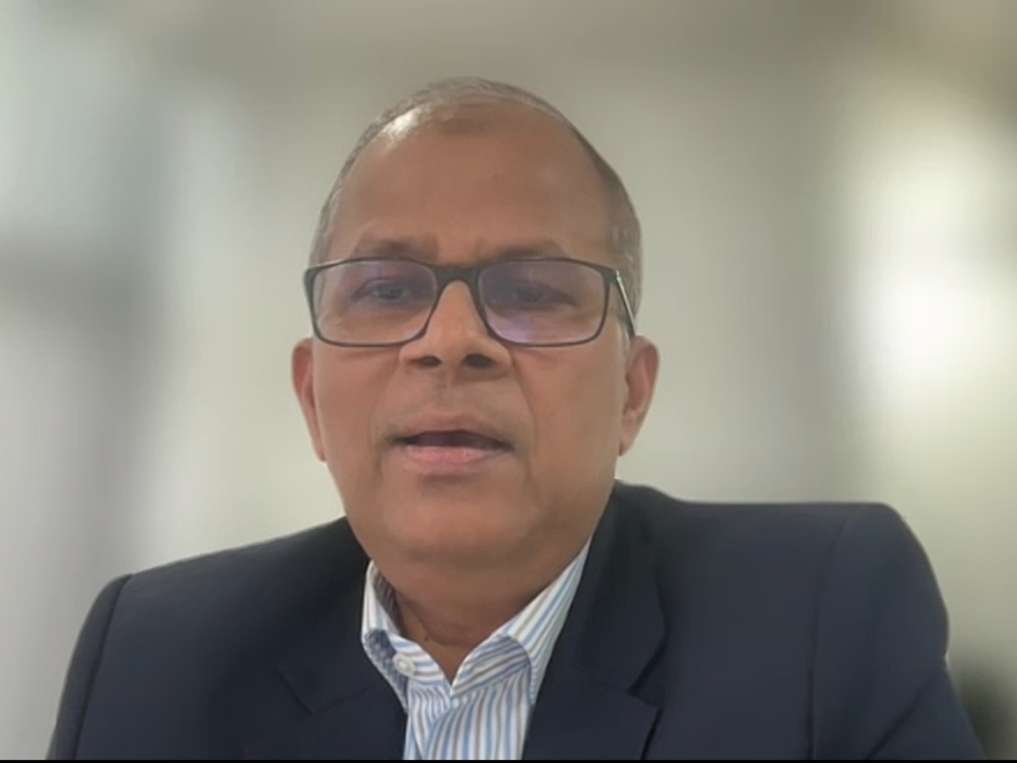
Safaricom group CFO Dilip Pal then offered a raw and unfiltered account of the company’s bold entry into Ethiopia. The expansion, which began as a promising strategic move, became a masterclass in adapting under pressure.
“Ethiopia has tested us, taught us and transformed us. We knew our Kenyan playbook would not apply. We had to earn trust, learn fast and adapt even faster. The company faced regulatory uncertainty, currency depreciation of over 100 percent hyperinflation and competition that slashed prices overnight yet still managed to build a 10-million-strong customer base in just four years. Greenfield is not for the faint-hearted, but we’re learning how to build a digital economy in real time,” he said.
The reality on the ground
Thereafter, the conversation widened to operational strategy with Kioo financial controller Dipen Patel detailing how sustainability was driving profitability. He revealed that his team had grown recycled content from 10 percent to over 40 percent and reduced dependence on expensive imported raw materials, cutting costs across the board.
“Glass recycling is not CSR for us. It’s a business imperative. Every 10 percent increase in recycled content reduces energy by 30 to 40 percent. We showed our board the math. Strategy is not really strategy until it’s in the numbers. Recycling gave us the numbers,” he revealed.
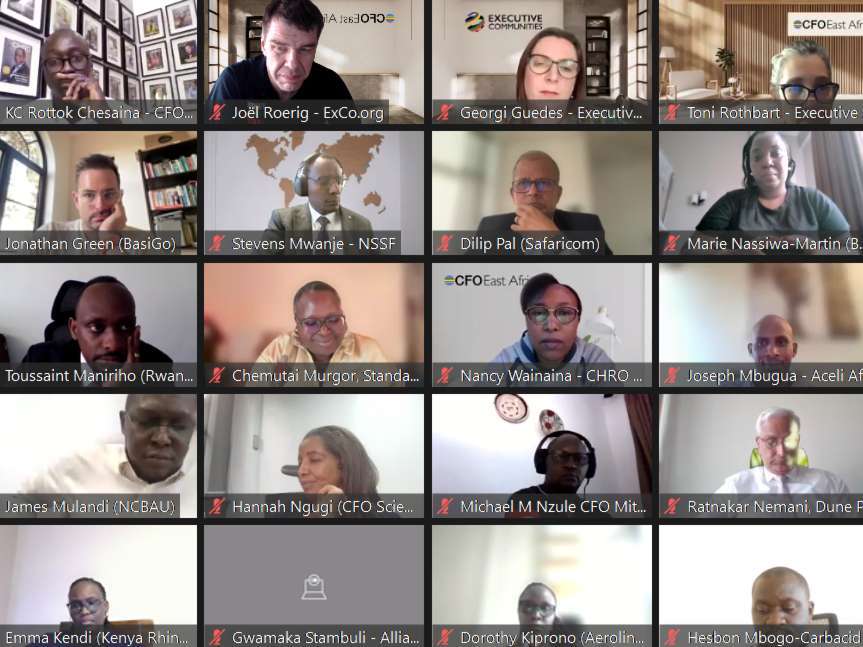
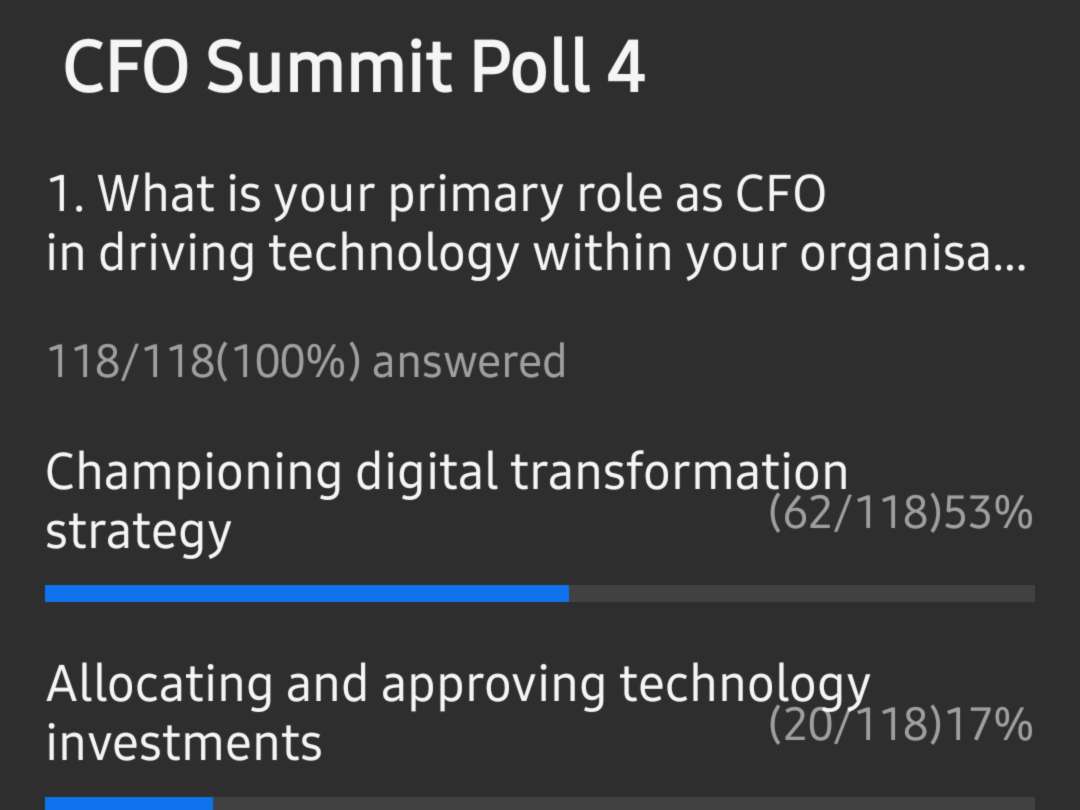
Throughout the event, the CFOs participated in polls that provided insights into how these ideas translate on the ground. The majority said they had not yet fully integrated ESG into formal structures, while 54 percent revealed they were supporting ESG literacy informally. Only 30 percent were leading structured programmes. On the topic of personal finance, 16 percent admitted they leave it to HR or third parties while two attendees openly stated they do not see it as their responsibility.
When asked about strategic execution, 45 percent reported spending most of their time aligning financial resources to business goals and 34 percent were leading strategy development directly. Most notably, 70 percent of participants said they had felt the impact of US political decisions, demonstrating the urgency of geopolitical risk.

Adapting to change
After a short break, Jonathan Green, CFO and co-founder of BasiGo, recounted the company’s bold foray into East Africa, detailing its mission to scale clean transport solutions across the region. His remarks made it clear that the traditional CFO job description fell short of covering the demands of a startup in East Africa’s transport sector. BasiGo now operates more than 100 electric buses across Kenya and Rwanda.
“I wear five hats every day. I could be fundraising in the morning and solving a charging infrastructure problem by lunch. That’s startup life. Our buses run on clean energy that would otherwise be wasted. More than just cutting emissions we’re creating a viable commercial model,” he said.
Revisiting the subject of geopolitical risk, Baylor Foundation Uganda finance director Marie Nassiwa Martin described how the 2025 USAID funding cuts forced the organisation to rethink its financial model. Her finance team has since shifted focus to laboratory services, technical training and in-house systems.
“You don’t just shut down. You adapt. You look inward and say: what can we commercialise? Which services can we offer without compromising our mission? We have to adapt. We offer critical life-saving services. We can’t afford to close shop,” she explained.
That theme of transformation was reinforced by Stevens Mwanje, CFO of NSSF Uganda, who explained how he rebuilt his finance department by focusing on people. Stevens, who has more than a decade of leadership in the public sector, credited mindset as the foundation of reform in the public sector.
“Almost all my accountants now have another skill. Some code. Some manage projects. Some lead data teams. That’s how we build a finance department of the future. Public service is not about position. It’s about purpose. Once you forget the purpose and focus on the position you stop being a transformative leader,” he said.
The final speaker of the evening was Toussaint Maniriho, CFO of the Rwanda Space Agency. He shared how technology is redefining the role of CFOs in government institutions, arguing that automation and real-time data must now be standard tools in any finance leader’s kit.
“Technology has transformed our financial work into the daily work that we do. We have to ensure that we automate our systems and advance our data analysis to ensure that our transactions are accurate,” he said.